
Last updated November 15, 2026
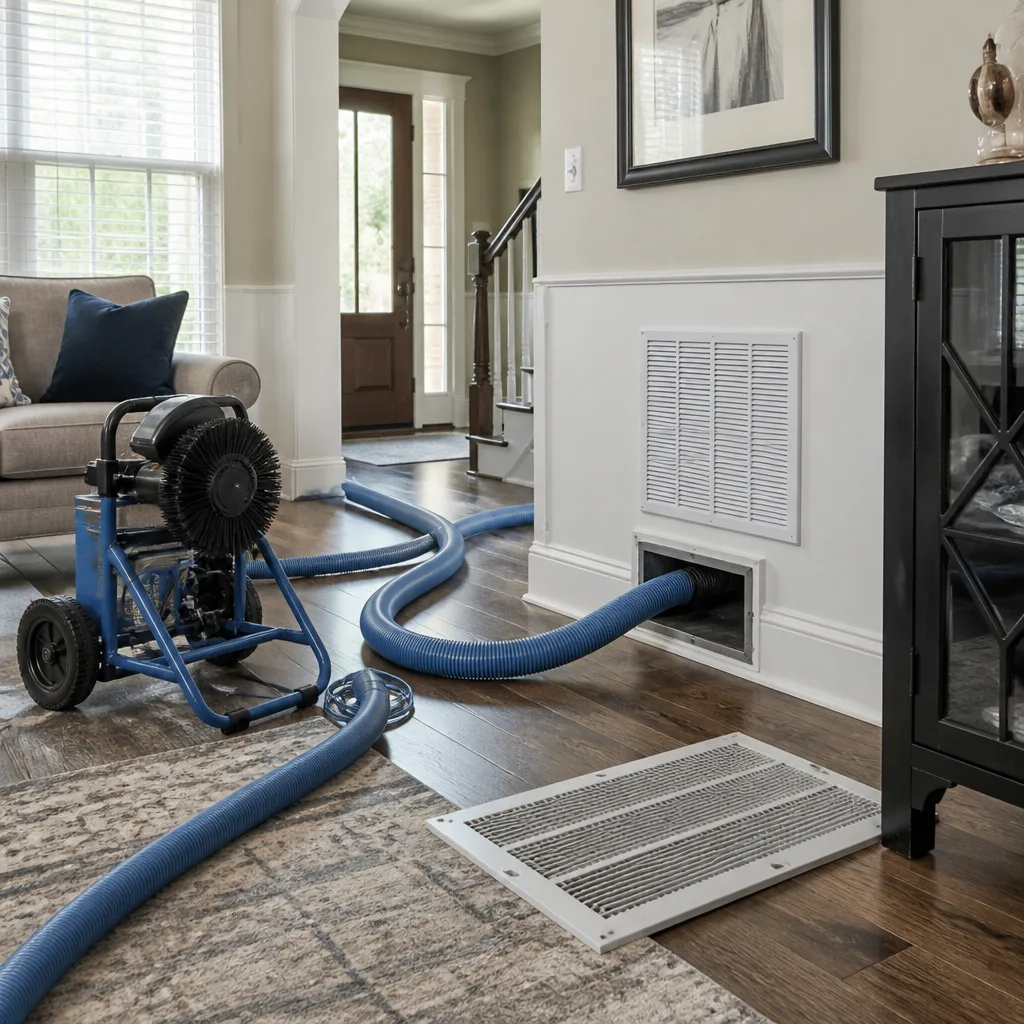 Whole-home duct cleaning
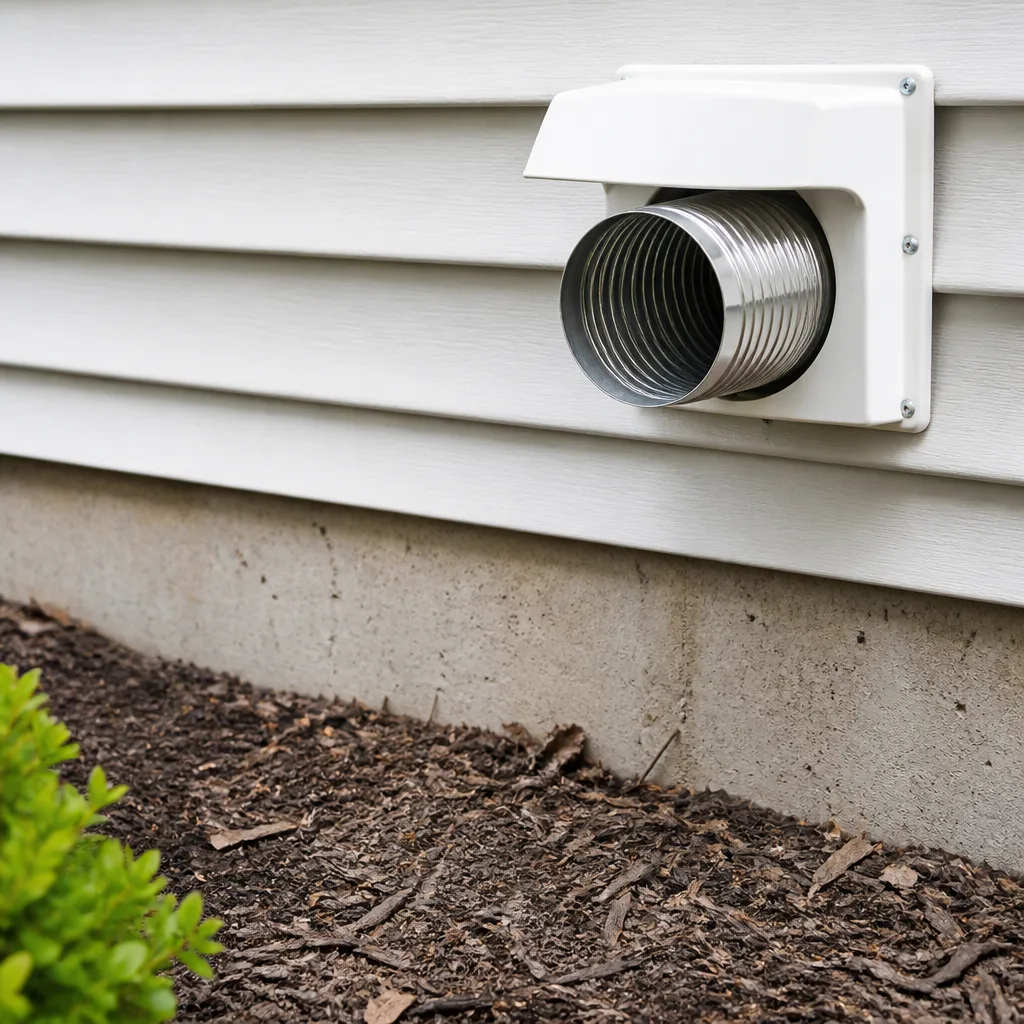 Dryer vent cleaning
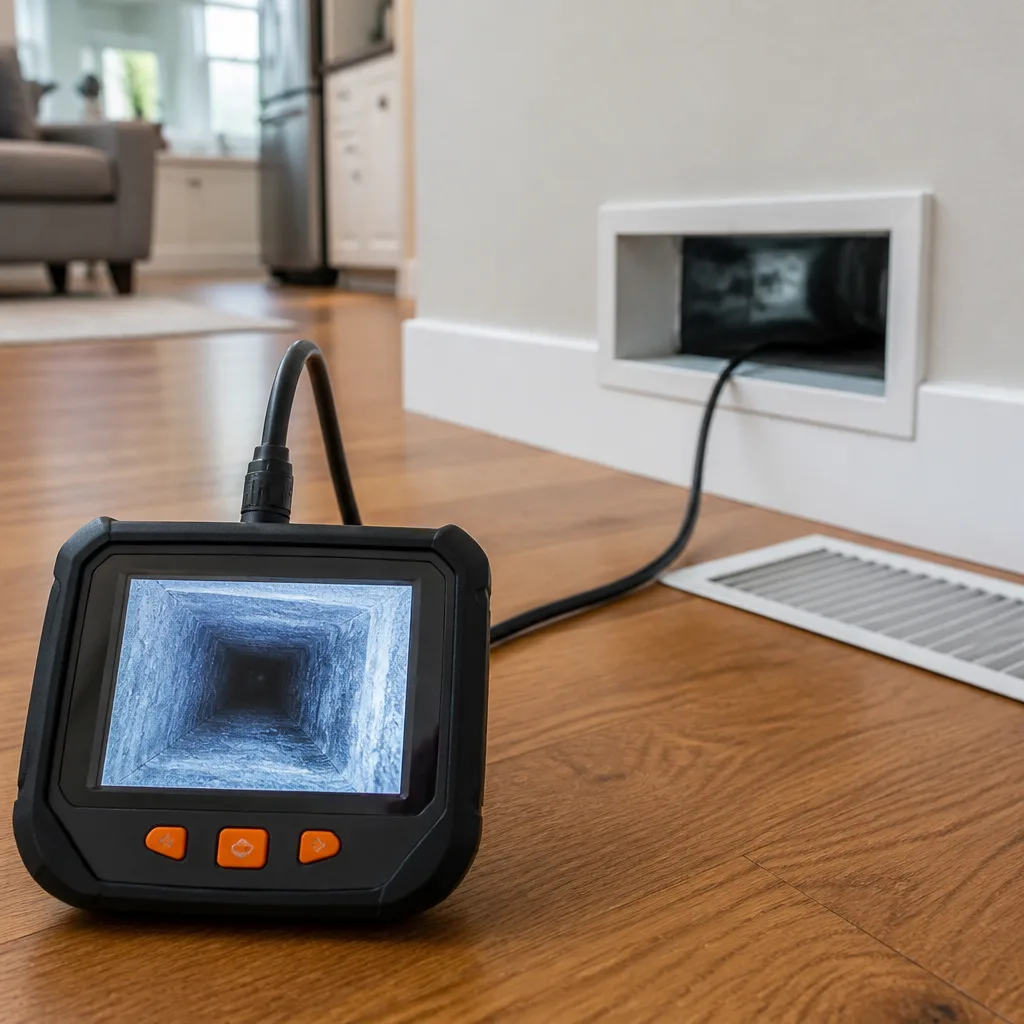 Camera inspection
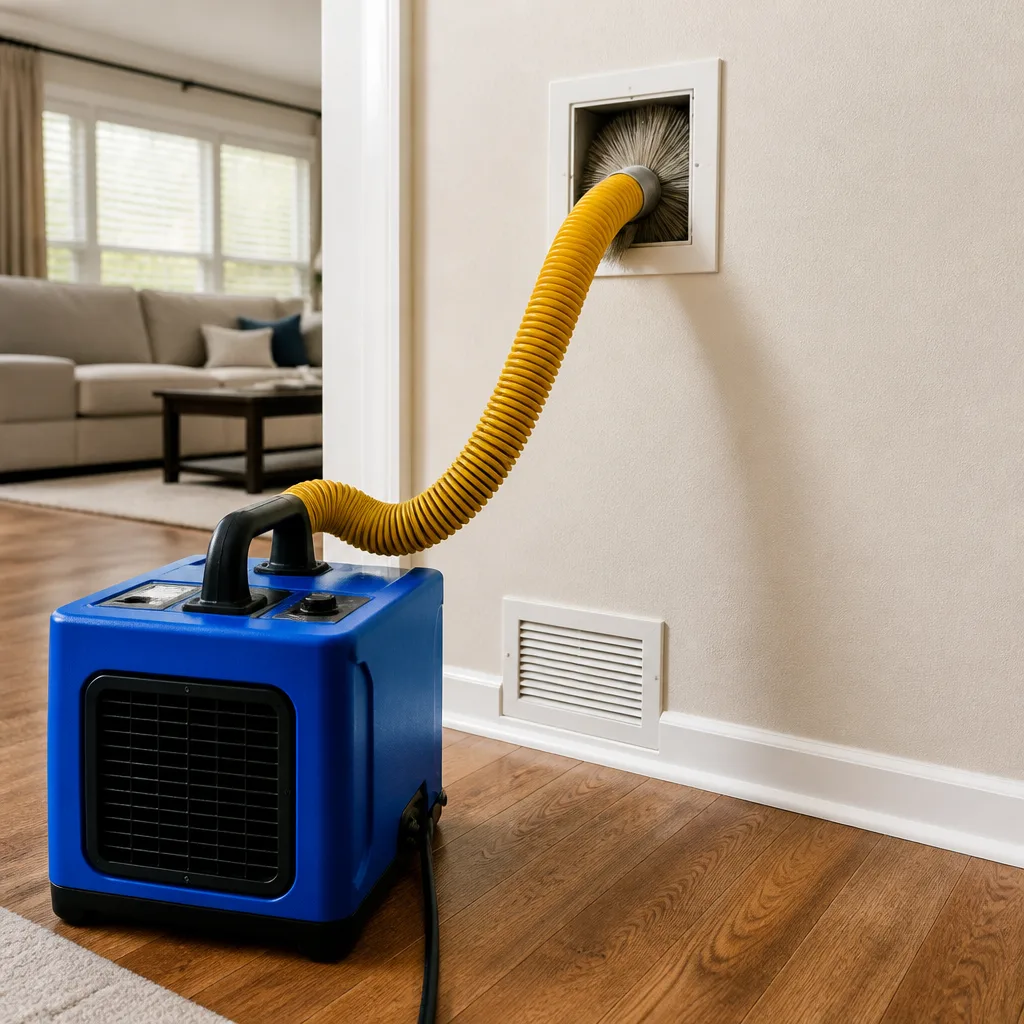 Sanitizing & deodorizing
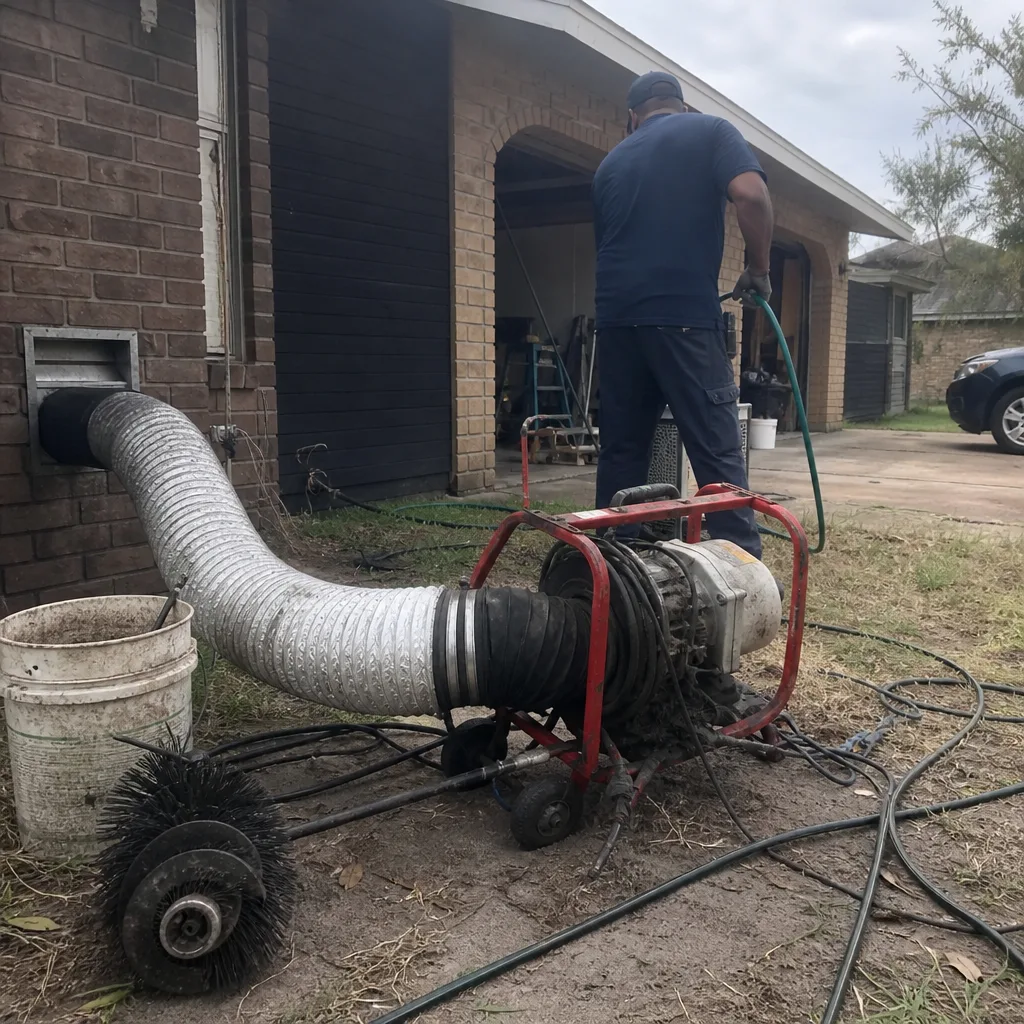
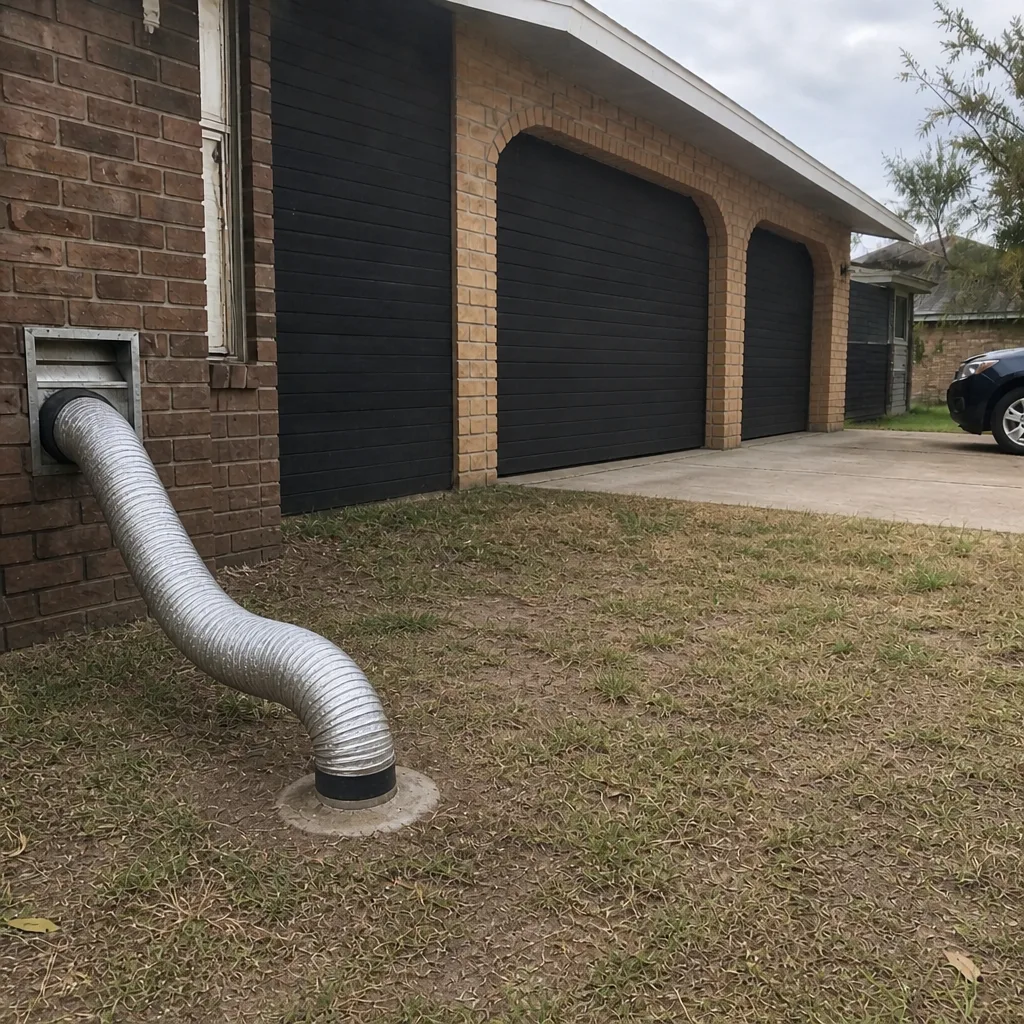
Whole-system duct and dryer vent check with before-and-after photos - you see exactly what came out of your vents
That "$99 whole-house special" is a bait ad - the real number appears once they are in your hallway, or the "clean" is a shop-vac at the register. We photograph the inside of your ducts before and after instead.
Air Duct Cleaning Warning Signs: An Edinburg Homeowner’s Reference Guide
Dust on your supply grilles isn’t a warning sign. It’s a lagging indicator. By the time you can see it, your duct system has usually been collecting debris for months, and the more useful signals have already passed you by. The real warnings show up in your utility bill and your airflow long before they show up on the grill. This guide explains the mechanical reason behind each symptom, so you understand what’s actually happening inside your system instead of working down a generic checklist. Everything below is written from what we see in homes across Edinburg, where mild winters, heavy spring rain and slab foundations create a specific set of duct problems.
Quick Answer
The most reliable air duct cleaning warning signs in an Edinburg home are a utility bill that climbs without a rate change, rooms that never reach the same temperature, musty odors after rain, visible debris blowing from supply registers, and unexplained respiratory irritation indoors. Visible dust on the grille is usually the last sign to appear, not the first. If more than one of these shows up at once, it’s worth having the system inspected before the next cooling season.
Styles & brands we work with
- Whole-home duct cleaning
- Dryer vent cleaning
- Camera inspection
- Sanitizing & deodorizing
Table of Contents
- When to Call a Professional
- What an Unexplained Utility Bill Increase Tells You
- Uneven Room Temperatures: Obstruction or Leakage?
- Odor Patterns Specific to South Texas Homes
- Signs of Pest Infiltration in Slab-Foundation Ducts
- Cleaning Versus Repair: Which Problem Do You Have?
- Common Mistakes to Avoid
- Frequently Asked Questions
What an Unexplained Utility Bill Increase Tells You
A bill that rises while your rate stays flat usually means your system is working harder to move the same air. That’s a duct restriction symptom, and it’s one of the earliest signals a homeowner gets. When debris narrows the inside of a duct run, the blower pushes against higher static pressure. It runs longer per cycle to satisfy the thermostat. Your usage climbs even though nothing about your habits changed.
The diagnostic logic is simple enough to apply yourself. Pull out last year’s bills for the same month and compare the actual kilowatt-hours, not the dollar total. Rates move. Usage is the honest number.
How to read the change
- Find the same calendar month from the prior year and note the kWh used.
- Compare it to this year’s kWh for that month, not the dollar amount.
- If usage is up noticeably and no one in the house changed their habits, your system is likely running longer to do the same job.
- Rule out the obvious first: a failing capacitor, a dirty filter, or a thermostat left on the wrong setting can all produce the same rise without any duct problem at all.
If the filter is fresh and the equipment checks out but usage stays high, restricted ductwork moves toward the top of the list. A restricted return is often the culprit, and it’s frequently the dirtiest part of a residential system. In Edinburg homes, cooling season is long, so a system running against high static pressure does it for many more hours per year than it would in a cooler climate. That’s why a restriction here shows up in the bill faster than homeowners expect.
We use Nikro HEPA-rated vacuum equipment because a restriction diagnosis depends on knowing what’s actually inside the run, and pulling fine particulate out of the system without recirculating it into the room is the only way to check properly. If you want the full picture of what a proper inspection covers, start with Duct Cleaning Edinburg.
Uneven Room Temperatures: Obstruction or Leakage?
A room that never reaches temperature is a classic symptom that gets misdiagnosed because two different problems look nearly identical from the thermostat. One is a blocked duct. The other is a leaking duct. They behave the same way from your side of the wall, and they need different fixes.
The difference is where the air goes. With an obstruction, less air arrives at the room. With a leak, the air leaves the duct on the way there, usually into an attic, a wall cavity, or a crawlspace.
How to tell them apart
- Feel the register: if airflow from the room’s supply vent is weak, suspect an obstruction or a crushed run. If airflow feels normal but the room is still warm, suspect a leak downstream.
- Compare rooms: one consistently bad room points to an obstruction on that branch. Several rooms underperforming on the same side of the house points to a leak or a disconnected trunk.
- Check the door test: close the room’s door and feel whether airflow improves. If it does, the return path is the issue, not the supply.
- Look for dust marks: a dark streak at a joint, a ceiling patch or a flex duct connection often marks where air is escaping.
In Edinburg, the second pattern is common because so many homes have flex duct running through a hot attic. Attic heat degrades flex duct over time, and a sagging or kinked run loses capacity quietly. That matters here more than in milder markets, because the attic is brutally hot for most of the year.
Repairing a compromised run is a different job from cleaning one. That’s why we offer air duct repair as a standalone service. We clean it, and if it’s damaged, we fix it, rather than flagging a disconnected duct and leaving you to find someone else. Our technicians use Rotobrush rotary brush systems on the duct interiors, which reach the walls of the run rather than just the air column. Our technicians have up to 10 years of experience reading these systems.
Odor Patterns Specific to South Texas Homes
A musty smell that appears after rain is the most local warning sign on this list. In Edinburg, heavy rain events and high humidity push moisture into places a filter can’t protect. When that moisture condenses inside flex duct, particularly in a run through an unconditioned attic or a slab-adjacent space, it creates the conditions for microbial growth on the duct liner. That is a different problem from filter neglect, and changing the filter won’t touch it.
Odor timing is the diagnostic clue. Watch when the smell appears and how long it lasts.
- After rain, fading over a day or two: points to condensation inside a duct or at a boot where the run meets the floor or ceiling.
- Constant, strongest at startup: usually a dirty interior or standing debris in the return.
- Sharp and chemical, appearing quickly: stop and have the system checked before running it again.
- Only when the system is off: often a drain pan or condensate issue rather than the duct interior.
The reason this pattern is so pronounced here is the combination of slab foundations and humid air. Ducts that run low or through unconditioned space stay cool, and cool surfaces pull moisture out of the air. A properly contained cleaning, using Abatement Technologies equipment for containment and air purification, is the right way to address a duct interior without spreading spores through the living space while the work happens. Call (877) 566-6144. We answer 24/7. Fast dispatch from 7am to 7pm, Sunday through Friday.
See the difference
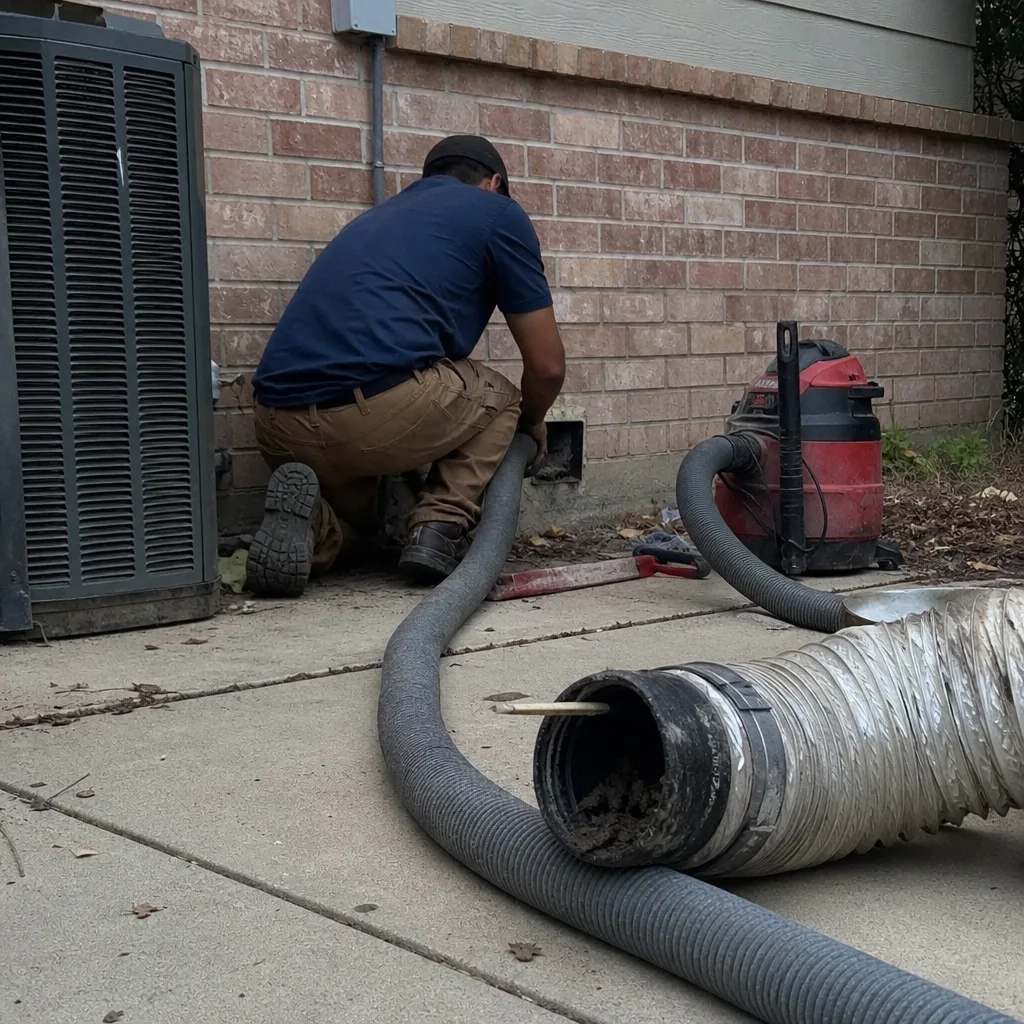 Before
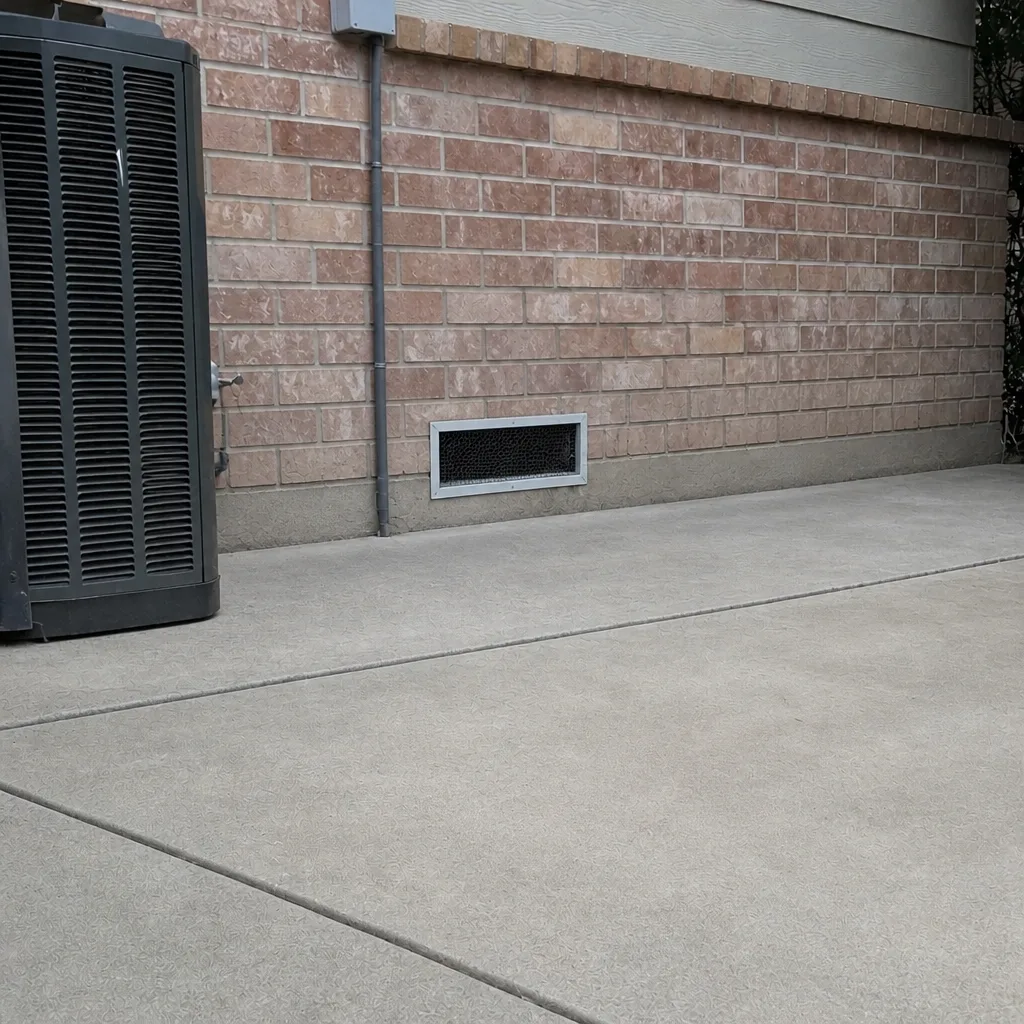 After
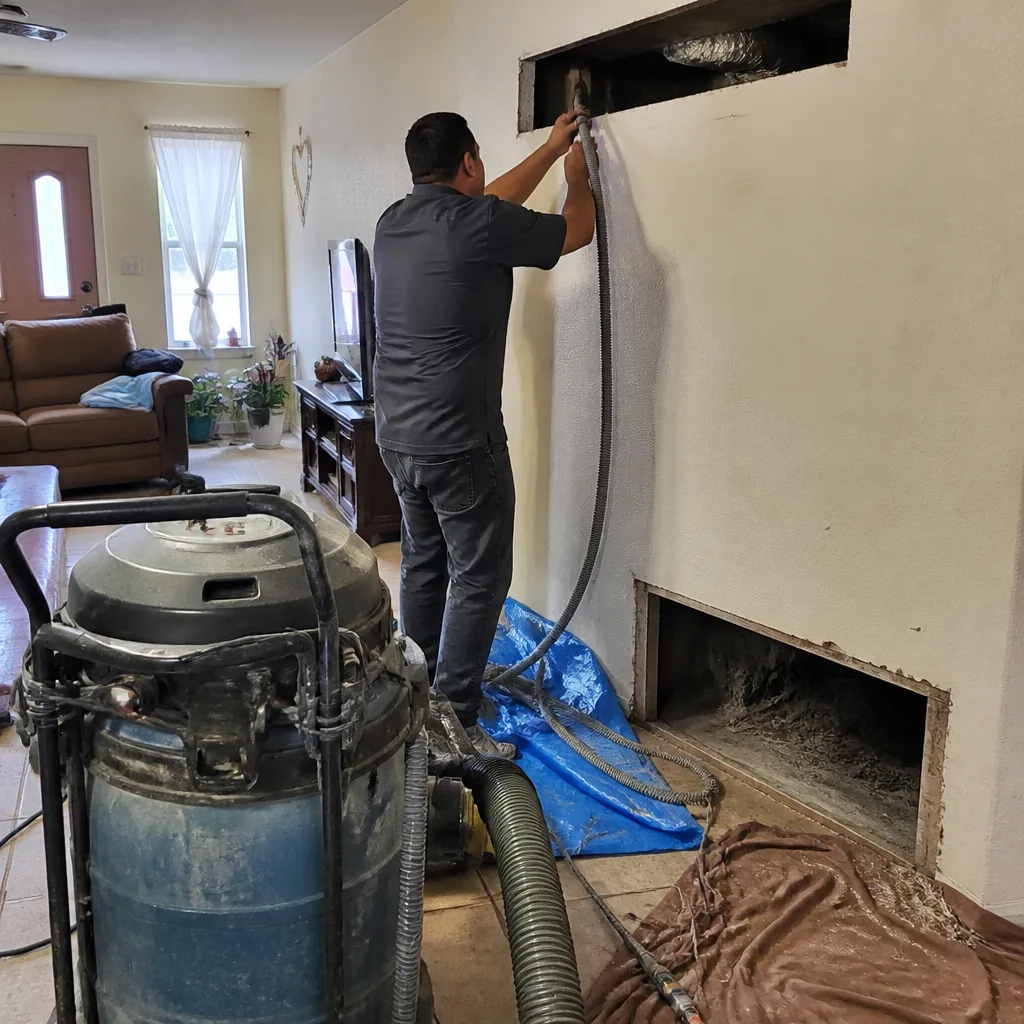 Before
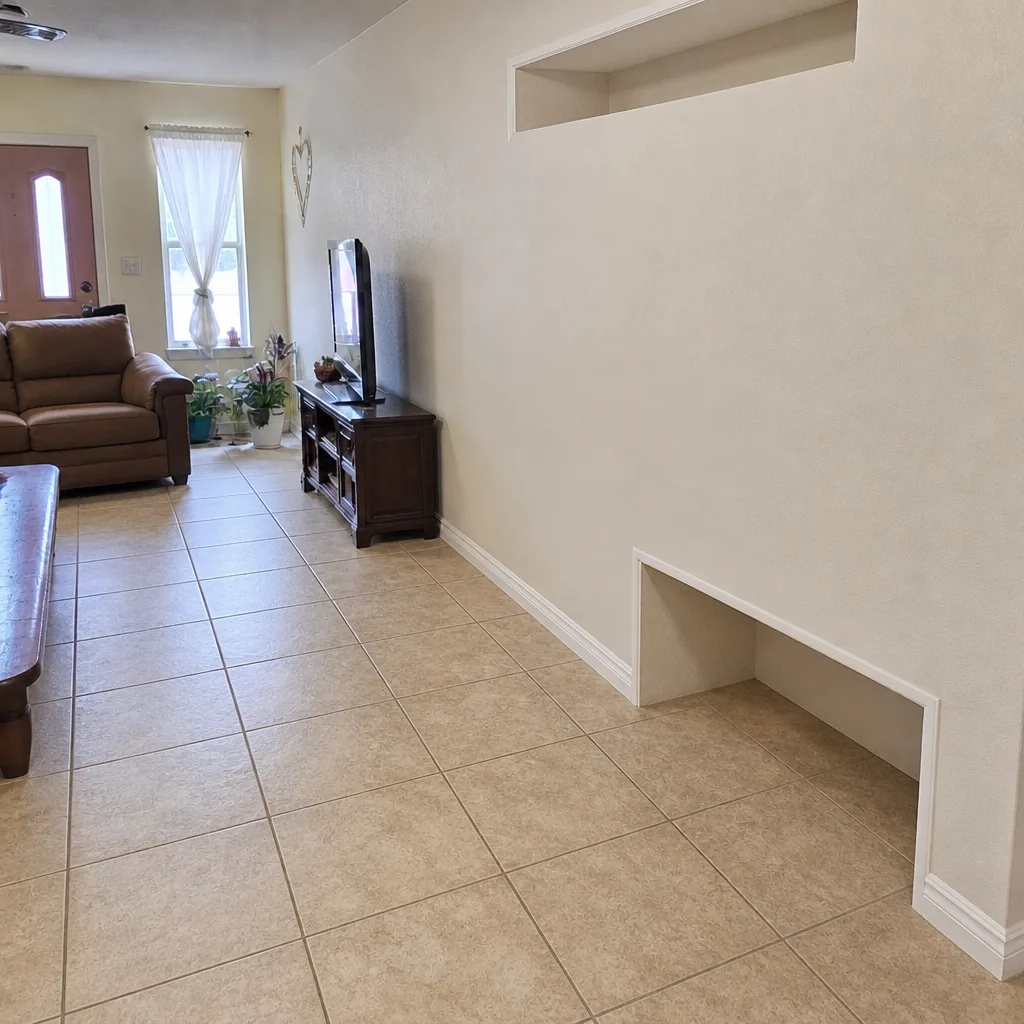 After
 Before
 After
Signs of Pest Infiltration in Slab-Foundation Ducts
Pest infiltration in ductwork is more common in Edinburg than most homeowners realize, and slab foundations are part of the reason. Duct runs that pass beneath or through the slab have connection points at the perimeter, and any gap in that path is an entry point. Rodents and insects find warm, dark, quiet runs appealing, and once inside they leave droppings, nesting material and hair that a normal filter never stops.
What to look for
- Droppings near the base of registers or on the floor below a vent: the first physical evidence most people find.
- Scratching or rustling when the system starts: air movement disturbs material inside the run.
- A persistent musky or ammonia odor: distinct from the rain-triggered mustiness described above.
- Chewed or collapsed flex duct in the attic or crawl space: rodents chew flex duct and insulation.
- Seasonal allergy symptoms that don’t follow the usual pollen calendar: indoor exposure doesn’t track the outdoor season.
Slab homes also hide their ductwork, which means a problem can develop for a long stretch before anyone notices. The entry point is usually at the perimeter, where the system connects to exterior walls, vents, or a return chase. Sealing those gaps is part of the repair work, not just the cleaning, which is why we treat cleaning and repair as one scope.
If you suspect pests have been inside the system, don’t run the system until it’s been inspected. Airflow spreads what’s in there. This is a case where a professional inspection with proper containment equipment matters more than a standard cleaning, and it’s a conversation worth having before anything else. Our technicians have up to 10 years of experience in duct and vent systems, and they know what entry points look like in this type of construction.
Cleaning Versus Repair: Which Problem Do You Have?
Most homeowners asking about air duct cleaning actually have a mix of both problems, and knowing which is which helps you get the right job done the first time. The chart below sorts the warning signs by what they usually mean.
| Warning sign | Usually points to | Typical fix |
|---|---|---|
| Visible dust blowing from supply registers | Debris accumulation inside the run | Cleaning |
| Rising kWh with a steady rate | Restriction, often the return | Cleaning, plus inspection |
| One room consistently underperforming | Blocked or crushed branch | Repair, sometimes cleaning |
| Several rooms underperforming on one side | Leaking or disconnected trunk | Repair |
| Musty odor after rain | Moisture and growth in flex duct | Cleaning, with containment |
| Pest droppings or chewed flex duct | Physical compromise of the run | Repair, then cleaning |
| Whistling or unusual noise at a vent | Pressure imbalance from a restriction | Inspection first |
The signs that point clearly to cleaning are the ones with debris visible or measurable: dust discharge, rising usage, musty odor from accumulated material. The signs that point to repair are structural: collapsed runs, disconnected joints, chewed duct, crushed flex in an attic. Repair is the step many companies skip, because it takes more time and more skill than running a brush through a duct.
It’s also worth knowing what else in the system is being neglected. Components like Honeywell and Aprilaire air-quality equipment only perform as well as the ductwork moving air past them. Honeywell and Aprilaire components are designed to do their work inside a clean, sealed system, and a compromised duct undermines them regardless of how good the equipment is. That’s why the diagnostic step comes before the cleaning step.
The One System Most Duct Cleaners Skip
Your dryer vent is a fire risk, and lint buildup in a vent run is the reason. This isn’t a duct that carries air from your HVAC equipment, but it is a duct system in your home, and many companies that clean HVAC ducts don’t touch it. The warning signs are different and worth knowing separately.
- Clothes taking more than one cycle to dry fully, consistently.
- The dryer or the wall behind it feels noticeably hot during a cycle.
- A burning or scorched smell during drying.
- Visible lint collecting around the outside vent flap.
- The exterior flap doesn’t open fully or won’t close.
Edinburg homes often have long vent runs, especially where the dryer sits away from an exterior wall, and long runs accumulate lint faster. If you haven’t looked inside your dryer vent since you moved in, the vent is worth examining. Learn more about dryer vent cleaning and what’s involved.
Common Mistakes to Avoid
- Watching for dust on the grille instead of usage patterns. Dust on the grille is the last sign to show, not the first. Track your kWh by month before assuming your duct system is fine.
- Assuming a room that won’t cool needs a bigger AC unit. A room that stays warm while others are comfortable usually has a duct problem on that branch, not an undersized system.
- Treating rain-triggered mustiness as a filter issue. In Edinburg, a musty smell tied to rain is usually moisture in the duct line, not a dirty filter. Swapping filters won’t fix it.
- Skipping the dryer vent. Many homeowners never have the dryer vent cleaned because they think of it as part of the dryer, not the duct system. In this climate, long vent runs make it a real fire risk.
- Accepting a cleaning quote without asking about equipment. A shop vac isn’t a duct cleaning machine. Ask what rotary brush and HEPA vacuum system will be used inside your home, and ask about containment.
- Letting a company clean a damaged duct instead of repairing it. Cleaning a crushed or disconnected run doesn’t solve the problem; it moves the debris and leaves the real defect in place.
- Using a consumer-grade vacuum or pushing equipment into a duct yourself. The equipment can’t reach the duct walls, and pushing objects into a run risks disconnecting or damaging flex duct.
When to Call a Professional
Call a professional when two or more of the signs in this guide show up at the same time, when you can smell a musty or chemical odor coming from a vent, when you find droppings or chewed flex duct, or when the HVAC equipment has been checked and everything is fine but usage is still climbing. Call sooner if your household has anyone with allergies or asthma, if you recently bought the home, or if the home just went through a renovation, since dust and construction debris inside the duct system don’t clear on their own.
Duct Cleaning Edinburg offers free estimates in Edinburg. Call (877) 566-6144. We answer 24/7. Fast dispatch from 7am to 7pm, Sunday through Friday. A written estimate sets the price before work begins, and you get before-and-after photos so you can see what changed inside your own system.
Frequently Asked Questions
The most reliable early sign is a utility bill that rises in kilowatt-hours while your rate stays flat. Dust on the grille appears later, after debris has already built up for months. Call (877) 566-6144 for an exact quote. Estimates are free.
A dirty duct shows signs tied to debris: dust discharge, musty odor, rising usage. A damaged duct shows signs tied to structure: weak airflow in one room, chewed flex in the attic, or a disconnected joint. They look similar from the thermostat and need different fixes.
A musty smell after rain usually means moisture has condensed inside a duct, particularly in flex runs through an unconditioned attic or a space cooled by the slab. It’s a moisture problem, not filter neglect, and it’s worth having the system inspected. Call (877) 566-6144 for an exact quote. Estimates are free.
Before-and-after photos of your own duct interiors are the answer. You should be shown the inside of your system as it was, and as it is when the work finishes. If a company can’t show you what changed, that’s a real concern. Call (877) 566-6144 for an exact quote. Estimates are free.
A cheap quote often reflects light-duty equipment, minimal contained cleaning, and no inspection for deeper problems like a crushed run or pest intrusion. Ask what equipment will be used, and whether containment is part of the job. Call (877) 566-6144 for an exact quote. Estimates are free.
Most homes don’t need an annual cleaning. Cleaning depends on conditions specific to your home: allergies, renovation dust, pest activity, moisture, and how dirty the system actually is. An inspection will tell you whether your ducts need work soon or just need a filter change. Call (877) 566-6144 for an exact quote. Estimates are free.
The Bottom Line
Visible dust on your grille is the tail end of a duct problem, not the beginning. The useful warning signs come earlier: a usage jump in your utility bill, a room that never reaches temperature, a musty smell after rain in Edinburg’s humidity, droppings or chewed flex in a slab-foundation run, or a dryer vent that hasn’t been looked at. Each of these points to a mechanical cause, and knowing whether you need a cleaning or a repair is the difference between a problem solved and a problem moved. If you’ve spotted more than one, get an inspection before cooling season. Call (877) 566-6144. We answer 24/7. Fast dispatch from 7am to 7pm, Sunday through Friday. Professional-grade equipment, containment, and before-and-after photos of your own system.
To put this guide into context for your part of town, see our Edinburg service page for local details.
Written by the team at Duct Cleaning Edinburg.