
Last updated November 15, 2026
 Whole-home duct cleaning
 Dryer vent cleaning
 Camera inspection
 Sanitizing & deodorizing
Whole-system duct and dryer vent check with before-and-after photos - you see exactly what came out of your vents
That "$99 whole-house special" is a bait ad - the real number appears once they are in your hallway, or the "clean" is a shop-vac at the register. We photograph the inside of your ducts before and after instead.
Air Duct Cleaning Permits, Codes & Inspections in Edinburg, TX: What You Need to Know
Most homeowners assume duct work is duct work: someone runs a brush through the system, vacuums out the dust, and leaves. The part nobody explains is that cleaning and repair sit on opposite sides of a legal line in Texas. Cleaning generally needs no permit. Cutting, replacing, or rerouting ductwork usually does. Ask a contractor which of those two jobs they’re actually doing in your attic, and the answer tells you whether your paperwork needs to be in order. This guide covers that line, who enforces it in Edinburg, what inspectors look for, and the questions to ask before anyone climbs into your attic.
Quick Answer
Air duct cleaning itself generally does not require a permit in Edinburg, Texas, because it’s maintenance of an existing system rather than a modification. Duct repair or replacement usually does trigger permit requirements, because it falls under the same mechanical code framework that governs HVAC work in Hidalgo County. The clearest way to know: ask the contractor whether the work changes the duct system’s configuration or material. If it does, verify the permit with the City of Edinburg before work starts.
Styles & brands we work with
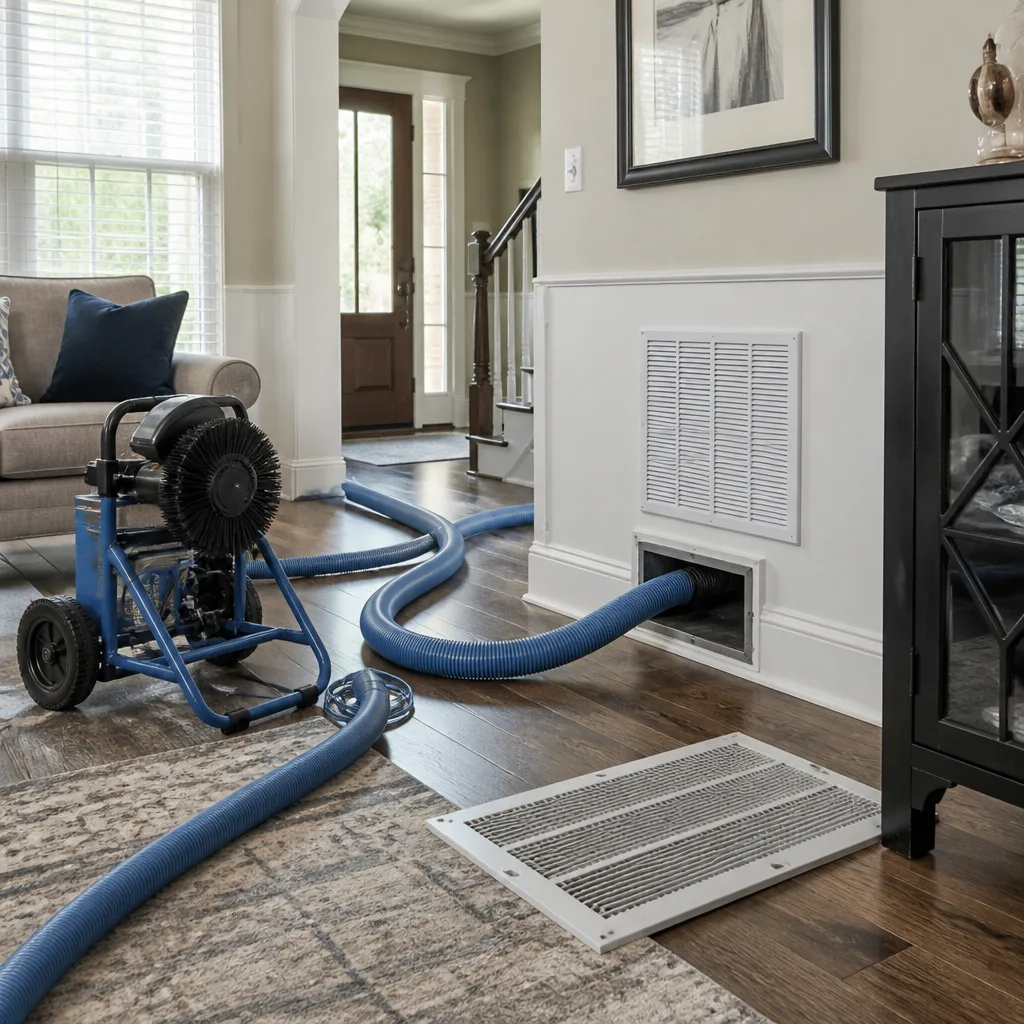
- Whole-home duct cleaning
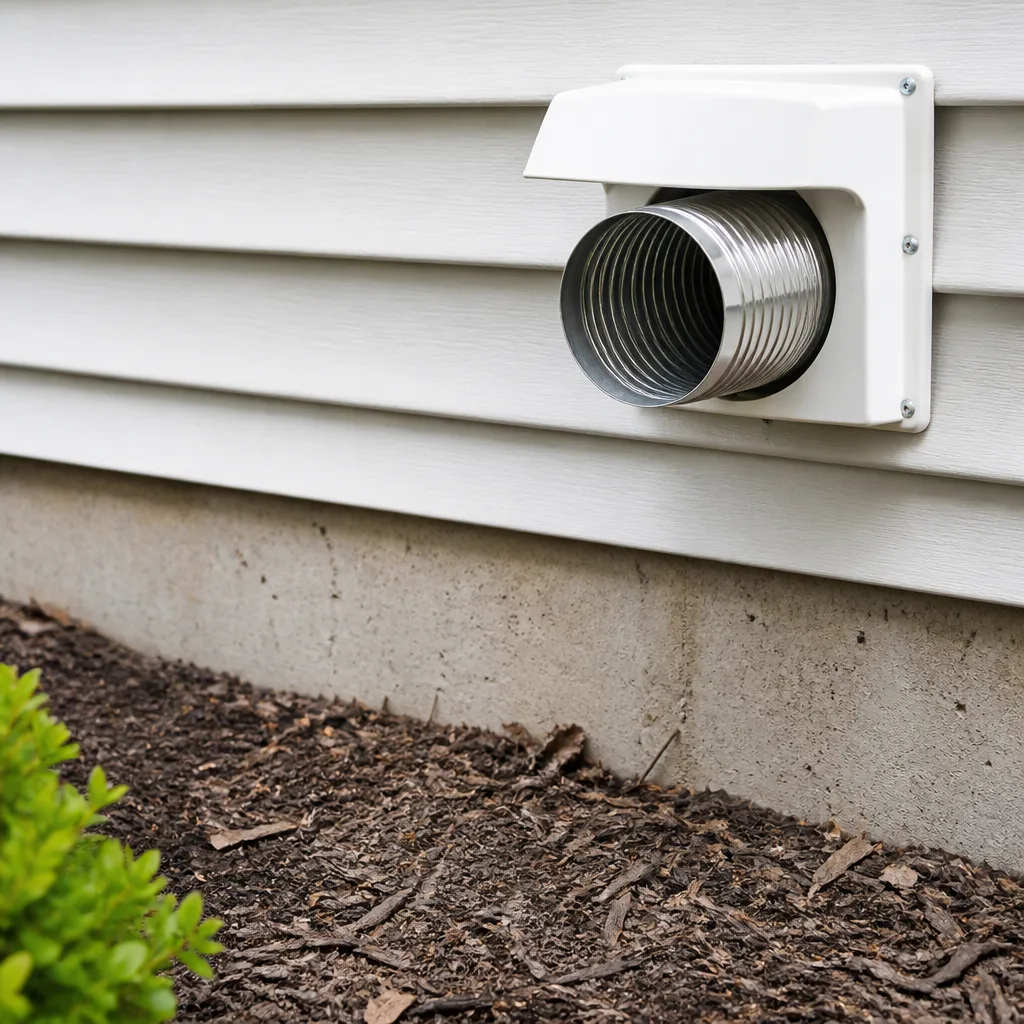
- Dryer vent cleaning
- Camera inspection
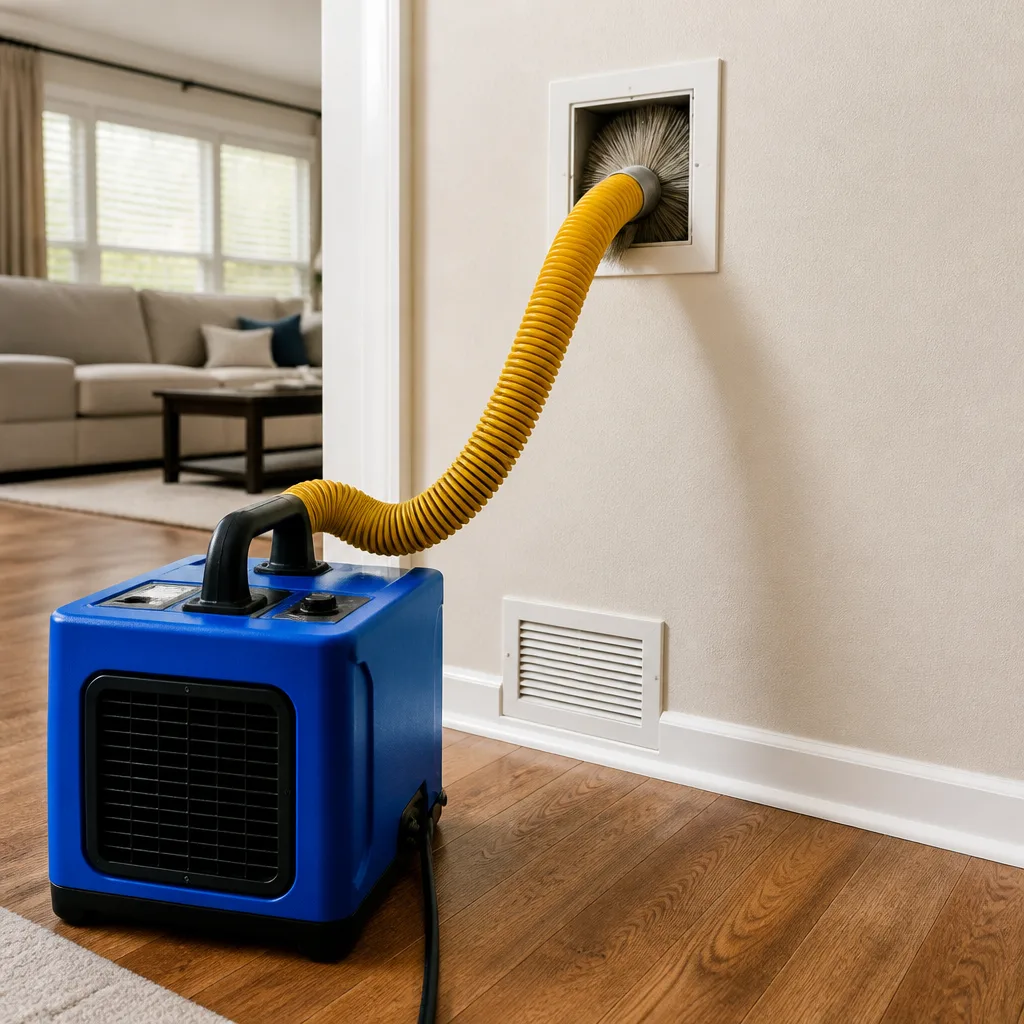
- Sanitizing & deodorizing
Table of Contents
- Cleaning vs. Repair: Where the Permit Line Falls
- Who Issues Permits in Edinburg and Hidalgo County
- What the Texas Mechanical Code Says About Duct Systems
- What Inspectors Actually Look For
- How Improper Duct Modifications Hurt Efficiency and Warranties
- Questions to Ask a Duct Contractor Before Work Starts
- Why Unpermitted Work Bites You at Resale
- Common Mistakes to Avoid
Cleaning vs. Repair: Where the Permit Line Falls
The distinction is simpler than most people expect. Cleaning removes accumulated debris from a duct system that is structurally sound. Repair changes the system itself: replacing a collapsed section of flex duct, reconnecting a run that came loose, sealing or rerouting a trunk line, swapping out materials.
Cleaning falls under routine maintenance. Maintenance doesn’t need a permit. Repair is a modification of a mechanical system, and modifications are where the Texas mechanical code and local permitting kick in.
The confusion happens because a cleaning visit often turns up a problem that needs repair. A technician inspecting air duct cleaning may see a crushed flex run, a disconnected joint, or ductwork that was installed poorly in the first place. Once you cross from cleaning that duct to replacing it, you’re in permit territory.
Here’s the practical test:
- Cleaning: no permit. The duct system stays as designed; you’re removing what’s inside it.
- Sealing and minor reconnection: usually no permit, but it depends on the scope; ask the contractor to confirm.
- Replacing duct sections or runs: permit likely required.
- Rerouting, resizing, or adding runs: permit required.
- Replacing the air handler or adding an HVAC component: permit required, and it’s usually a different trade’s permit.
The reason this matters in Edinburg specifically: a large share of the housing stock in neighborhoods like Sage Point, Benisen Court, and the older blocks near the courthouse square has duct systems that have been touched multiple times. Attic heat in South Texas is brutal on flex duct, and it fails slowly. A cleaning job that uncovers a damaged run is common. Whether that repair gets permitted is up to you, because the person who benefits from skipping it isn’t the one who carries the liability.
Who Issues Permits in Edinburg and Hidalgo County
This is where homeowners get lost, because Edinburg sits inside Hidalgo County and both names show up on paperwork. The short version: if your property is within the Edinburg city limits, the City of Edinburg is the authority that issues your mechanical permit. If you’re outside the city limits in unincorporated Hidalgo County, the county handles it.
Most residential addresses inside the city proper fall under city jurisdiction. If you’re unsure which applies to you, two quick checks settle it:
- Check your property tax statement or utility billing. City-provided services (water, garbage) generally indicate you’re inside the city limits.
- Call the city’s building department directly and give them the address. They’ll tell you in under a minute whether the property is inside their jurisdiction and whether the scope of work you’re describing requires a permit.
That phone call is free and it’s the single most useful thing you can do before authorizing a repair. Contractor opinions vary. Building department answers don’t.
The inspectors and permit staff who handle mechanical work in our area see a lot of residential duct modifications. They know what sloppy attic work looks like, and they know which shortcuts get taken. Permits aren’t there to slow you down; they’re the record that the work was done to a standard. For homeowners in Edinburg who plan to sell within a few years, that record is worth having.
One more thing about jurisdiction: if the work touches a manufactured or modular home, the framework can differ from site-built construction. Ask the city before you assume the same rules apply.
What the Texas Mechanical Code Says About Duct Systems
Texas adopts the International Mechanical Code as the basis for its mechanical requirements, with local amendments. You don’t need to memorize section numbers, but you should understand what the code is actually protecting, because those protections are exactly what an inspector verifies.
The code’s duct system requirements cluster around a few ideas:
- Duct material must be rated for the application. Flex duct used in an unconditioned South Texas attic has to be rated for the temperature it will see. Cheaper material that doesn’t carry the right rating is a common shortcut.
- Seams and connections must be sealed. Duct leakage is the single largest efficiency loss in most residential systems. Code requires ducts to be sealed at joints and penetrations.
- Duct systems must be sized for the airflow the equipment delivers. Undersized or crushed ductwork restricts airflow, which drives up static pressure and makes the system work harder than it was designed to.
- Support and installation standards apply. Flex duct must be supported and routed without kinks or sags. It must not rest on ceiling joists in a way that collapses it.
- Return air paths must stay intact. A return that’s been blocked or reduced during a modification can cause pressure imbalances that pull air from unwanted places.
This is where the cleaning-and-repair distinction becomes real rather than theoretical. Cleaning doesn’t touch those standards. A repair either preserves them or violates them, and it’s the second case that requires an inspection to catch.
We work with Honeywell and Aprilaire air-quality components often enough to know how much a small duct change can ripple through a system. A filter cabinet that no longer seals, a bypass that gets disconnected during a modification: those look minor in the attic and show up as real problems in the living room.
What Inspectors Actually Look For
If a permit is pulled for duct work, the inspection is generally not a deep forensic analysis. It’s a check of the things that most commonly go wrong. Knowing them ahead of time tells you what a competent contractor is already thinking about.
- Material labels and ratings. The inspector checks that the duct material carries the appropriate listing for its location and use.
- Sealing at connections. Joints, boots, and transitions should be sealed with mastic or approved tape, not just friction-fit or wrapped in cheap foil tape.
- Support and routing. Flex duct should be supported at proper intervals, run reasonably straight, and not be visibly crushed or kinked over joists or around obstructions.
- Adequate airflow. The inspector may check that registers have proper airflow and that the system isn’t obviously restricted.
- Return air integrity. The return path should be continuous and properly sized.
- Clearance from heat sources. Ductwork near appliances or other heat sources should maintain required clearances.
Notice what’s on that list and what isn’t. Nobody checks whether your ducts are clean. Cleanliness is not a code issue; it’s a maintenance and air-quality issue. That’s the whole reason cleaning doesn’t require a permit in the first place.
What inspectors do care about is that any change to the system was made correctly and can be documented. That’s the record the permit creates. In a market where ductwork gets modified a lot, in a hot climate where material degrades, that record matters.
How Improper Duct Modifications Hurt Efficiency and Warranties
Here’s what surprises people: a duct repair done by an unlicensed or careless installer can cost you more than the repair itself, even if the ducts look fine and the air blows.
Efficiency ratings. Your HVAC system’s rated efficiency assumes a duct system within a certain leakage and static pressure range. If a modification introduces leaks or reduces duct size, the system operates outside what it was designed for. You paid for a certain level of performance and now you’re not getting it. The equipment is running the same; the delivery system has been compromised.
Manufacturer warranties. Most HVAC equipment warranties are conditioned on proper installation. Some manufacturers specifically state that damage or malfunction caused by improper ductwork or installation isn’t covered. This isn’t a scare tactic; it’s in the paperwork. If your air handler’s blower motor fails prematurely because the system has been running at excessive static pressure due to undersized duct, expect the warranty discussion to get uncomfortable.
Insurance. A fire or water loss related to an unpermitted or improperly installed mechanical modification can complicate a claim. That’s the part people never think about until they need the coverage.
The fix isn’t complicated: any duct repair that changes the system should be done by someone who knows the code, and the work should be documented. That’s why duct repair is a real service and not just an add-on. Cleaning a system and then pretending its problems live somewhere else doesn’t help anyone.
Questions to Ask a Duct Contractor Before Work Starts
The fastest way to know whether a contractor takes permitting seriously is to ask directly and listen for the answer. Not the confident one. The specific one.
- “Does this scope of work require a permit?” A good answer explains why or why not, tied to whether the work changes the system. A bad answer is “we do this all the time, no permit needed” or “we’ll take care of all that.”
- “Who pulls the permit, and will I get a copy?” The permit should be pulled in the property owner’s name with the contractor listed, or pulled directly by the contractor. Ask for documentation.
- “Will the work be inspected?” If the job requires a permit, it usually requires an inspection. Ask whether the contractor schedules it.
- “What equipment are you running?” For cleaning, professional equipment matters. Rotobrush rotary brush systems and Nikro HEPA-rated vacuums are built for this work; improvised shop vacuums are not. If the answer is vague, keep asking.
- “How are you handling containment?” During cleaning, containment and air filtration equipment (Abatement Technologies is what we run) keeps dust from spreading through the house. Ask how the contractor prevents cross-contamination.
- “Which repairs need the permit, and which don’t?” A contractor who understands the distinction will give you a clear answer. One who treats everything as a no-permit situation is telling you something about shortcuts.
- “Can you show me before-and-after?” Photos of your own ducts before and after the work. Any contractor who can’t show you the record of what they did is asking you to take it on faith.
These aren’t hostile questions. A serious contractor expects them and answers them plainly.
Why Unpermitted Work Bites You at Resale
Unpermitted duct repair usually sits harmless for years, then becomes a problem the day you list the house. Here’s how it surfaces.
Most residential purchase contracts include a disclosure section where the seller reports known alterations and whether permits were obtained. If you authorized a duct replacement without a permit and never knew one was required, you’re now in an awkward spot: you can disclose it (and the buyer wants to renegotiate), or you can omit it (and hope it never comes up). Neither is a good option.
A home inspector checking the HVAC system may flag modifications that don’t match original construction, or that look inconsistent. That flag triggers a request for documentation. A permit and inspection record closes the question. Its absence leaves it open.
The Edinburg angle is practical rather than dramatic. Attic ductwork in this climate gets modified frequently, because systems fail and repair is often cheaper than replacement. That means a home with a few years on it has likely had duct work done. Buyers who know what to look for ask for documentation. Having it makes the transaction easier; not having it hands the buyer leverage.
If you’re a recent buyer and don’t know whether prior duct work was permitted, the city can usually tell you. Pull the permit history for the address. It’s a free check and worth doing before you authorize any new work.
Common Mistakes to Avoid
- Assuming cleaning and repair are the same job. Cleaning doesn’t require a permit; a repair that changes the duct system usually does. Ask the contractor to tell you which one they’re doing, and get it in writing.
- Trusting the contractor’s word on permitting. Contractor opinions on whether a permit is needed vary widely, and the ones who skip them have a reason. Call the City of Edinburg building department yourself and confirm before work starts.
- Letting a repair happen without documentation. Even if the repair doesn’t need a permit, keep the invoice and photos. At resale, a paper trail beats a verbal assurance every time.
- Accepting a “cheap” repair that cuts corners on material. In an attic that sees South Texas heat, flex duct has to be rated for the application. The cheapest material is often the one that fails first.
- Not asking about equipment. If a contractor shows up with a shop vacuum and no containment plan, the cleaning isn’t going to accomplish much. Professional equipment (Rotobrush, Nikro, Abatement Technologies) is the difference between actual cleaning and dust redistribution.
- Ignoring the duct after cleaning reveals a problem. A cleaning that finds a damaged run and then says “we’ll take care of the cleaning, you deal with the repair” leaves the homeowner without a plan. Cleaning and repair should sit inside one scope, or the contractor should be honest that they don’t do repair.
- Skipping the dryer vent. It’s a separate duct system, and it’s a leading residential fire hazard when lint builds up. If you’re having the HVAC ducts serviced, the dryer vent deserves the same look.
See the difference
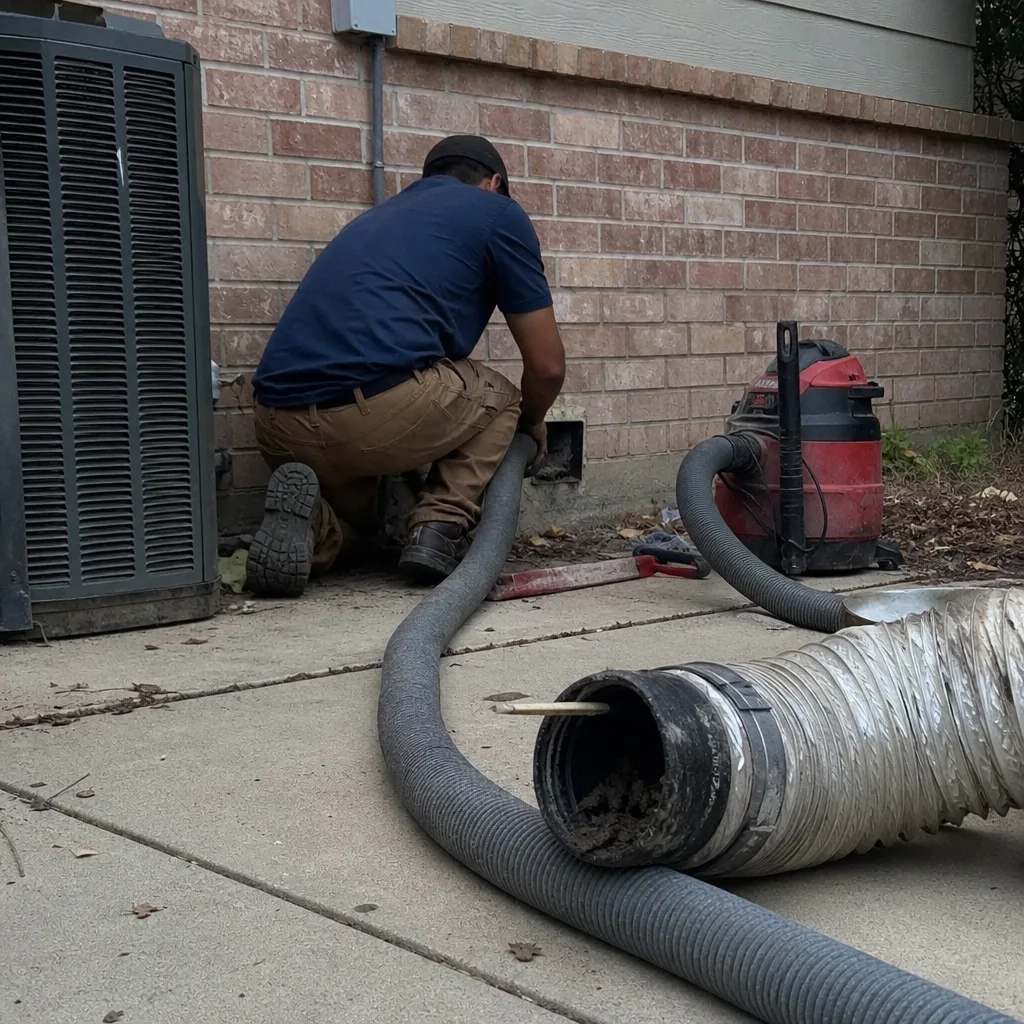 Before
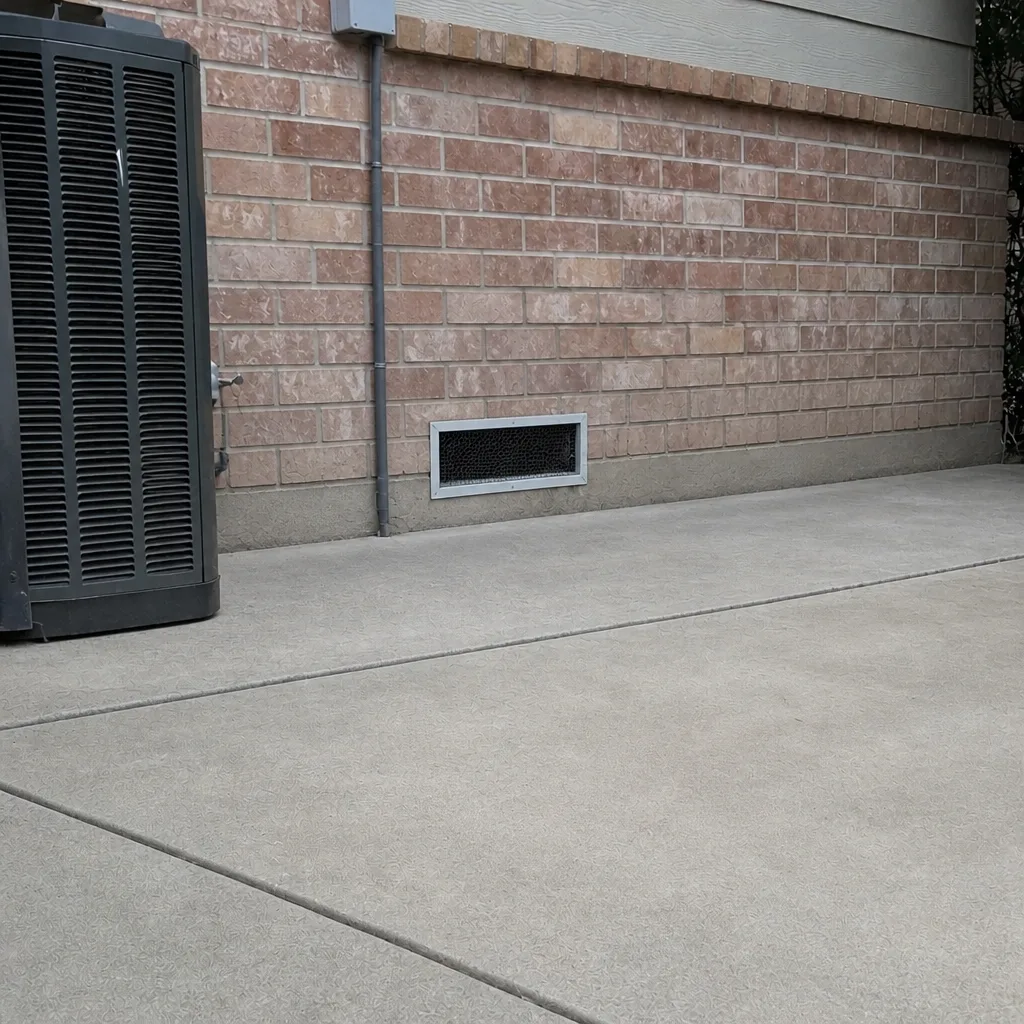 After
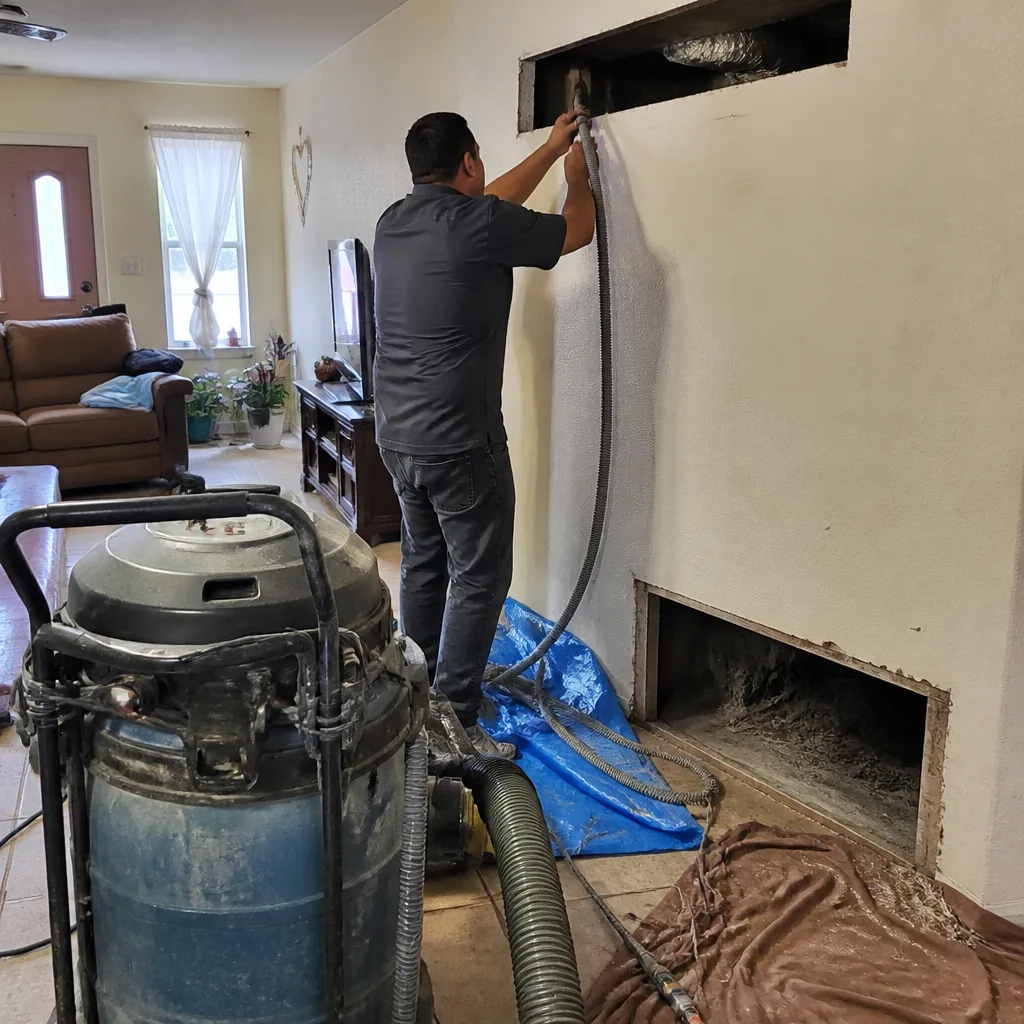 Before
 After
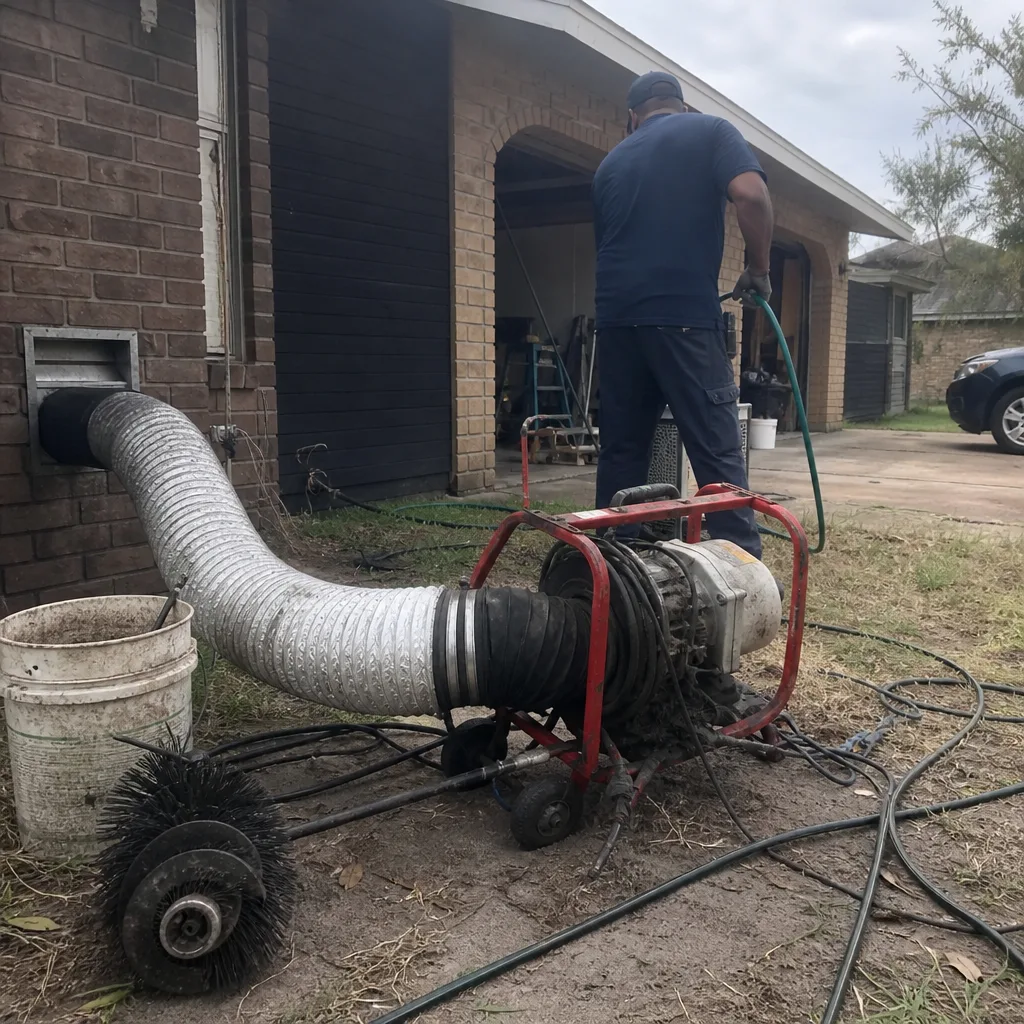 Before
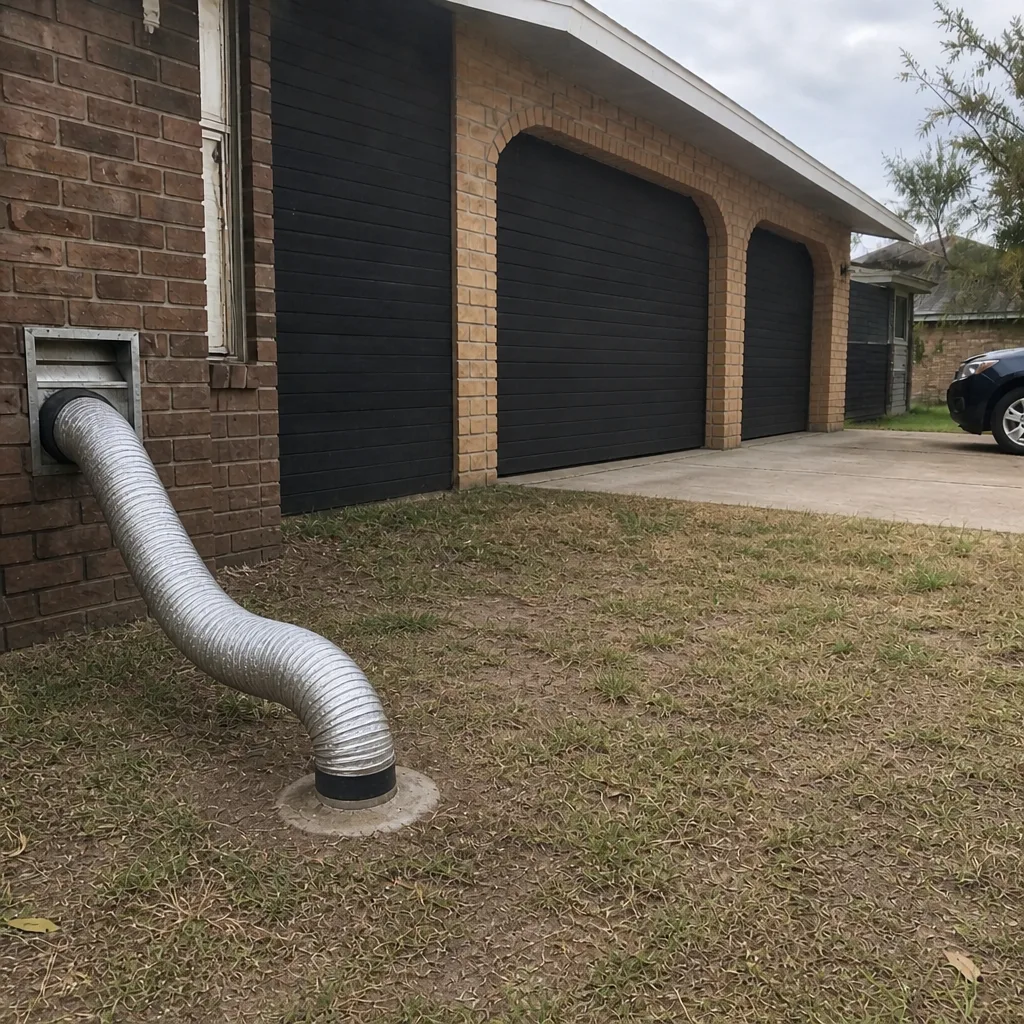 After
When to Call a Professional
Call a professional when the work involves a change to the duct system itself, when you need a documented permit-and-inspection record, or when a cleaning reveals damage you aren’t qualified to evaluate. Call before you start seeing symptoms that could be a duct problem: rooms that never heat or cool evenly, dust that settles back on surfaces shortly after cleaning, or a system that seems to run constantly. In an attic that reaches extreme temperatures, marginal ductwork fails slowly and quietly, so the earlier someone looks, the better chance a repair stays small. Duct Cleaning Edinburg offers free estimates in Edinburg – call (877) 566-6144. We answer 24/7. Fast dispatch from 7am to 7pm, Sunday through Friday.
Frequently Asked Questions
No. Air duct cleaning in Edinburg generally doesn’t require a permit, because cleaning is maintenance of an existing system rather than a modification. A permit is generally required when the work changes the duct system itself: replacing a section, rerouting a run, or otherwise altering configuration or material. If a cleaning uncovers damage and the contractor recommends repair, ask whether that repair needs a permit before you authorize it. Call (877) 566-6144 with the scope and we’ll tell you what we’d expect.
Usually yes, if the repair changes the duct system’s configuration or material. Replacing a collapsed flex run, resizing a trunk line, or rerouting ductwork all fall in that category. A minor sealing or reconnection job may not trigger a permit, but the answer depends on scope. The cleanest way to confirm is to call the City of Edinburg building department with the specific address and the work you’re describing. Call (877) 566-6144 first and we’ll help you understand the scope.
The City of Edinburg is the authority for properties inside the city limits. If your property is in unincorporated Hidalgo County, the county handles mechanical permits. Give them the property address and a plain description of the work, and they’ll tell you whether a permit is required. That call is free and it settles the question faster than any contractor opinion. Call (877) 566-6144 if you’d like us to walk through the scope with you before you make that call.
It can. A loss related to an unpermitted or improperly installed mechanical modification may complicate a claim, and insurers can and do ask whether required permits were obtained. Policies vary, so the direct answer is: check with your insurer if you’re concerned about existing work. The best protection is documentation, which is what a permit-and-inspection record gives you. Call (877) 566-6144 for an estimate on the scope you’re considering.
Cleaning removes accumulated debris from a duct system that’s structurally intact. Repair changes the system: replacing material, reconnecting failures, correcting sizing or routing problems. Cleaning is maintenance; repair is a modification. The permit question is tied to the difference, so knowing which one you’re being quoted for matters. Duct Cleaning Edinburg does both, and we’ll tell you plainly which category your job falls into. Call (877) 566-6144 for a free estimate.
No. Dryer vent cleaning doesn’t require a permit; it’s routine maintenance of a separate vent system. It’s worth scheduling alongside your HVAC duct work because lint buildup in dryer vents is a well-documented fire hazard, and it accumulates without any obvious sign. If the vent run needs repair or has a problem during cleaning, that’s when the permit question could come up, and we’ll flag it. Call (877) 566-6144 for a free estimate.
The Bottom Line
Air duct cleaning in Edinburg generally doesn’t require a permit, and duct repair that changes the system usually does. That’s the distinction that matters, and it’s the one most homeowners never get told. If a contractor is doing maintenance, you don’t need paperwork. If they’re modifying the duct system, you do. Ask the question, make the city call if you’re unsure, and ask for the permit copy when work is done. In a market where attic ductwork gets modified a lot, having that record at resale is worth far more than the time it takes to get it. For a free estimate on cleaning, repair, or dryer vent cleaning, call (877) 566-6144. We answer 24/7. Fast dispatch from 7am to 7pm, Sunday through Friday. Our technicians have up to 10 years of experience, and we work in Edinburg with the kind of equipment the job actually requires. Learn more at Duct Cleaning Edinburg.
Written by the team at Duct Cleaning Edinburg.