
Last updated November 15, 2026
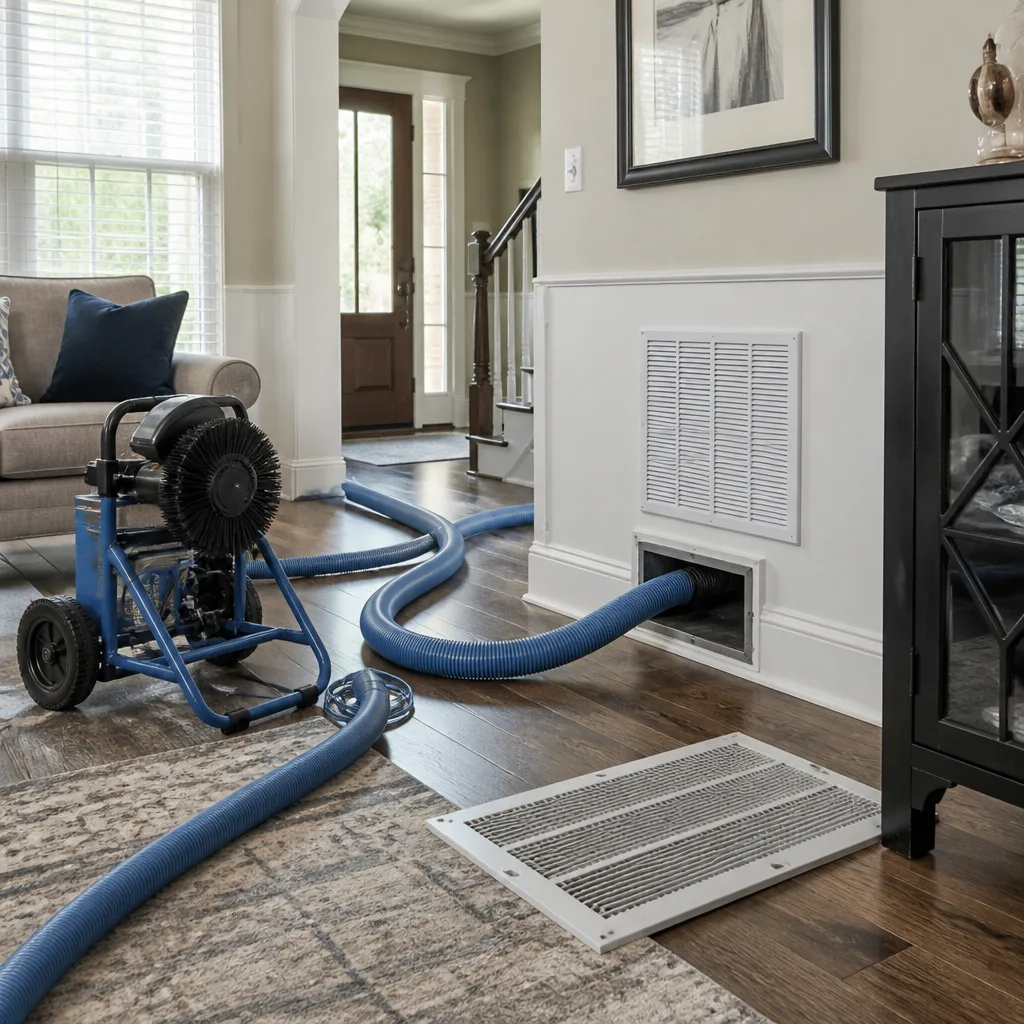 Whole-home duct cleaning
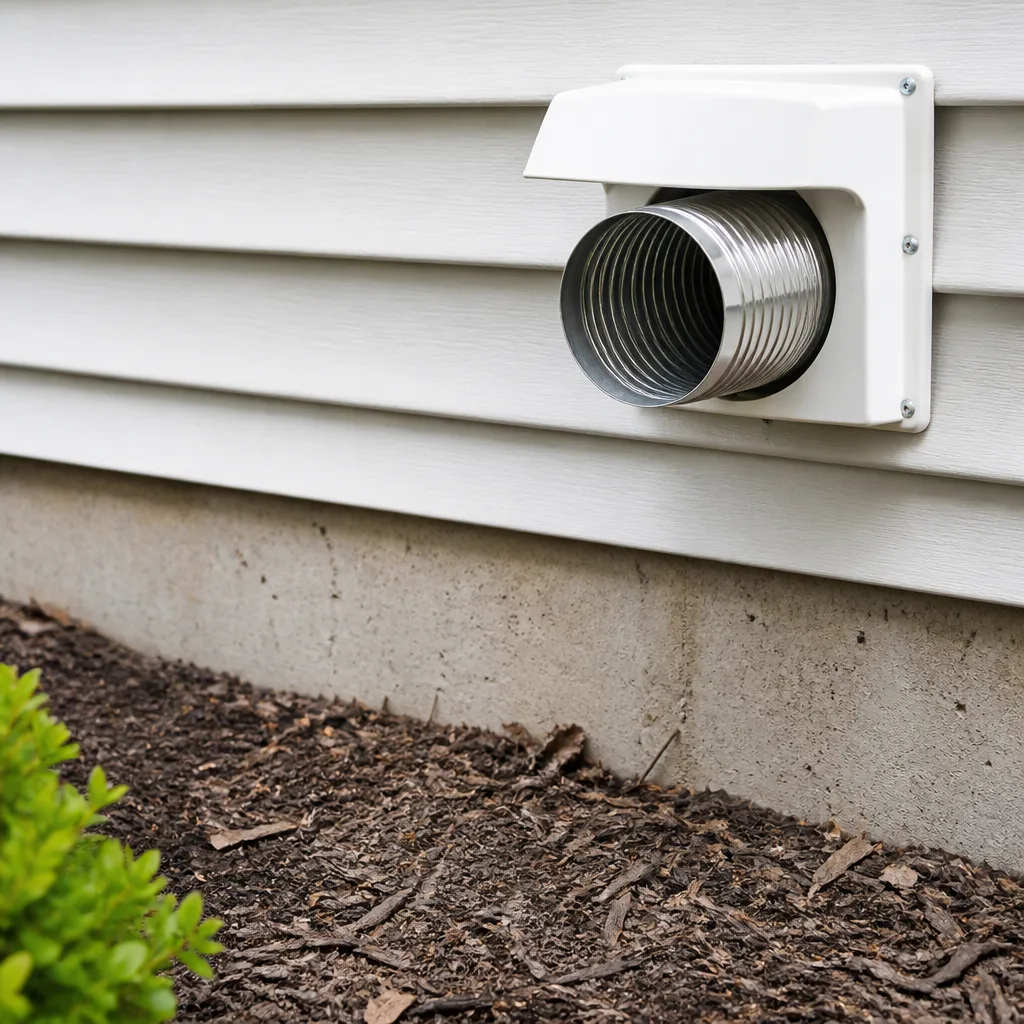 Dryer vent cleaning
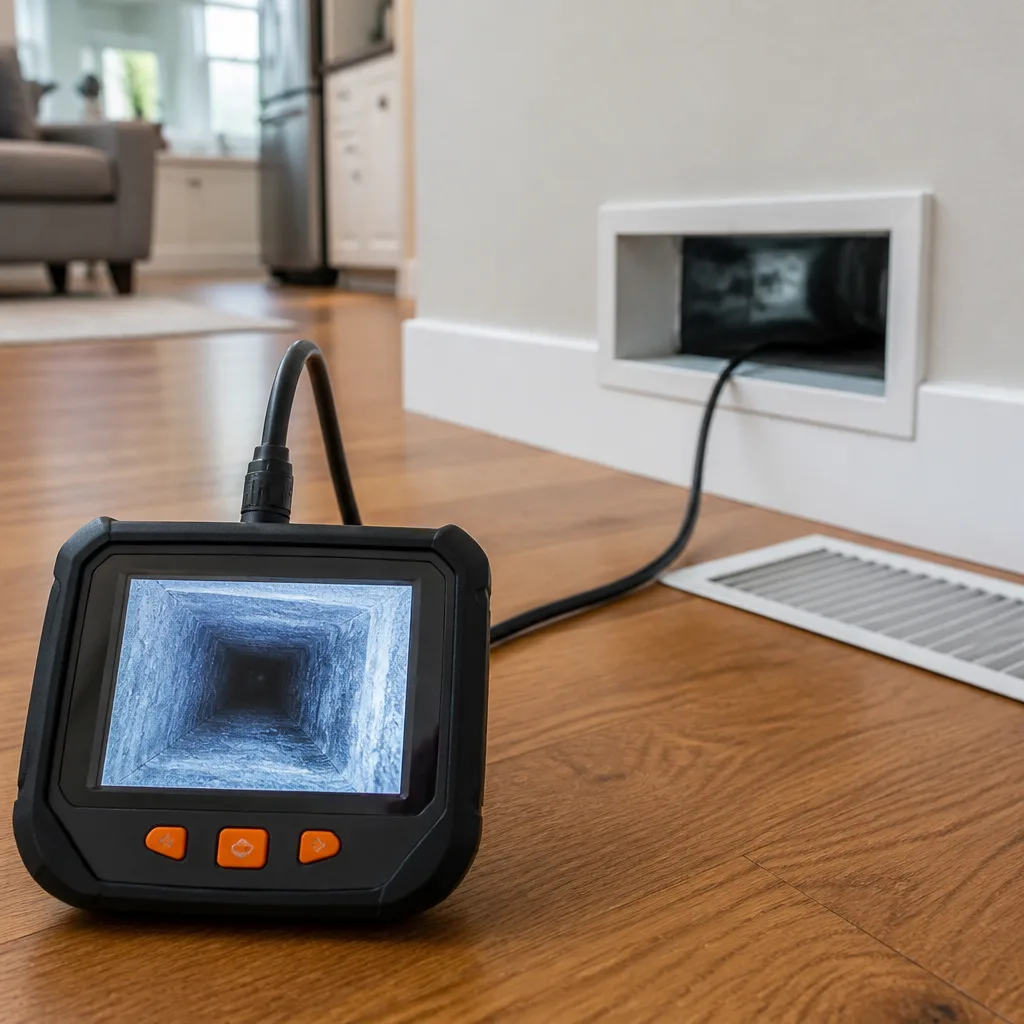 Camera inspection
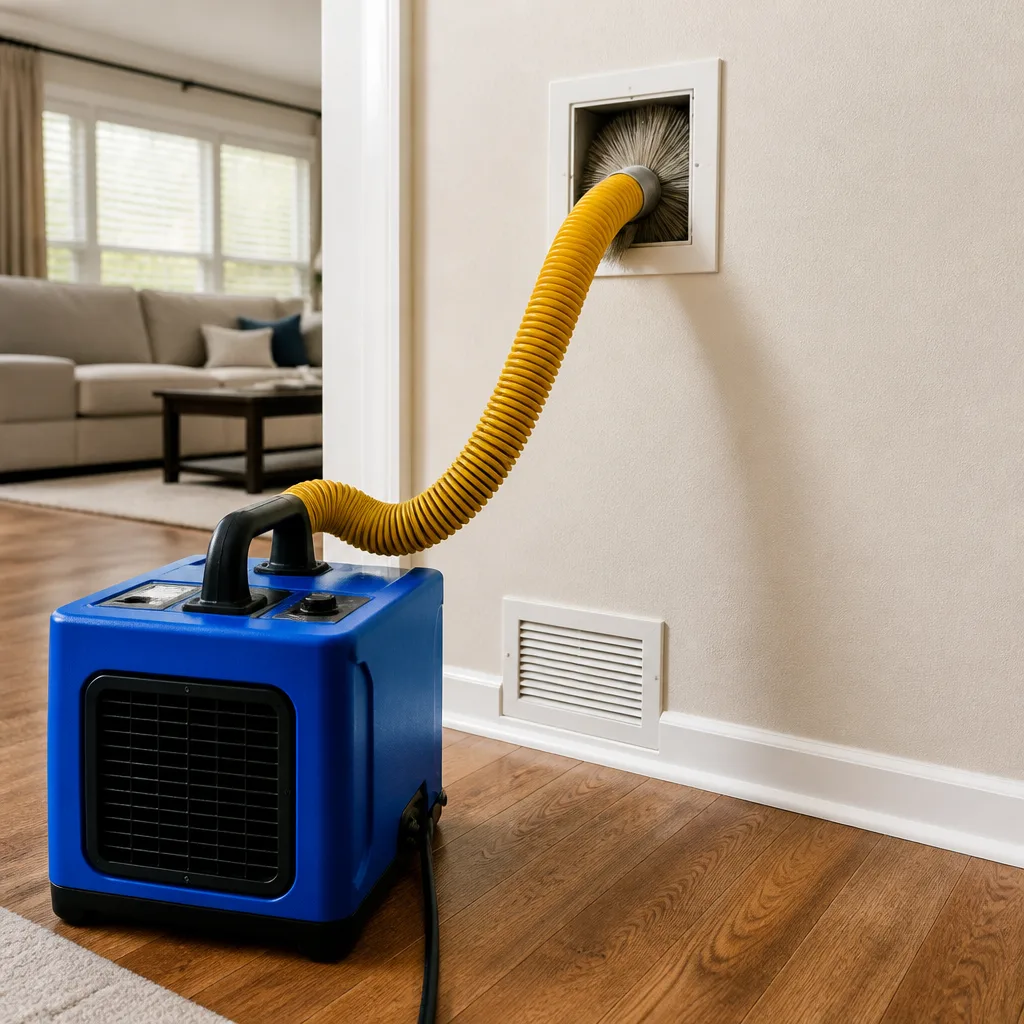 Sanitizing & deodorizing
Whole-system duct and dryer vent check with before-and-after photos - you see exactly what came out of your vents
That "$99 whole-house special" is a bait ad - the real number appears once they are in your hallway, or the "clean" is a shop-vac at the register. We photograph the inside of your ducts before and after instead.
Air Duct Cleaning Maintenance Schedule: What to Do and When
Most homeowners carry around a rule they never checked the source of: clean your ducts every three to five years. That number came from temperate climates where a furnace and an AC split the seasons. Edinburg doesn’t work that way. An air conditioner here can run ten months of the year, and a home that runs its system that long collects particulate in the ducts at roughly twice the pace of a comparable house in a northern climate. So the calendar most people trust is probably running long. What follows is a schedule built on the variables that actually drive how fast a duct system fouls: runtime hours, filter grade, pets, renovation dust, and the specific conditions of South Texas. You’ll get the intervals, the between-cleaning habits, and the warning signs worth acting on early.
Quick Answer
In Edinburg, most homes need professional duct cleaning every two to four years rather than the commonly cited three to five, because near year-round AC runtime roughly doubles particulate accumulation compared with temperate markets. Households with pets, recent renovation, or low-grade filters land at the shorter end. Between cleanings, change filters on a runtime-based schedule, not a calendar month, and inspect grilles and registers every season for dust streaks and debris.
Styles & brands we work with
- Whole-home duct cleaning
- Dryer vent cleaning
- Camera inspection
- Sanitizing & deodorizing
Table of Contents
- Why the Standard Three-to-Five-Year Rule Doesn’t Fit Edinburg
- How to Set Your Own Cleaning Interval
- Edinburg Factors That Speed Up Duct Fouling
- What to Do Between Professional Cleanings
- Warning Signs You Need Service Ahead of Schedule
- How to Document Your Duct Condition After a Cleaning
- What Requires Professional Equipment vs. What You Can Do Yourself
- How to Time a Cleaning Around Seasons and Renovations
Why the Standard Three-to-Five-Year Rule Doesn’t Fit Edinburg
The universal three-to-five-year recommendation assumes a heating and cooling system that runs maybe 1,500 to 2,000 hours a year. In Edinburg, a house can run its air handler closer to 3,500 to 4,000 hours because the cooling season stretches from early spring into late fall and short mild winters mean little downtime. Every one of those hours moves air, and moving air is the mechanism that deposits dust, lint, pet dander, and airborne soil onto duct walls and the evaporator coil’s upstream side.
Put simply, a duct system in Edinburg sees close to a full year of runtime for every six months a northern system logs. That’s the doubling effect in practical terms. It doesn’t mean every Edinburg home is overdue. It means the baseline expectation should be reset downward, and then adjusted up or down by the household-specific drivers below.
The variables that actually move the date:
- Runtime hours per year: The dominant factor. Homes with a thermostat set low through summer run more hours and foul faster.
- Filter grade (MERV): A higher-MERV filter captures more upstream, leaving less to settle in the ducts. A cheap fiberglass filter mostly passes through.
- Pet count and coat type: One long-haired dog or cat sheds enough to shift a cleaning interval by a year or more.
- Recent renovation: Drywall dust and sawdust migrate into return ducts and stick. Renovation should trigger a cleaning, not postpone one.
- Occupant sensitivity: Allergy or asthma in the household makes air quality the deciding variable, not the calendar.
How to Set Your Own Cleaning Interval
Use the following numbered steps to build a starting interval for your home, then adjust as you observe. This is the framework we recommend to homeowners who call Duct Cleaning Edinburg looking for a straight answer rather than a sales schedule.
- Start with a two-to-four-year base for Edinburg. Assume the shorter end unless your home has a reason to be the exception.
- Add a factor for pets. A household with one shedding pet should plan on the two-to-three-year side. Two or more, or a heavy-shedding breed, and the two-year mark is realistic.
- Check your filter MERV rating. A MERV 13 or better filter is doing meaningful upstream work. If you’re running a basic fiberglass filter, the ducts are absorbing what the filter lets pass.
- Flag any renovation. Sheetrock dust, sawdust, and construction debris get pulled into returns. Schedule a cleaning once the work is complete and before you run the system heavily again.
- Weight occupant health. Allergy and asthma in the home justifies a shorter cycle and a look with an interior camera, not just a visual grille check.
- Test the interior with a camera. A professional interior camera inspection shows what a flashlight at the register never will: dust matting on the liner, debris at elbows, and buildup at the coil.
Once you know your base interval, write it down next to the filter size and the date of the last cleaning. That written baseline is what makes the next decision a comparison rather than a guess.
Edinburg Factors That Speed Up Duct Fouling
Three local conditions matter more here than they do in most of the country, and each one shortens the interval in a different way. Understanding them explains why a house two streets over might need a different schedule than yours.
Caliche dust and airborne soil
The ground in this part of Hidalgo County is heavy with caliche, and when the wind kicks up over bare lots or during land clearing, that fine alkaline dust goes airborne. It finds its way into return air and settles in ductwork as a pale, gritty film. Homes near active development or open acreage accumulate it faster. If you see a chalky residue on return grilles, that’s the signature.
High AC runtime seasons
From April through September the system rarely gets a break. Long runtime means more air cycled, more particulate deposited, and less time for dust to settle quietly in one place. A house that runs its AC hard all summer is effectively on an accelerated schedule compared to a house kept warmer or occupied less.
Attic heat and flex duct liner
Attic temperatures in an Edinburg summer are severe, and most homes route flex duct through that space. Sustained heat stresses the inner liner of flex duct over time, and a liner that starts to fail sheds material into the airstream. That’s one reason a cleaning inspection is also a liner inspection: buildup that looks like ordinary dust sometimes isn’t. If the liner is compromised, cleaning alone doesn’t solve it, which is why we treat air duct cleaning and duct repair as connected work rather than separate trades.
What to Do Between Professional Cleanings
What you do between professional visits determines whether you land at the short end of your interval or stretch it. None of this requires special tools, and none of it replaces a proper cleaning. It simply slows the clock.
- Change filters on runtime, not the calendar. A filter that’s rated for three months in a mild climate is often spent in six to eight weeks here. Check monthly during the heavy cooling season and replace when the face is visibly gray or matted.
- Inspect grilles and registers each season. Look for dust streaks fanning out from the edges, and for any register that’s noticeably dustier than the rest. One dusty register often points to a leak or a disconnected run nearby.
- Keep returns clear. Furniture pushed against a return grille chokes airflow and changes where dust deposits. Leave a clear gap.
- Watch after renovation. Run the system with a fresh filter, then change it again sooner than usual while drywall dust is still settling.
- Note anything odd. A whistling register, a room that never cools, or a musty smell points to a duct problem that cleaning won’t fix on its own. That’s the moment to look at duct repair, not just another cleaning.
One task that belongs on this list and often isn’t: dryer vent. The lint that builds up in a dryer exhaust is a genuine fire hazard, and it accumulates on its own timeline. Treat dryer vent cleaning as part of the same household maintenance rhythm, roughly once a year for a typical family.
Warning Signs You Need Service Ahead of Schedule
The calendar is a guide, not a trigger. These are the conditions that should override your interval and prompt a call regardless of when you last had the system cleaned.
- Visible dust plumes from a register when the system starts. Air carrying visible particulate means the supply side is loaded.
- Dust returning within days of cleaning a room. If surfaces re-dust almost immediately after you wipe them, the source is often the duct system, not the room.
- A persistent musty or stale smell when the AC kicks on. Odor that appears with airflow points to buildup or moisture somewhere in the ducts.
- Allergy symptoms that worsen indoors. When symptoms track with time spent at home, the air handling system deserves a look.
- After a renovation or a move-in. Both introduce debris and both justify an inspection ahead of schedule.
- A new home purchase. You have no history of the previous owner’s maintenance. An inspection establishes a baseline you can trust.
None of these require waiting for your interval to come due. When in doubt, an inspection with an interior camera settles the question in an hour.
How to Document Your Duct Condition After a Cleaning
Most homeowners have no record of what their ducts looked like after the last cleaning, so the next technician starts from zero. Fixing that is simple, and it changes every future decision from a guess into a comparison.
Ask for before-and-after photos of your own system. Not stock images, not a generic video: your ducts, your registers, your return plenum. A specialist working with professional-grade equipment can produce them easily, and a company that won’t is telling you something. Keep those photos with your HVAC records, along with the filter size and MERV rating you’re running and the date of the cleaning.
That documentation does three things. It gives the next inspection a real baseline to compare against. It shows you whether buildup is progressing faster than your interval predicts. And it protects you from paying twice for work that was never done. If you want an honest starting point, schedule duct service in Edinburg and ask for the interior images before and after.
Keep it simple: a folder, physical or digital, with the date, the photos, and the filter spec. That’s the whole system, and it’s more documentation than most homes ever have.
What Requires Professional Equipment vs. What You Can Do Yourself
Some maintenance is genuinely yours to handle. Some of it requires hardware that consumer tools can’t substitute for. Knowing the line keeps you from wasting effort and from doing damage.
What you can legitimately self-manage:
- Changing filters on a runtime-based schedule.
- Visual inspection of grilles and registers for streaks and dust.
- Keeping returns unobstructed and furniture clear of grilles.
- Watching for warning signs and noting dates in your records.
What requires professional equipment:
- Interior camera inspection. A flashlight at the register shows one small section. A camera travels the run and reveals liner condition, debris at elbows, and buildup at the coil.
- Negative pressure verification and true source removal. Proper cleaning puts the system under controlled negative pressure so dislodged debris is captured, not redistributed into the living space. That’s what our Abatement Technologies containment and air purification setup is for.
- Rotary brush and HEPA extraction. A shop vac can’t do this job. Rotobrush rotary brush systems agitate the full interior of the duct, and Nikro HEPA-rated vacuum equipment captures fine particulates rather than recirculating them into the room.
- Air-quality component checks. Familiarity with Honeywell and Aprilaire components matters when the system includes filtration or humidification gear, because cleaning around them is different from cleaning bare ductwork.
This is the difference between a generalist with a vacuum and a specialist with the right hardware. If you’re comparing quotes, ask what equipment will actually enter your home.
How to Time a Cleaning Around Seasons and Renovations
When you schedule within your interval matters less than whether you schedule, but a little planning gets more out of the job. Two rules of thumb carry most of the weight.
- Clean before the heavy cooling season, not mid-summer. Getting the ducts cleaned in late winter or early spring means the system starts its hardest-running months clean, and the fresh filter load lasts longer. Cleaning in the middle of a July heat wave means the system immediately refouls during peak runtime.
- Always follow a renovation with a cleaning. Drywall dust and sawdust migrate into returns during the work and settle after. Clean once the dust has settled and before the system runs hard again. Change the filter right after.
If you bought a home and don’t know its history, clean it once as a baseline and document the condition. Then you’re on a real schedule instead of a guess. Homes in Edinburg often benefit from an earlier spring cleaning than owners expect, because the cooling season starts before most people think to book it.
Common Mistakes to Avoid
- Trusting the national three-to-five-year rule as-is. It was written for temperate climates. In Edinburg’s near year-round runtime it likely runs a year or more long, and a home with pets should cut it further.
- Changing filters by the calendar instead of by runtime. A filter that’s rated for three months in a mild climate can be spent in two here during peak season. Check monthly in summer and replace on condition, not on the box’s promise.
- Skipping the cleaning after a renovation. Drywall dust settles into returns and sticks. Cleaning it once the work is done is not optional if you want the system to run clean through the next season.
- Accepting a per-vent coupon price. A low per-vent quote tends to grow once the technician is on site. Ask for one flat price per system, agreed before work starts.
- Not asking for before-and-after photos. Without images of your own ducts, you have no way to confirm the work happened and no baseline for the next inspection. Insist on them.
- Assuming every quote means the same work. A cheap quote often means a shop vac and a quick pass, not rotary brush agitation, HEPA extraction, and containment. Ask what equipment will enter your home before you compare prices.
- Ignoring the dryer vent. It’s part of the same maintenance rhythm and carries a real fire risk. Most duct-only services leave it out, which leaves a genuine hazard unaddressed.
See the difference
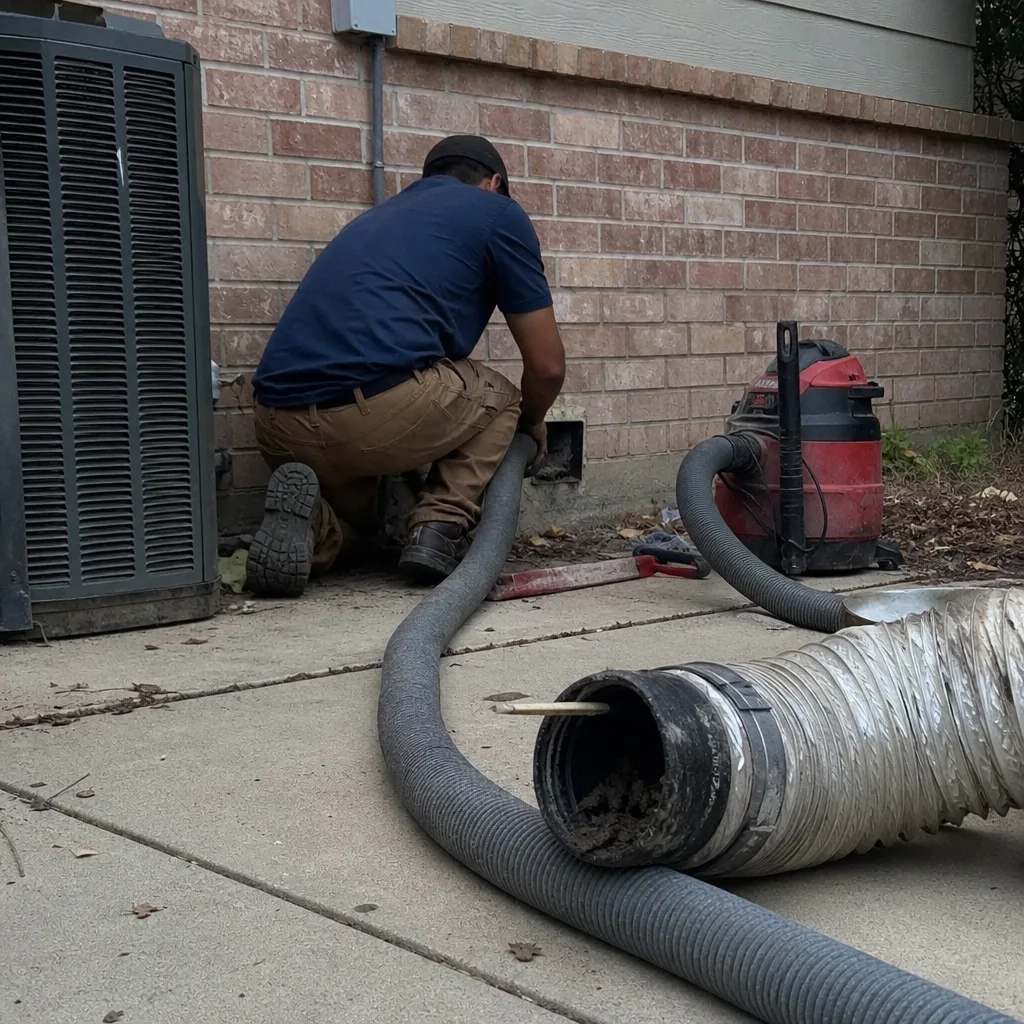 Before
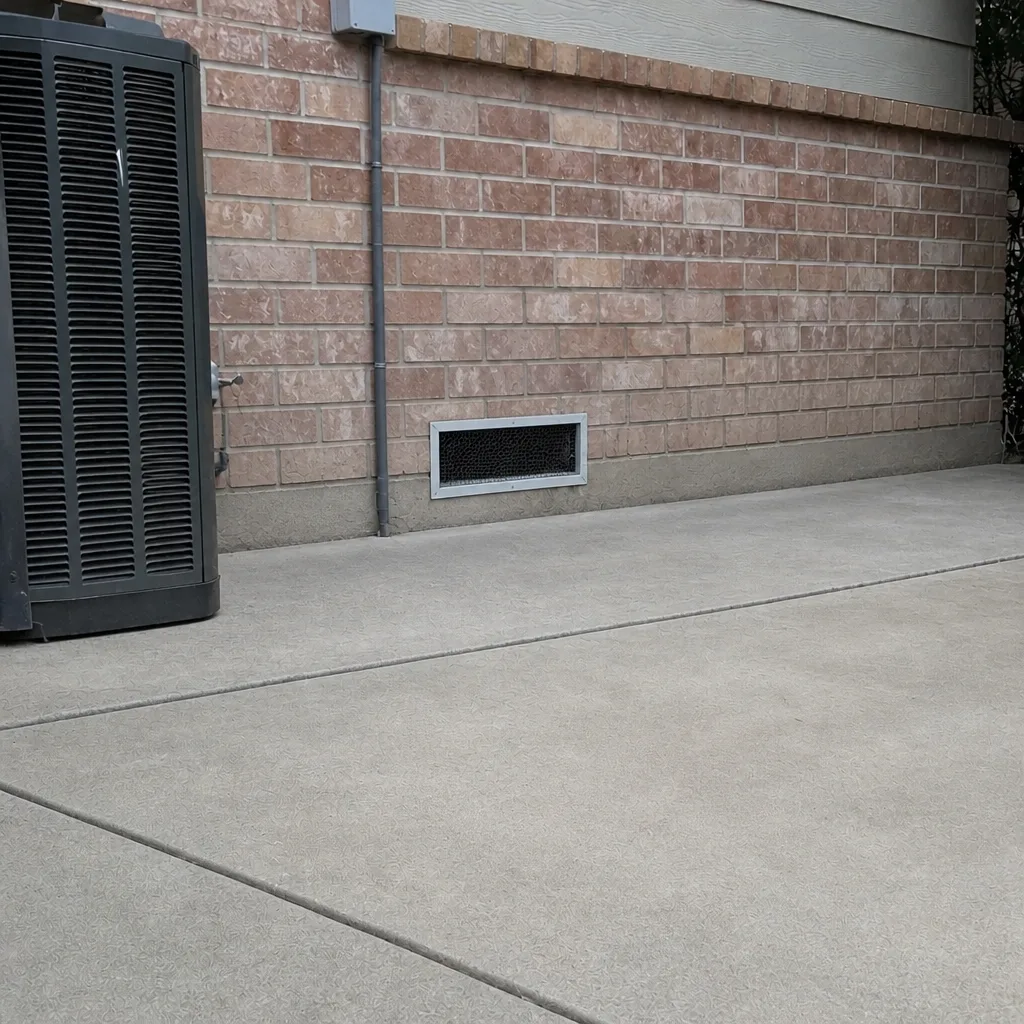 After
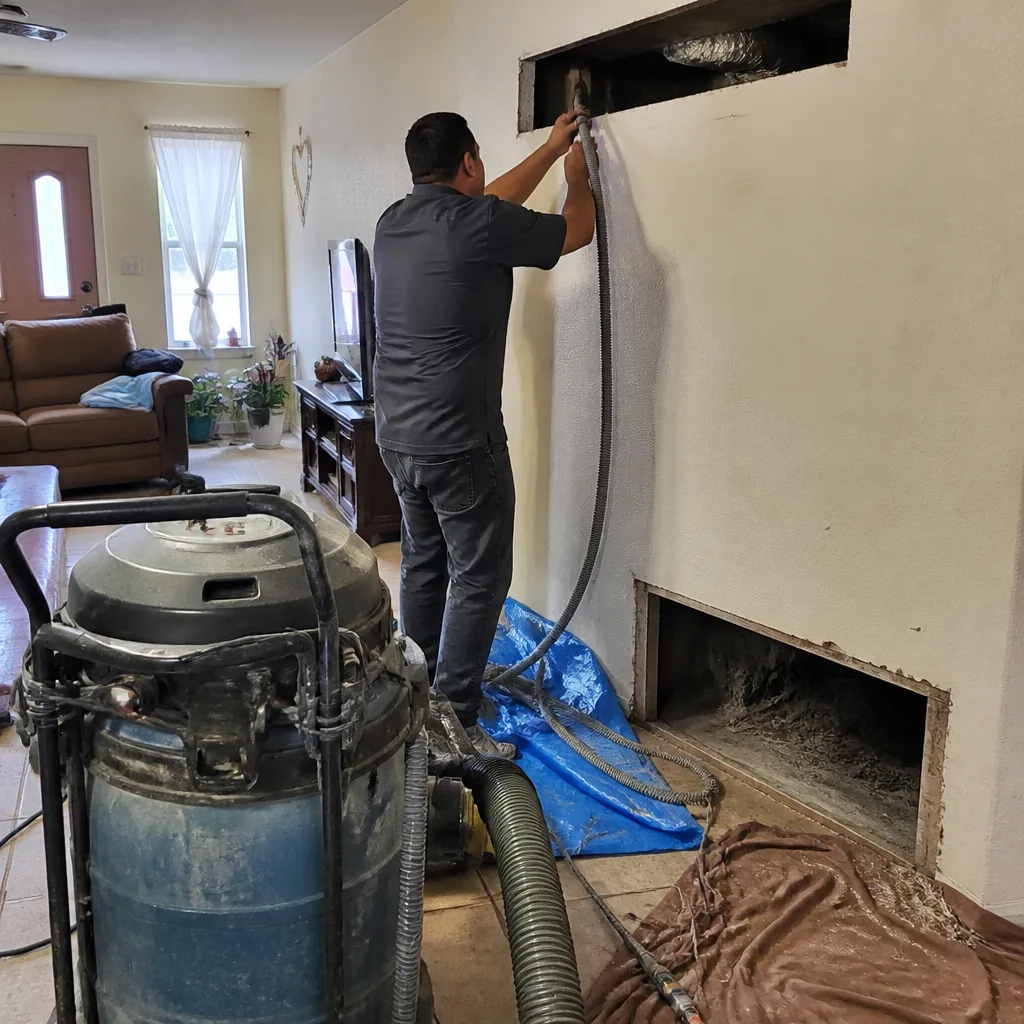 Before
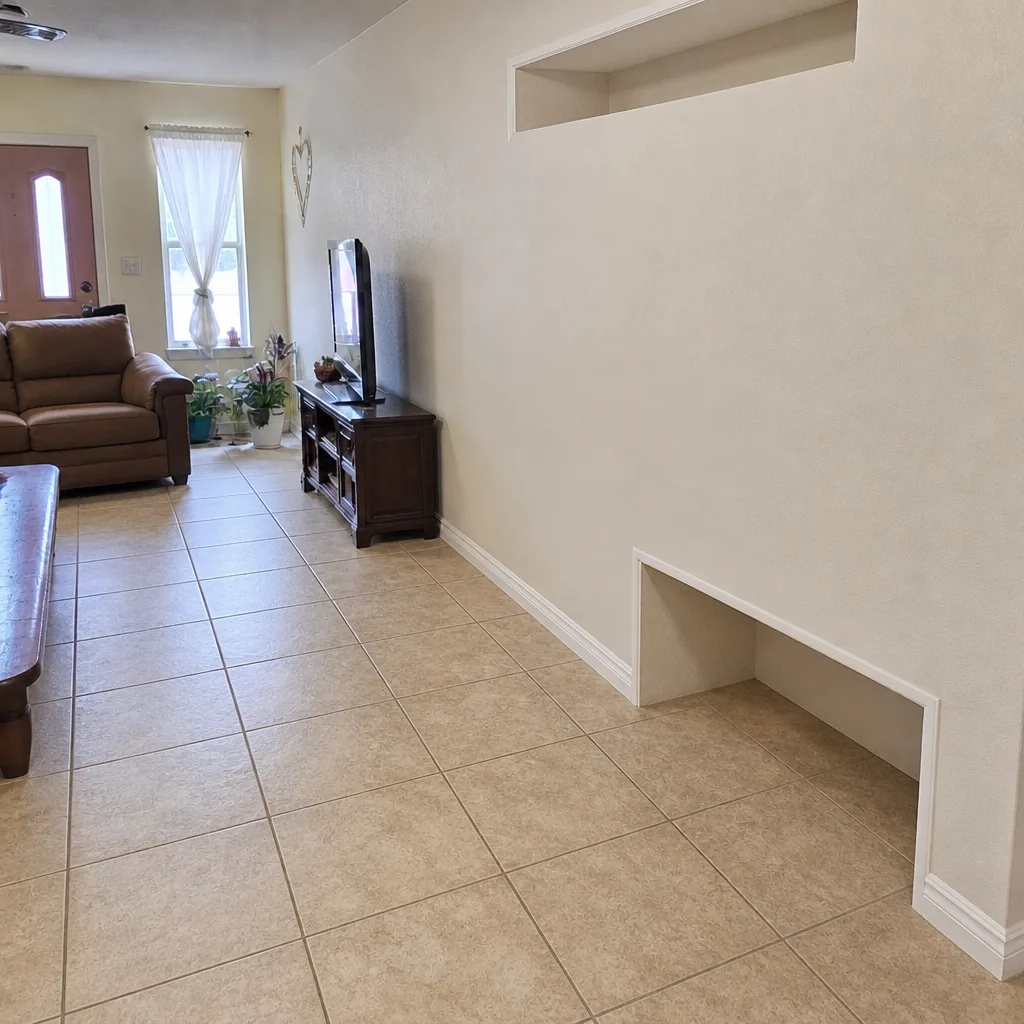 After
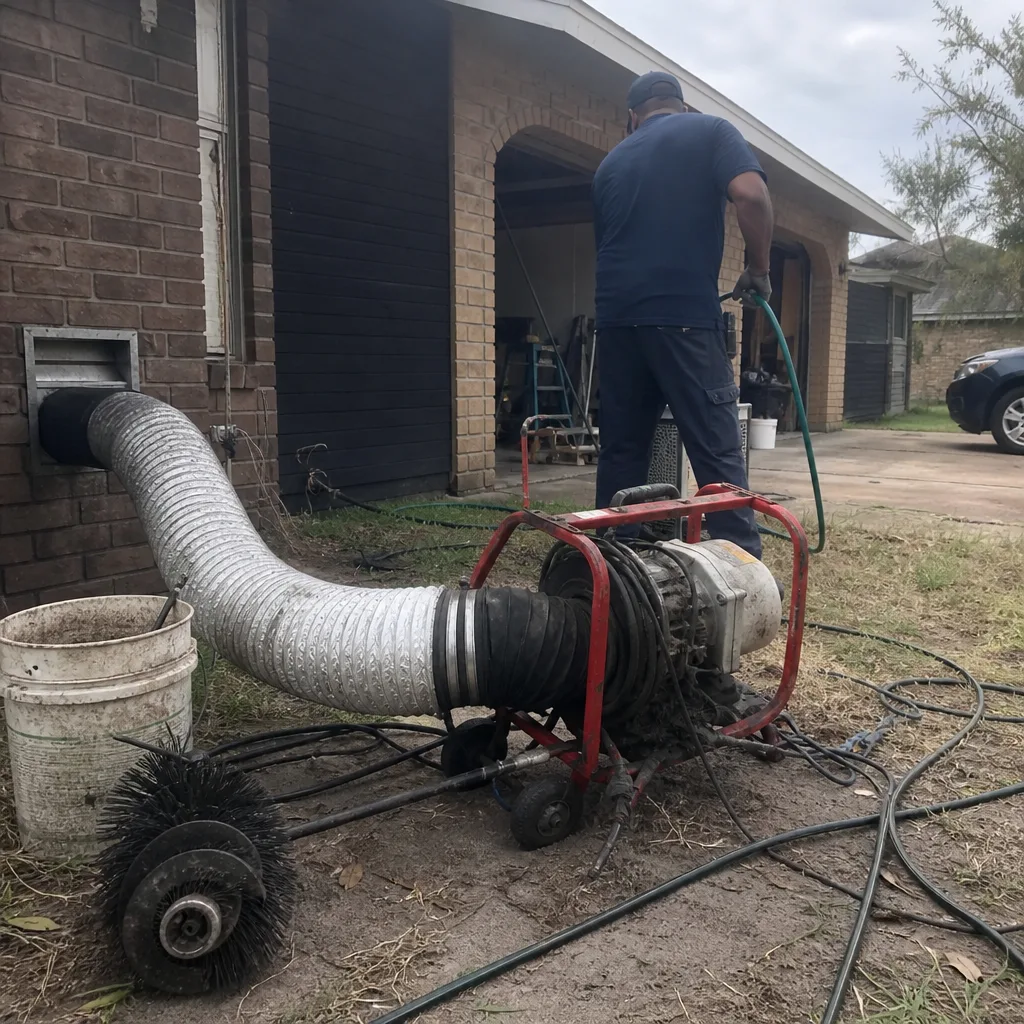 Before
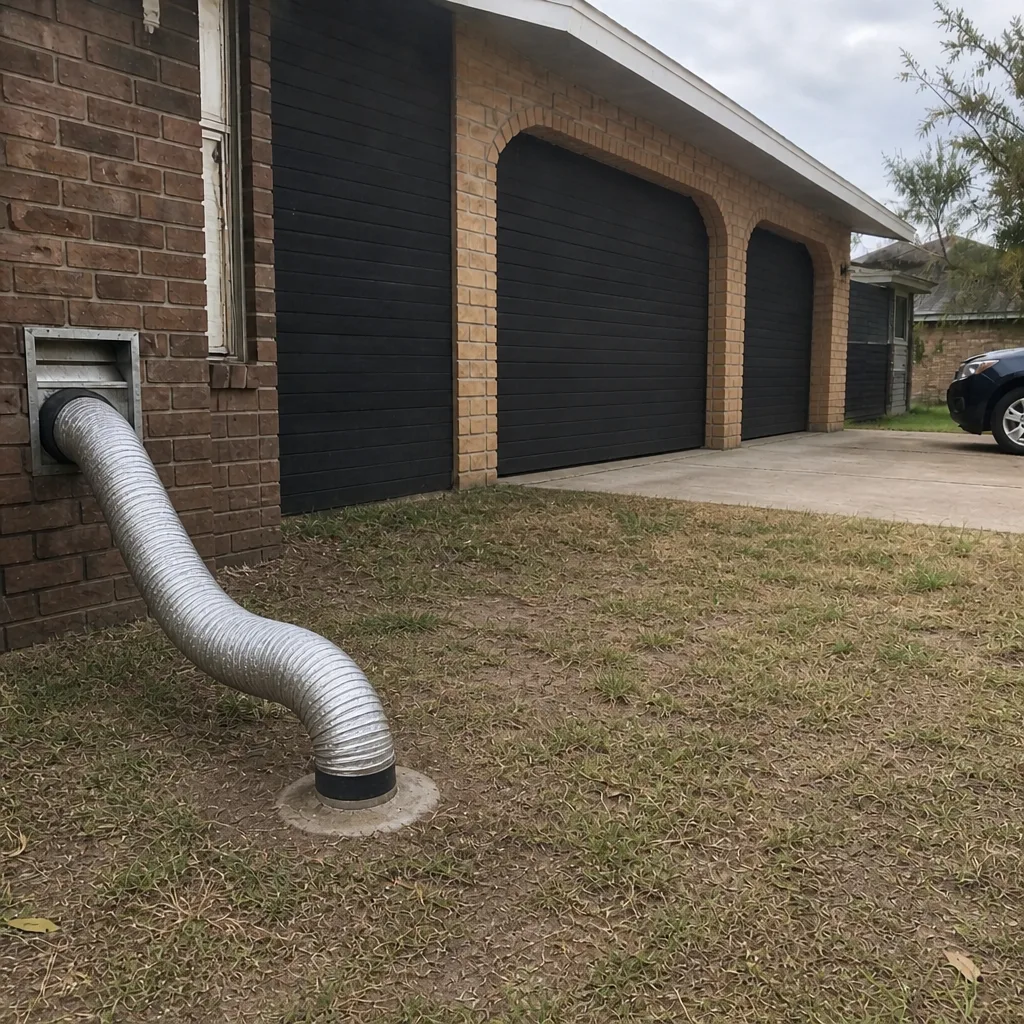 After
When to Call a Professional
Call when the warning signs show up: visible dust from a register, a musty smell that appears with airflow, a recent renovation, or a home you just bought with no maintenance history. Call when your interval comes due, and call when you want an inspection with an interior camera to settle whether the ducts actually need work. Duct Cleaning Edinburg offers free estimates in Edinburg: call (877) 566-6144. We answer 24/7. Fast dispatch from 7am to 7pm, Sunday through Friday. The estimate is free, the price is set per job by the written estimate, and we use Rotobrush and Nikro systems rather than improvised tools. If your ducts need repair on top of cleaning, we handle that too.
Frequently Asked Questions
Most Edinburg homes need professional duct cleaning every two to four years, shorter than the widely cited three-to-five-year rule, because near year-round AC runtime roughly doubles particulate accumulation. Households with pets, recent renovation, or low-grade filters should plan on the shorter end. Call (877) 566-6144 for an exact quote: estimates are free.
Cheap quotes usually mean light-duty equipment and a quick surface pass rather than true source removal. Professional work involves rotary brush agitation, HEPA extraction, and negative pressure containment so debris is captured, not recirculated into your home. Ask what equipment will be used before comparing prices. Call (877) 566-6144 for an exact quote: estimates are free.
Ask for before-and-after photos of your own ducts, not stock images. Images of your system at your address are the only real confirmation, and they give the next inspection a baseline. Call (877) 566-6144 for an exact quote: estimates are free.
No. A shop vac can’t agitate the full interior of a duct or capture fine particulate, and it risks pushing dislodged dust back into the living space. Proper cleaning requires rotary brush and HEPA-rated vacuum equipment under controlled negative pressure. Call (877) 566-6144 for an exact quote: estimates are free.
Yes. Fine alkaline caliche dust goes airborne during wind and land clearing, and it settles in return air as a pale gritty film on grilles and duct walls. Homes near active development or open acreage build it up faster and should lean toward the shorter end of the interval. Call (877) 566-6144 for an exact quote: estimates are free.
It should, and most duct-only services skip it. Lint buildup in a dryer exhaust is a genuine fire hazard and accumulates on its own timeline, roughly annually for a typical family. Treat it as part of the same maintenance rhythm. Call (877) 566-6144 for an exact quote: estimates are free.
The Bottom Line
The three-to-five-year rule doesn’t fit Edinburg, where an air conditioner runs close to ten months a year and deposits particulate at roughly twice the pace of a temperate climate. Build your interval from the variables that drive fouling: runtime hours, filter MERV, pet load, and renovation dust, with caliche intrusion and attic heat as local accelerants. Between cleanings, change filters on runtime, inspect grilles each season, and watch for the warning signs that justify an early call. Document your duct condition with before-and-after photos so the next decision is a comparison, not a guess. When your interval is due or the signs appear, call (877) 566-6144 for a free estimate. We answer 24/7. Fast dispatch from 7am to 7pm, Sunday through Friday.
Written by the team at Duct Cleaning Edinburg.