
Last updated November 15, 2026
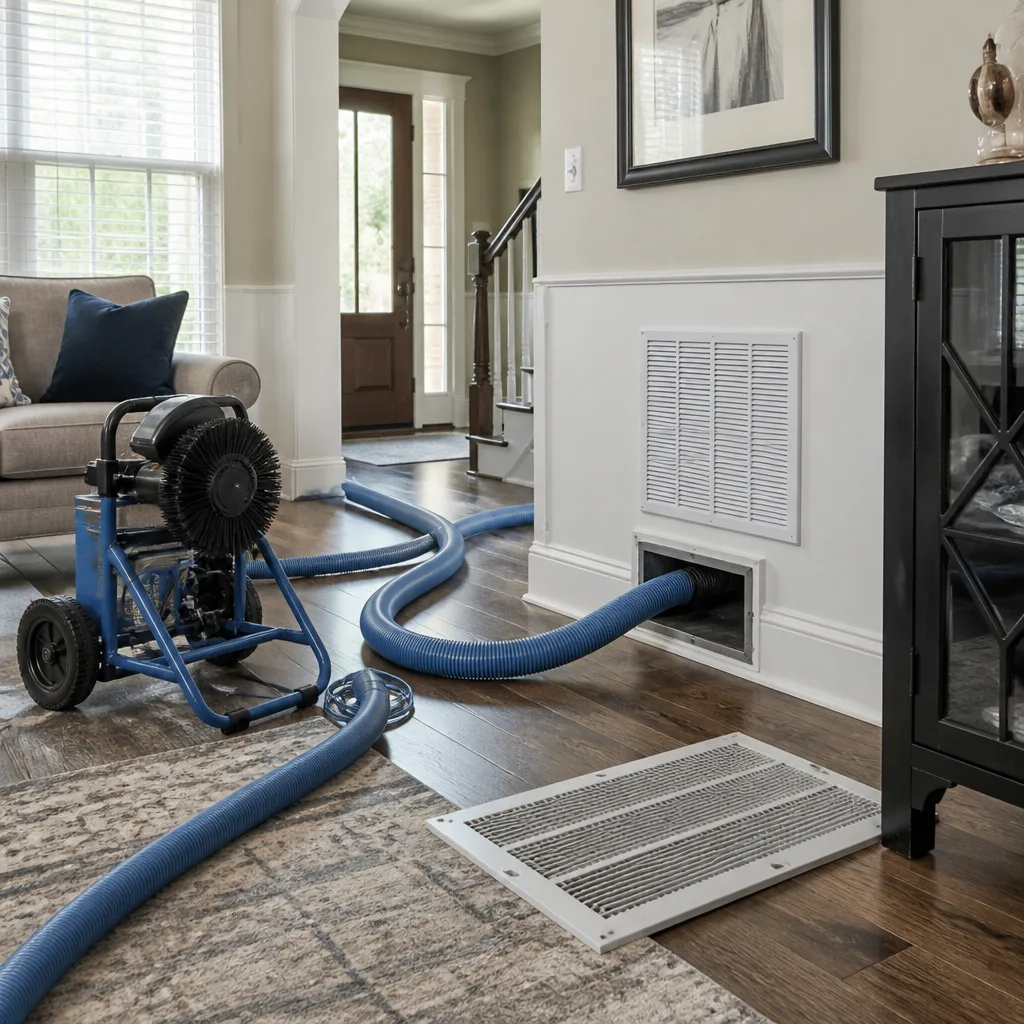 Whole-home duct cleaning
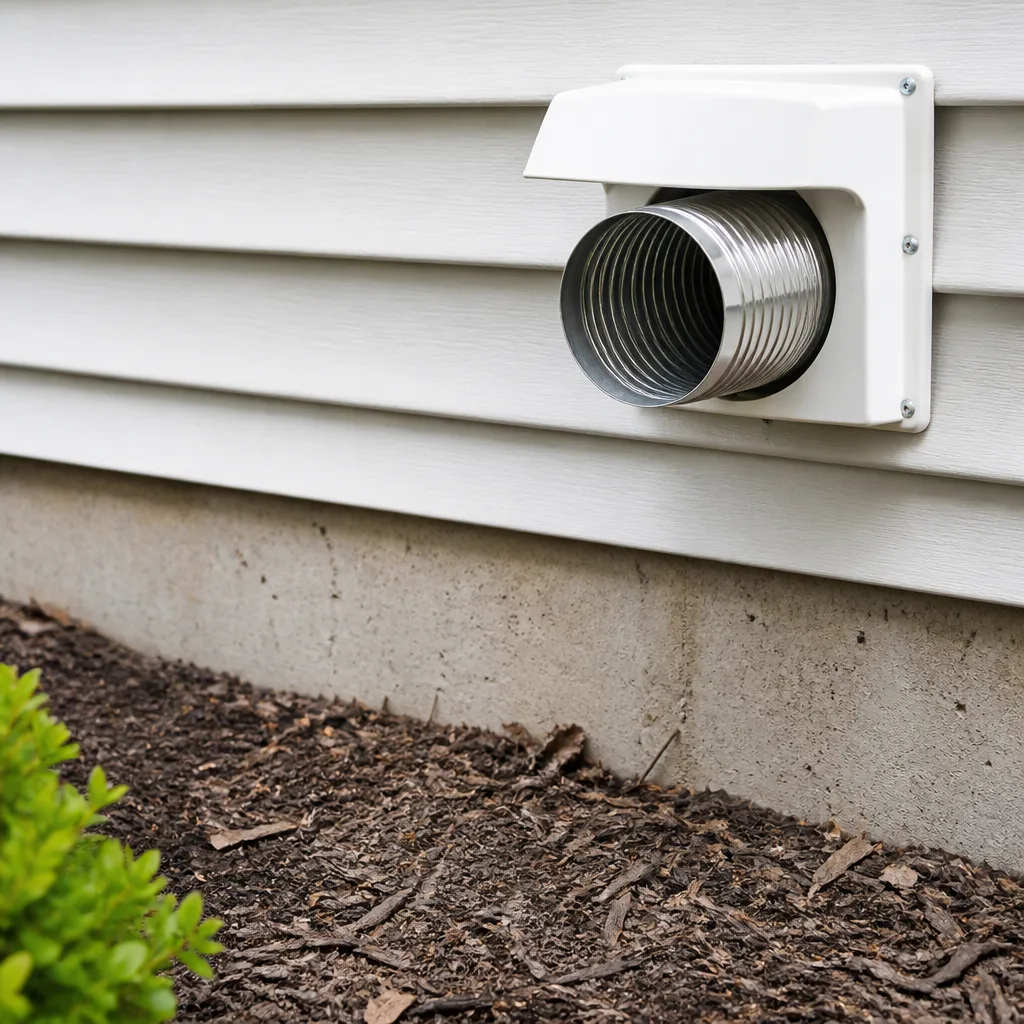 Dryer vent cleaning
 Camera inspection
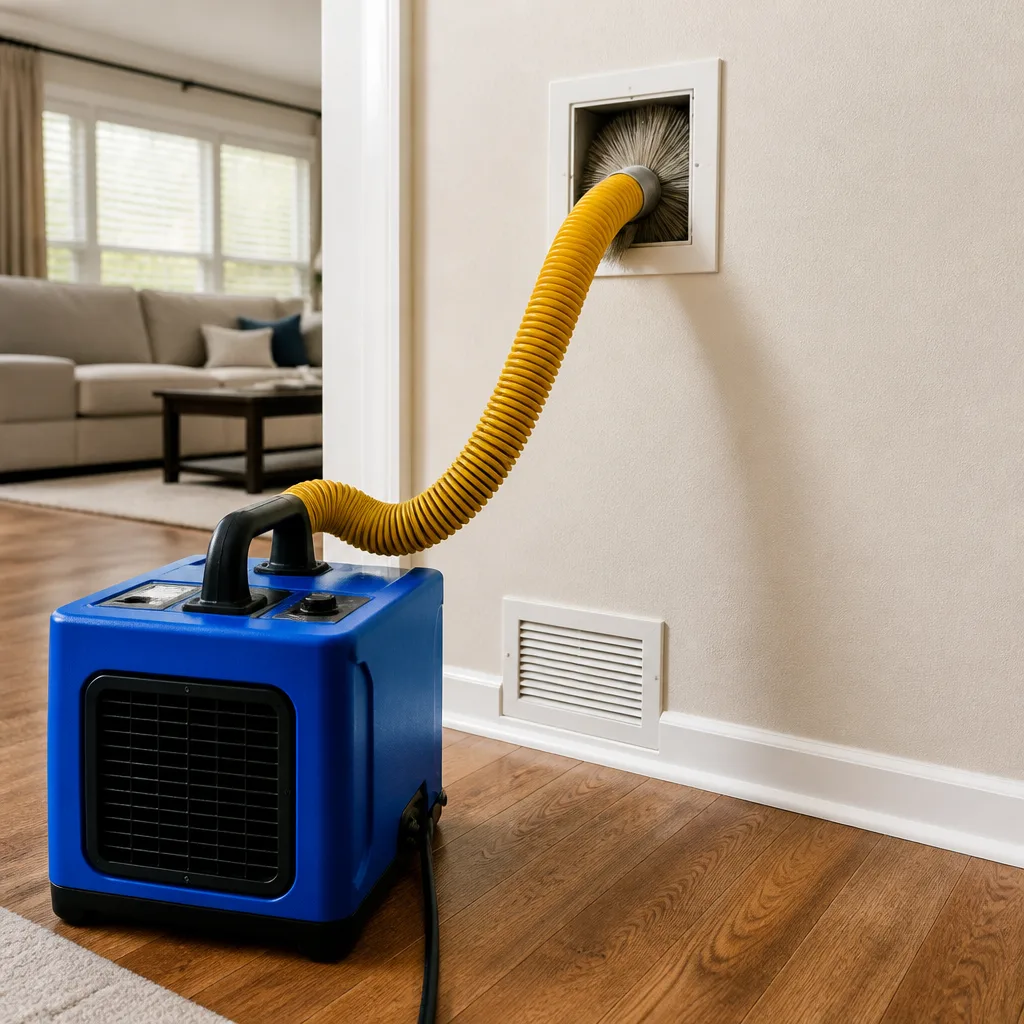 Sanitizing & deodorizing
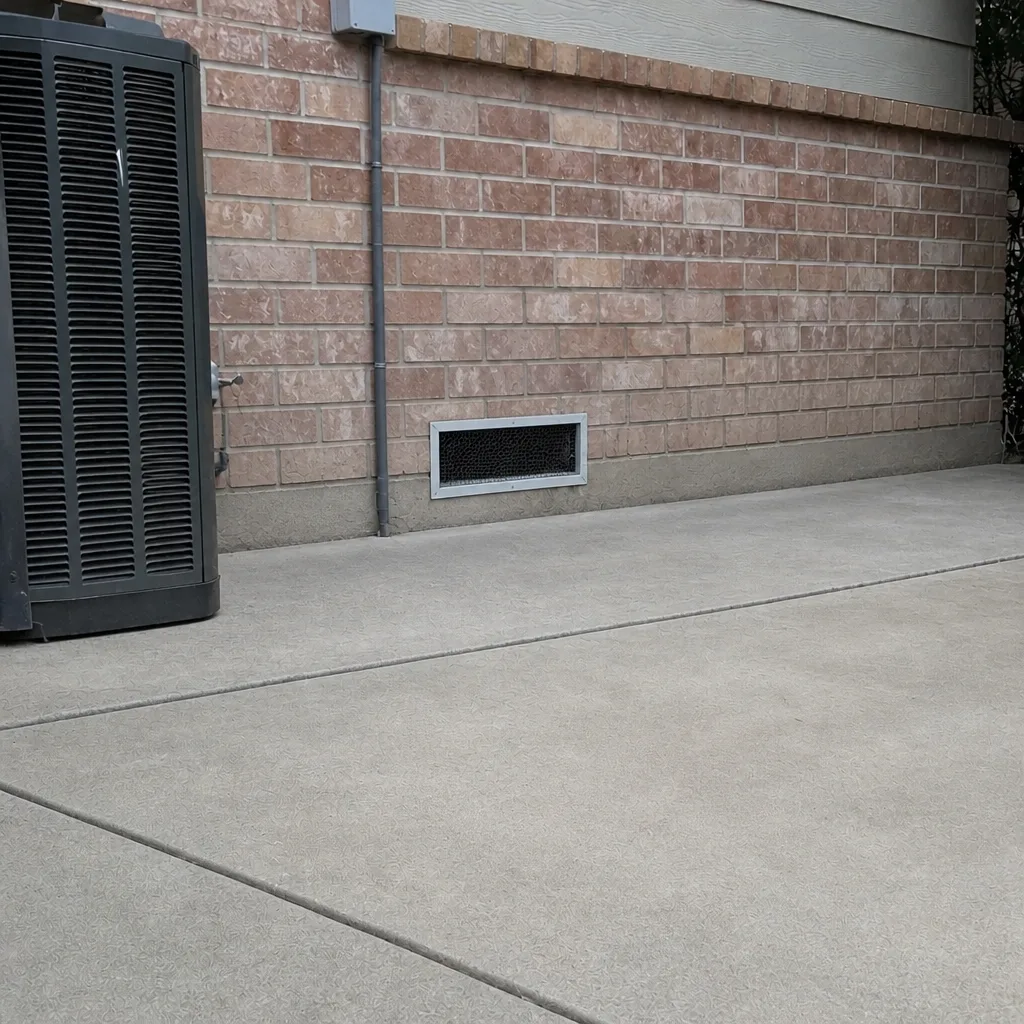
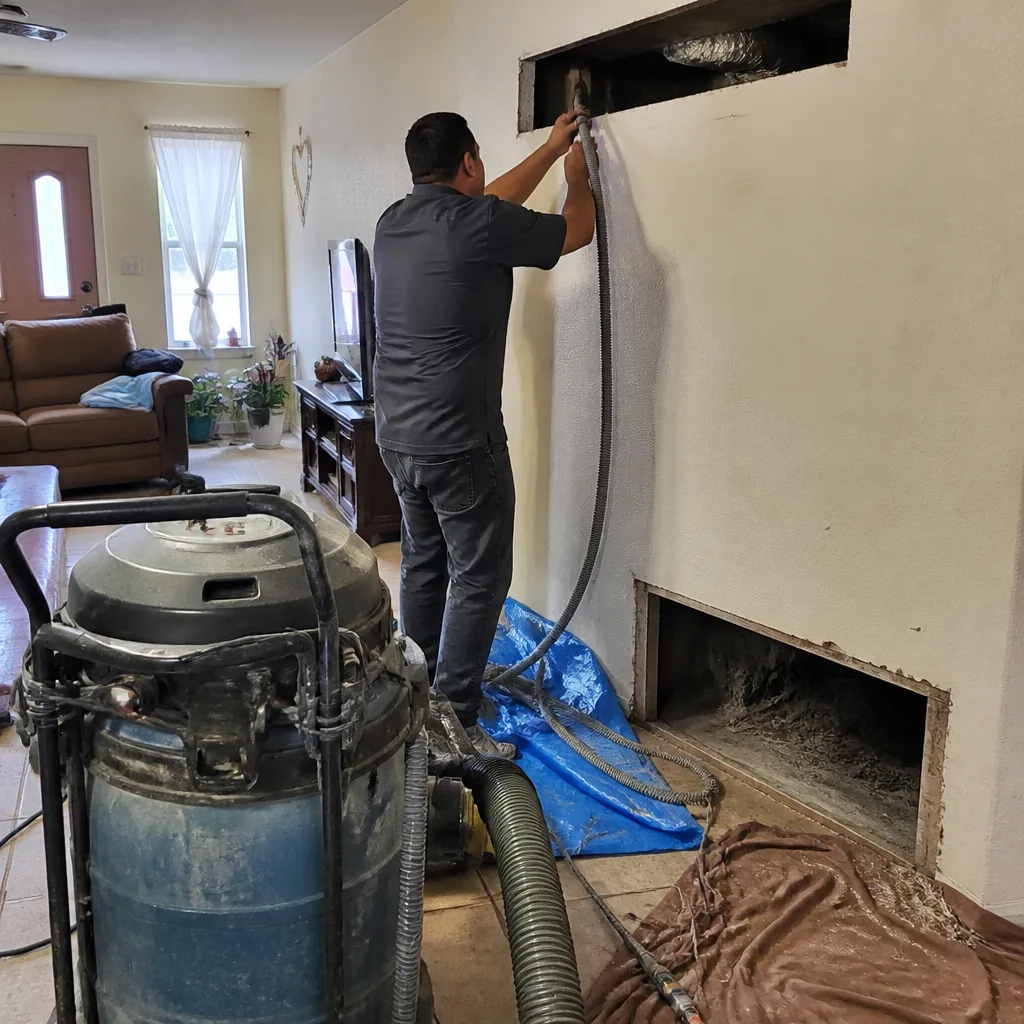
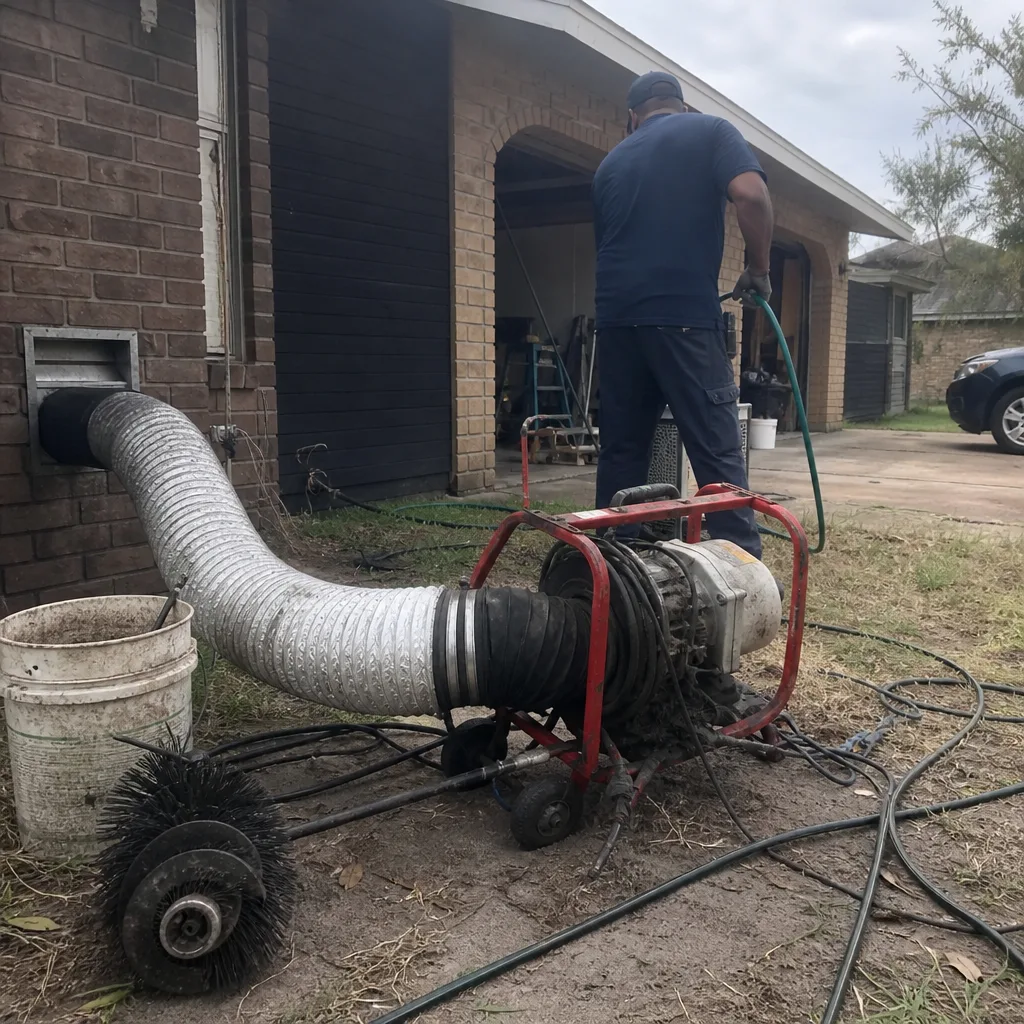
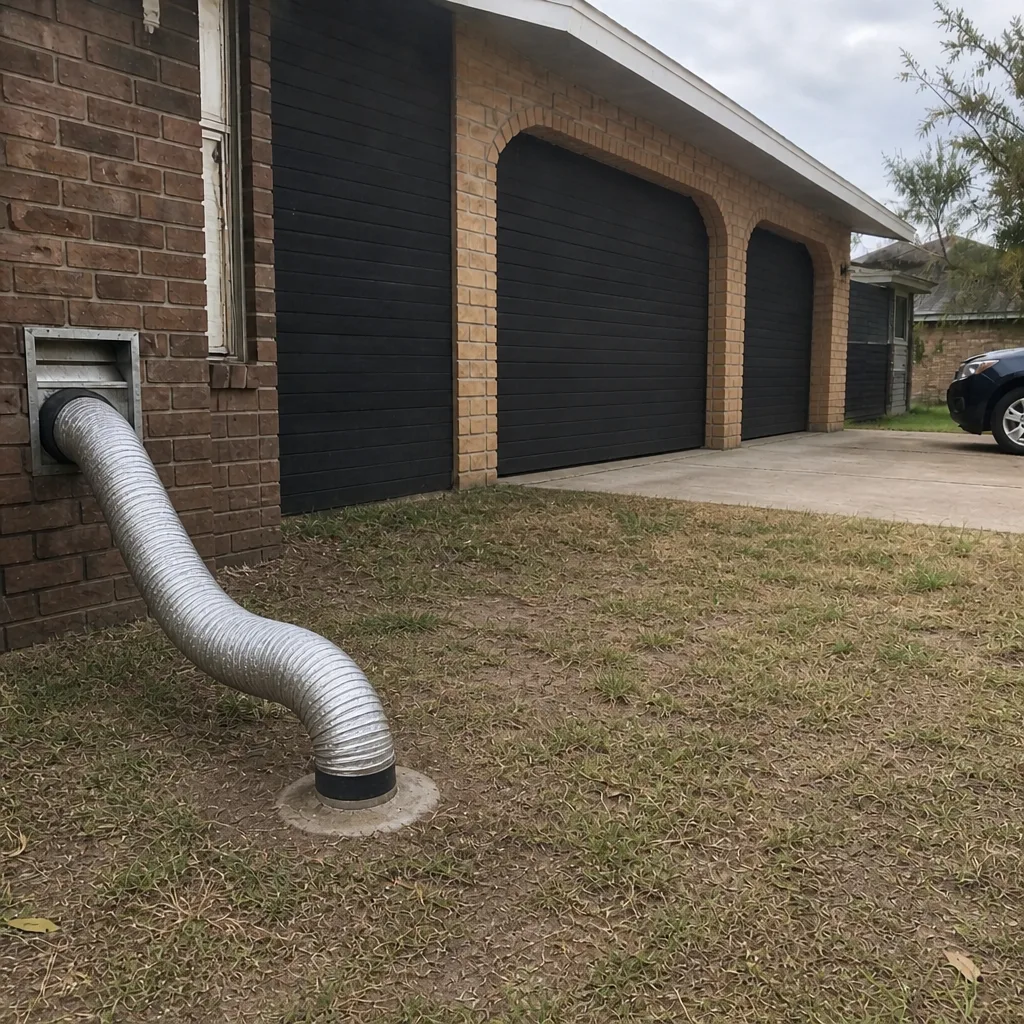
Whole-system duct and dryer vent check with before-and-after photos - you see exactly what came out of your vents
That "$99 whole-house special" is a bait ad - the real number appears once they are in your hallway, or the "clean" is a shop-vac at the register. We photograph the inside of your ducts before and after instead.
Seasonal Air Duct Cleaning Care for Edinburg: Year-Round Homeowner’s Guide
Most seasonal duct care guides are written for places with four real seasons. They tell you to book service before heating season, to check for frost and ice, to think about snow load and frozen pipes. None of that fits Edinburg. Your heating system may run fewer than 20 days in a year, while your air conditioner runs through an eight-month cooling grind that starts early and ends late. The seasons that matter here are the pre-summer push, the July and August peak, the October window, and the short mild winter. This guide walks through each phase, what to inspect, what you can watch yourself, and when a professional cleaning actually earns its place on your calendar.
Quick Answer
The best time to schedule professional air duct cleaning in Edinburg is late October, right after the cooling season ends. Before summer (March into early April), have the system inspected and the ductwork cleaned so it enters peak load months with clear pathways. In winter, use the mild weather to check heat exchanger pathways, return air paths, and filter loading after months of heavy summer conditioning.
Styles & brands we work with
- Whole-home duct cleaning
- Dryer vent cleaning
- Camera inspection
- Sanitizing & deodorizing
Table of Contents
- Why Edinburg’s Seasons Aren’t Equal
- Pre-Summer Preparation: March and April
- How Spring Pollen Loads Your Ducts Differently
- Mid-Summer Monitoring: July and August
- Post-Summer Assessment: The October Window
- Winter Heating Prep and Return Air Paths
- A Year-Round Duct Care Calendar
- Common Mistakes to Avoid
- When to Call a Professional
- Frequently Asked Questions
Why Edinburg’s Seasons Aren’t Equal
A northern climate splits the year roughly in half between heating and cooling. Edinburg splits it very differently. The cooling season dominates, the transition windows are short, and winter is mild enough that the heating system is often idle. That mismatch is why generic seasonal advice misses the mark here. A homeowner in Edinburg who follows a northern service calendar ends up cleaning ducts at the wrong time and skipping the phase that matters most.
Two things drive duct stress in a Rio Grande Valley home: volume of air moved and duration of that load. Your system moves conditioned air through every room for most of the year. That continuous airflow deposits dust, pollen, and fine lint along duct walls and interior seams. The longer the cooling season runs, the more that accumulation builds. By the time October arrives, your ductwork has carried more air than a comparable northern system carries in a full year of intermittent use.
- Eight-month cooling grind: sustained load on supply and return ducts
- Brief transition window: roughly March and April, when temperatures swing but the AC hasn’t locked into peak demand
- Mild winter: heating runs briefly, then stops, leaving ducts to sit through cooler weeks
- Spring pollen season: February through April, driven by mesquite and cedar
Understanding that rhythm is the whole point of this guide. Each phase asks something different of your duct system, and each one has a smart move attached to it. When you plan around the load rather than the calendar label, the results show up in airflow, in filter life, and in how the house feels in July.
Pre-Summer Preparation: March and April
March and April are your inspection window. Peak load is coming, and whatever is sitting in your ductwork by April will be pushed through the house all summer. This is the phase to look at the whole system with fresh eyes before demand climbs.
What to Inspect Before Summer
- Filter condition and fitment. Check that the filter is seated correctly, not collapsed, and matched to the correct slot size. A loose filter lets unfiltered air bypass into the system.
- Return air paths. Confirm every return grille is unobstructed. Furniture, rugs, and closets can block a return without anyone noticing.
- Supply register airflow. Go room to room and feel the airflow at each register. Weak delivery in one area suggests a restricted or disconnected branch duct.
- Visible dust at the registers. Dark staining around a register or dust streaks on the ceiling near it usually point to a duct-side problem rather than a room-side one.
- Condition of accessible duct runs. In attics, look for crushed flex duct, separated joints, or disconnected sections. These are common in older Edinburg homes where ductwork has been patched over the years.
- Access panel condition. If you have accessible duct panels, check that they’re sealed and intact. Open or poorly sealed panels pull attic air into the system.
Why Clean Before Peak Load
Cleaning in March or early April means the duct interior is clear when the system transitions into heavy use. It also means any repair work – reconnecting a branch duct, sealing a seam, replacing crushed flex – happens before demand climbs. A duct system that’s clean and tight in April moves air better in July. That’s not a slogan. Restricted ducts force the blower to work against higher static pressure, and airflow to the far rooms drops off.
If you have allergy concerns, this is the phase to act. Cleaning before peak pollen season is more helpful than cleaning after, because it removes accumulated material before the spring load adds to it. Professional-grade equipment matters here. The rotary brush and HEPA vacuum systems that specialists run are built to pull settled debris out of the duct interior and capture it in the machine rather than pushing it into the room. Homeowner-grade shop vacs can’t do that job.
How Spring Pollen Loads Your Ducts Differently
Edinburg’s spring pollen season runs roughly February through April and is driven mainly by mesquite and cedar. That timing puts pollen loading well ahead of the usual summer dust cycle, and it behaves differently than dust does. Pollen is fine, light, and it can pass through a lightly loaded filter. It also tends to adhere to slightly moist surfaces inside the system, which is exactly what you get in a warm, humid climate running an AC.
- Febrile loading: pollen arrives early, often while the heating system is still in occasional use
- Filter pinch point: pollen clogs filter media faster than household dust, which means filter changes matter more in March and April
- Interior adhesion: pollen that reaches the duct interior can cling to walls and seams rather than staying airborne
- Interaction with summer: pollen load plus summer dust accumulation means the total burden on the ducts is higher than the season labels suggest
What This Means Practically
Check your filter more often during pollen season than you do in summer. If you find yourself changing filters early because they’re loading fast, the duct interior may be holding onto material that’s being re-entrained. A system that’s carrying pollen residue from spring into the summer cooling season works harder than a clean one. That’s the case for doing air duct cleaning in the pre-summer window rather than waiting until fall. If you’re running a Honeywell or Aprilaire filter system, the housing and media condition matter too, since that’s the point where fine pollen is meant to be captured, and a poorly seated filter lets it bypass.
Mid-Summer Monitoring: July and August
By July and August the system is at peak load, and duct problems often surface in ways you can observe without opening anything up. Your job in these weeks is monitoring, not cleaning. Heavy professional cleaning mid-summer is often impractical – attics are brutally hot, and the system is running continuously. Watch for signals and log them so you can act on them in the fall.
What to Watch During Peak Demand
- Uneven cooling between rooms. A room that’s consistently warmer than the rest may be at the end of a restricted branch duct or a run with a crushed section.
- Whistling or howling at registers. High-velocity noise at a register often signals a restricted duct or excessive static pressure.
- Visible dust at return grilles. If return grilles are loading up faster than usual, the system is pulling more material through than the filter can capture.
- Musty or stale odor when the system starts. Odor on startup can point to moisture or biological growth in the system. If you notice this, treat it as a reason to have the system inspected.
- Filter loading rate. If filter changes are creeping up in frequency, the duct interior may be contributing material.
- Ceiling stains near registers. Staining or discoloration around supply registers can point to a leak or a duct-side issue worth investigating.
Why Not Clean Mid-Summer
There’s a practical side to this. Attic duct access in July and August is difficult and often unsafe, especially during the hottest afternoon hours. Professional crews working in Edinburg during peak summer plan access work carefully for exactly that reason. The work is doable, but the ergonomics are better in October. More importantly, cleaning before peak load (April) or after it (October) means the duct interior is clean during the highest-demand stretch, which is where the airflow benefit lands. Cleaning mid-season leaves half the summer ahead and half the accumulation already re-formed.
Record what you observe. A note on your phone listing which room runs warm, when the whistling started, and how fast filters are loading gives a technician a much better picture than a vague “something’s off with the air.”
Post-Summer Assessment: The October Window
Late October is the most practical window for professional air duct cleaning in Edinburg. The cooling system has just finished its hardest stretch. The weather is mild enough that attic access work is comfortable and safe. And the cleaning you do now carries you straight through the winter and into next spring.
Three things line up in October that don’t line up any other time of year:
- The system has finished its peak load. Whatever accumulated over July and August is present, and now is the time to pull it out.
- Access work is safe and effective. Attics are cooler, and technicians can work at a pace that doesn’t compromise thoroughness. That matters on a duct system that runs the length of an attic in a single-story home.
- You’re cleaning ahead of the heating season. When the heating system does run – even if it’s only for a handful of days – the air it moves passes through ducts that are already clean.
What the Assessment Should Cover
A serious post-summer assessment looks at more than surface dust. It includes the condition of accessible duct runs, the seal at joints and connections, the state of the return air path, and the register condition throughout the house. In our experience, October jobs often turn up a small number of duct issues that a summer of heavy load has pushed into the open – a crushed branch duct, a pulled-apart flex connection, a register boot separated from the ceiling.
That’s why duct repair as a standalone service matters. Cleaning a duct system with a disconnected branch or a crushed flex run doesn’t fix the underlying problem. A specialist who cleans and can also repair the compromised ductwork gets it right in one visit. The three core services – air duct cleaning, dryer vent cleaning, and air duct repair – address the system as a whole rather than just the interior surfaces. If you’re also thinking about the safety side of your home, the October window is a good time to book duct cleaning in Edinburg alongside a dryer vent check, since the lint that accumulates in dryer vents is a leading residential fire hazard and doesn’t get cleaned unless someone specifically does it.
Winter Heating Prep and Return Air Paths
Edinburg winters are mild, and the heating system may only run for a short stretch of the cooler months. A short heating season doesn’t mean the heating side of the system can be ignored. When the furnace does run, it moves air through the same ductwork the AC uses, and that air needs clear pathways. Two things deserve specific attention in winter: the heat exchanger pathway and the return air path.
Heat Exchanger Pathway
The heat exchanger is a safety-critical component. Cracks or blockages can allow combustion gases to enter the airstream, and that’s a genuine health hazard. This is not a component to inspect yourself beyond what the manufacturer’s manual allows – it needs a trained technician with the right tools and test equipment. What you can do is clear the pathway: make sure nothing is stacked around or in front of the furnace, keep the filter clean and correctly seated, and confirm that supply and return registers serving the furnace area are open. Beyond that, have the heat exchanger inspected by a professional. In a home where the heating system sits idle for most of the year, a pre-winter inspection is a reasonable precaution.
Return Air Paths
Summer conditioning keeps air moving through the returns. After months of that load, the return path can carry accumulated dust along its interior, and the return grilles can be partially blocked by furniture, curtains, or rugs. Before the heating season, walk the house and confirm:
- Each return grille is fully open and unobstructed
- No furniture or textile is covering or close to blocking a return
- Return filters (if the system uses them) are clean and seated correctly
- Return duct runs in the attic aren’t crushed, kinked, or disconnected
If you’ve noticed weak return airflow in a particular part of the house, that’s worth flagging. A duct system that’s under-filling the return side runs inefficiently in either season. A return-side inspection is part of a proper duct assessment, and it’s the kind of thing that gets missed when a cleaning job only looks at supply ducts.
A Year-Round Duct Care Calendar
Here’s the practical schedule we walk Edinburg homeowners through. It’s built around the local load curve rather than a generic national template.
February Through April: Pollen Season
- Check filters every few weeks and replace earlier than you would in summer
- Have the system inspected for duct condition before peak load
- Schedule cleaning if the pre-summer window is still ahead of you
March and April: Pre-Summer Window
- Professional air duct cleaning before the cooling system enters peak demand
- Repair any compromised ductwork found during inspection
- Confirm all registers and returns are open and unobstructed
July and August: Peak Monitoring
- Watch for uneven cooling, register noise, and faster filter loading
- Keep a log of observations to share with a technician later
- Avoid major duct access work during the hottest stretch unless there’s a clear problem
October: Post-Summer Cleaning Window
- The most practical month for professional air duct cleaning
- Full assessment: duct condition, seams, branches, register boots
- Book dryer vent cleaning alongside the duct work
November Through February: Winter Prep
- Confirm return air paths are clear
- Check filter condition and fitment before heating season
- Have the heat exchanger inspected by a technician
Homeowners in Edinburg who follow this rhythm get the most out of every cleaning dollar. The cleaning happens when the system has finished its heavy stretch, and the inspection happens before the next one starts.
See the difference
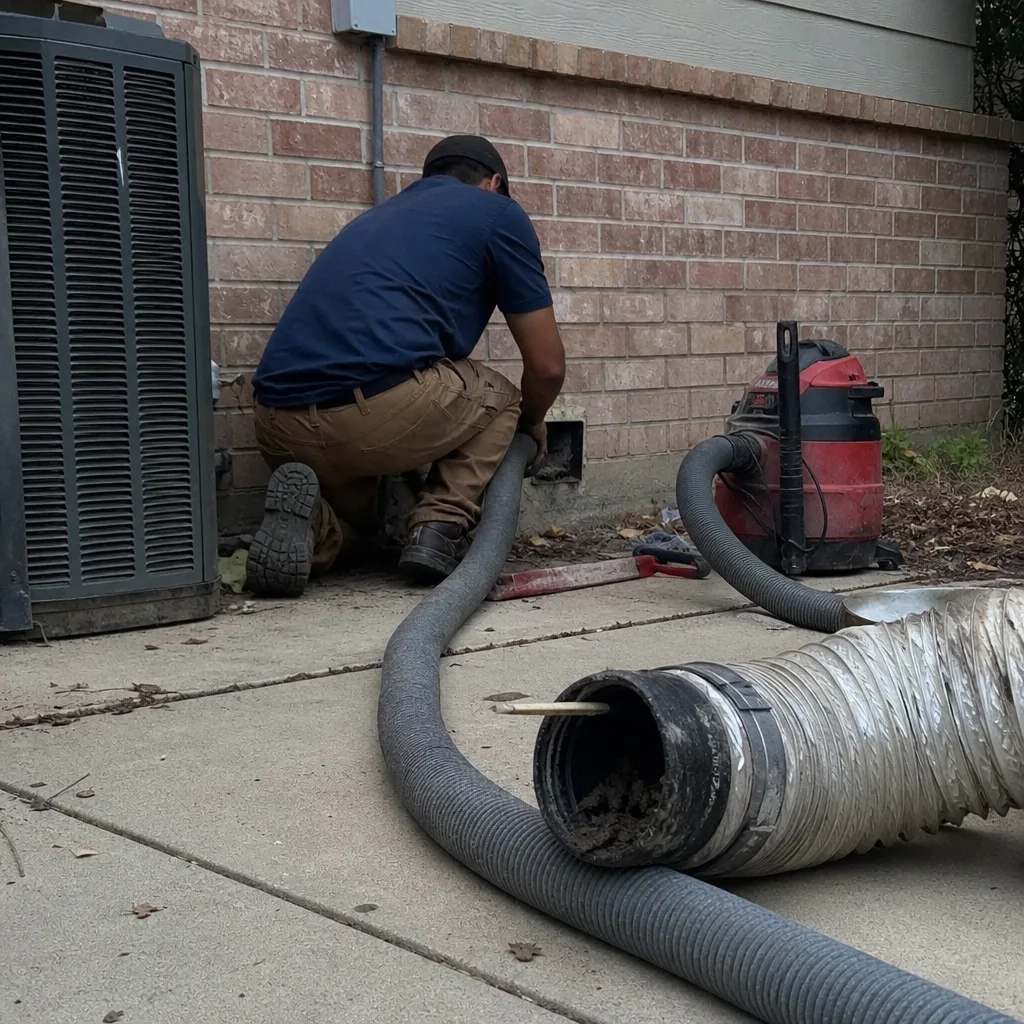 Before
 After
 Before
 After
 Before
 After
What Professional Duct Cleaning Actually Involves in Edinburg
The equipment behind the job is the difference between a cleaning that works and one that doesn’t. This is the part most homeowners never see, and it’s the part that matters. Specialist shops run brands like Rotobrush and Nikro because those systems were purpose-built for residential duct cleaning. Rotobrush is a rotary brush system designed to agitate and pull debris from duct walls. Nikro HEPA-rated vacuums capture fine particulates rather than recirculating them into the room. Abatement Technologies equipment is used for containment and air purification during service, which reduces cross-contamination inside the home while the work is underway.
Homeowners in Edinburg who’ve had a generalist service in the past often weren’t getting that. A shop vac and a length of hose can look like duct cleaning, but it can’t pull settled debris out of a long run or capture the fine fraction. That’s one reason we ask about the equipment before we quote – the equipment is the service. Familiarity with Honeywell and Aprilaire air-quality components also matters when the house has an air-quality system, since ducts interact with filters, humidifiers, and return-side equipment in ways that require the technician to understand the whole chain.
What a Thorough Cleaning Job Covers
- Inspection and access. The technician inspects the system, establishes access points, and plans the work.
- Containment setup. Abatement Technologies containment equipment is put in place to keep the work area contained.
- Agitation and extraction. Rotary brush agitation loosens debris; HEPA vacuum extraction captures it.
- Register and grille cleaning. Supply and return registers are cleaned as part of the job.
- Repair of any damage found. If a duct run is crushed or disconnected, the repair is part of the scope.
- Final check and walkthrough. Before-and-after condition is reviewed so you can see what was done.
One flat price per system, agreed before work starts, is the right way to book this. Per-vent pricing punishes larger homes with more registers, and it makes it harder to compare quotes honestly. A whole-system range carries more information.
Common Mistakes to Avoid
- Following a northern seasonal calendar. Edinburg’s peak load is the cooling season, not heating season. Cleaning your ducts “before winter” misses the point entirely. The October window after the cooling grind is where the biggest benefit lands.
- Cleaning mid-summer because it feels urgent. Attic access in a July heat wave is slow and unsafe, and the cleaning gets half the accumulation already replaced. If you need to clean mid-summer, do it because a real problem surfaced, not on a whim.
- Judging a cleaning quote on price alone. A teaser price that turns into a much larger invoice once the technician is on site is the classic bait-and-switch. Ask what equipment is used, ask for whole-system pricing, ask whether the quote includes register cleaning and repair of any damaged runs, and insist on a written estimate.
- Skipping the return side. Supply ducts get the attention, but return ducts and the return air path carry at least as much material. A cleaning that doesn’t address the return is incomplete.
- Ignoring the dryer vent. Dryer vent cleaning is part of the same trade and carries a real fire-risk reduction. Most pure duct cleaners don’t offer it, and lint buildup in the vent is a leading residential fire hazard.
- Cleaning without repairing. If a branch duct is disconnected or a run is crushed, no amount of cleaning restores proper airflow. The repair is the fix. Look for a shop that does both.
- Assuming “same day” means thorough. Speed is a scheduling convenience, not a quality measure. A contained, methodical job with proper equipment takes time, and the results show up in the ducts, not the arrival time.
When to Call a Professional
Some duct work is a homeowner’s call, and some is a professional’s. Filter changes, register checks, and clearing furniture from around returns are yours. Duct interior cleaning, duct repair, heat exchanger inspection, and anything to do with the electrical side of the air handler are not – those need training and the right equipment. If a duct is disconnected in the attic, if the heat exchanger is suspect, or if the electrical panel or air handler wiring needs work, call a trained professional. Duct interior work is a contained, methodical job that isn’t worth improvising at home.
We offer free estimates for air duct cleaning, dryer vent cleaning, and air duct repair in Edinburg. Call (877) 566-6144. We answer 24/7, and fast dispatch runs from 7am to 7pm, Sunday through Friday. The written estimate sets the price, and it’s one flat price per system agreed before work starts, with before-and-after photos of the ducts so you can see the results.
Frequently Asked Questions
Late October is the most practical month for air duct cleaning in Edinburg. The cooling system has just finished its heaviest stretch of the year, and the weather allows thorough attic access work. Cleaning in March or early April is the other smart window, since it takes care of accumulated material before peak load starts. Either month gets you the most benefit per cleaning. Call (877) 566-6144 for an exact quote; estimates are free.
Pricing is per job, set by a written estimate, and the quote covers the whole system rather than per-vent charges. Exact cost depends on the number of registers and returns, the condition of the ducts, and whether any duct repair is needed. We quote one flat price per system agreed before work starts, so there are no surprise upsells once the technician is on site. Call (877) 566-6144 and we’ll walk through your system with you.
Cheap quotes usually signal lighter equipment, and lighter equipment can’t do the same job. A shop vac and a handheld brush won’t pull settled debris out of a long run or capture fine particulates the way a rotary brush system and a HEPA-rated vacuum do. Some teaser prices also turn into larger invoices once the technician is on site. Ask what equipment is used and what’s included before you compare quotes. Call (877) 566-6144 to talk through a whole-system quote.
Before-and-after photos of the ducts are the clearest way to see what was cleaned. A thorough job also includes register cleaning and a review of duct condition at the end so you can see the change for yourself. If anybody pushes back on showing photos of the ducts, that’s worth noting. Call (877) 566-6144 for a free estimate and we’ll walk through what the job covers.
Most Edinburg homes benefit from cleaning one time a year, timed to the post-summer window. Homes with pollen sensitivity, recent renovations, new-home purchases, or heavy seasonal occupancy may want to check more often. The inspection cycle matters as much as the cleaning itself, so plan on an inspection before every summer and a cleaning after. Call (877) 566-6144 to talk through your home’s schedule.
Cleaning before pollen season matters more than cleaning after it. Removing accumulated material from the duct interior means the system starts the spring load with a clear pathway, and that reduces the amount of pollen and dust being pushed through the house. Pair that with fresh filters and a properly seated filter housing. Call (877) 566-6144 for a free estimate ahead of February.
The Bottom Line
Edinburg’s duct care year is shaped by an eight-month cooling grind and a short, mild winter, not by four equal seasons. That makes March and April a pre-summer inspection window, July and August a monitoring phase, late October the most practical professional cleaning window, and winter a time to clear return air paths and have the heat exchanger inspected. Equipment matters throughout, and so does repair capability, since cleaning a compromised duct only gets you halfway. Specialist work with professional-grade gear is what makes the seasonal schedule pay off. If you’re not sure what phase your home is in, call (877) 566-6144 for a free estimate.
We work with the air-quality components already in your home, including Honeywell and Aprilaire filters and controls, and we use Abatement Technologies containment equipment during service to keep the work area clean and contained. Our technicians have up to 10 years of experience with duct and vent systems. The air duct cleaning service is available as a standalone booking, and if you’ve noticed attic duct issues, ask about a dryer vent cleaning appointment on the same call.
Contact Duct Cleaning Edinburg to book your seasonal service. Call (877) 566-6144 for a free estimate. We answer 24/7, fast dispatch from 7am to 7pm, Sunday through Friday, and the written estimate sets the price before any work starts.
Written by the team at Duct Cleaning Edinburg.