
Last updated November 15, 2026
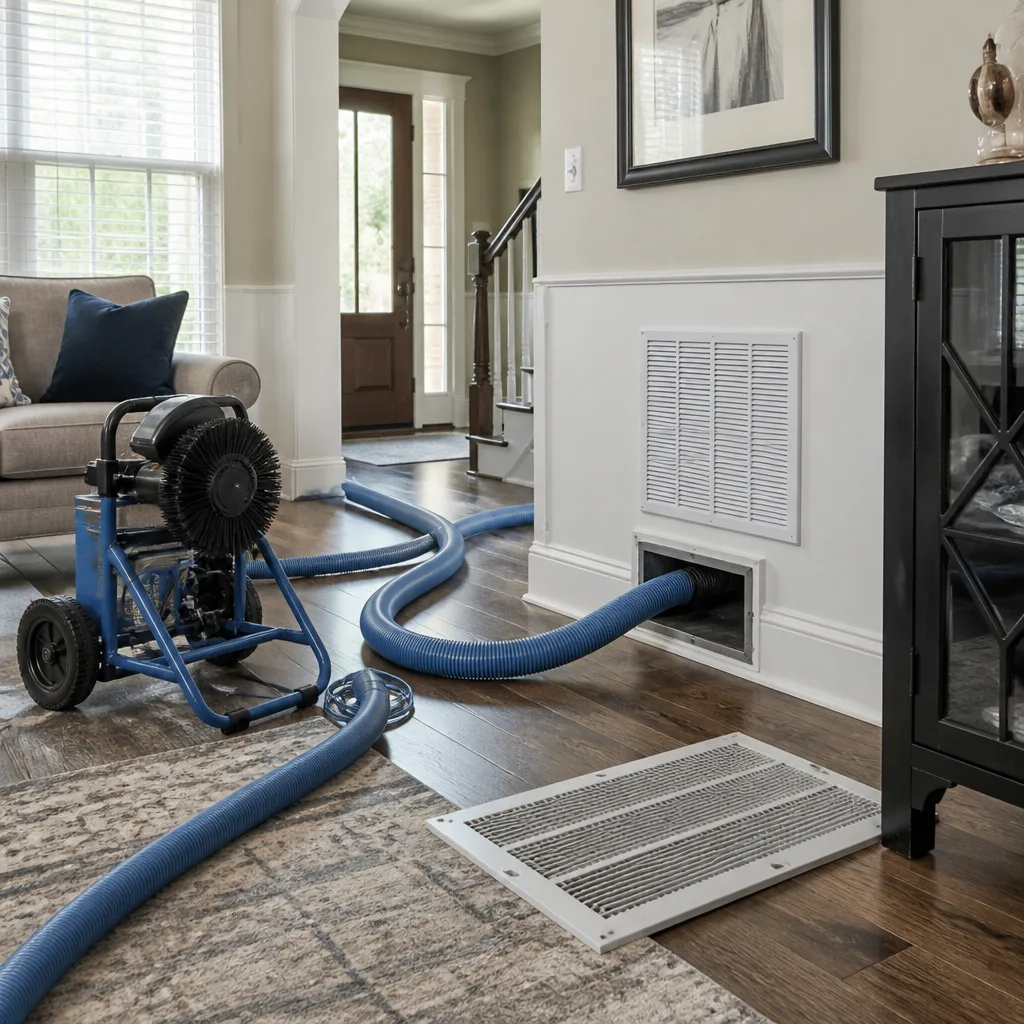 Whole-home duct cleaning
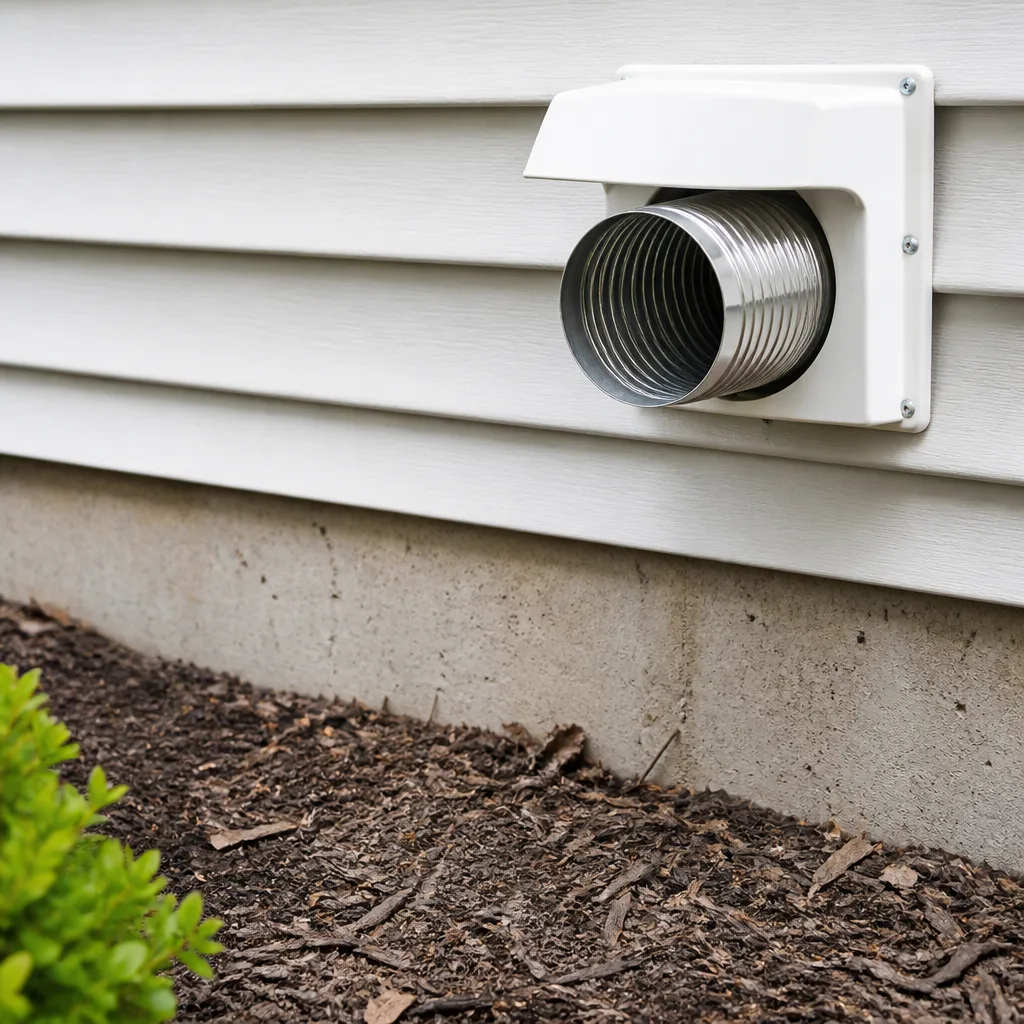 Dryer vent cleaning
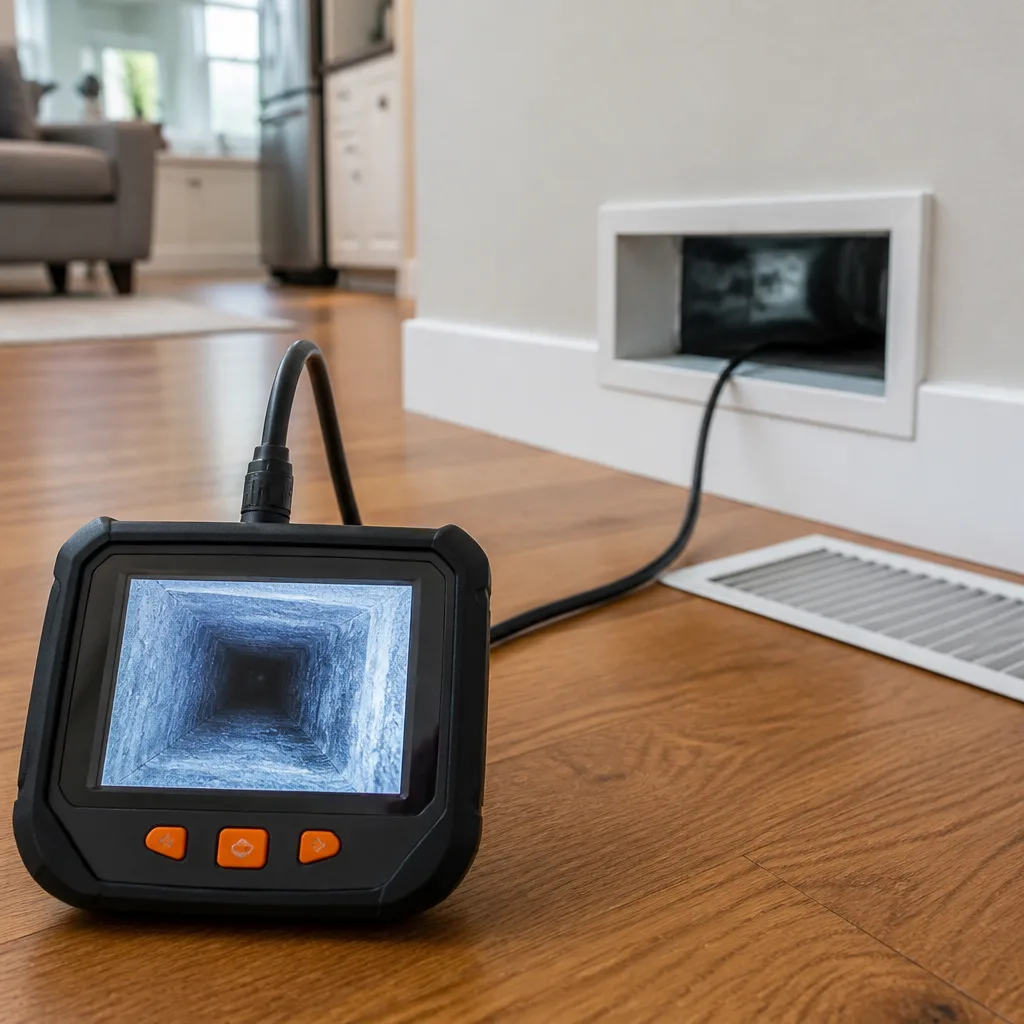 Camera inspection
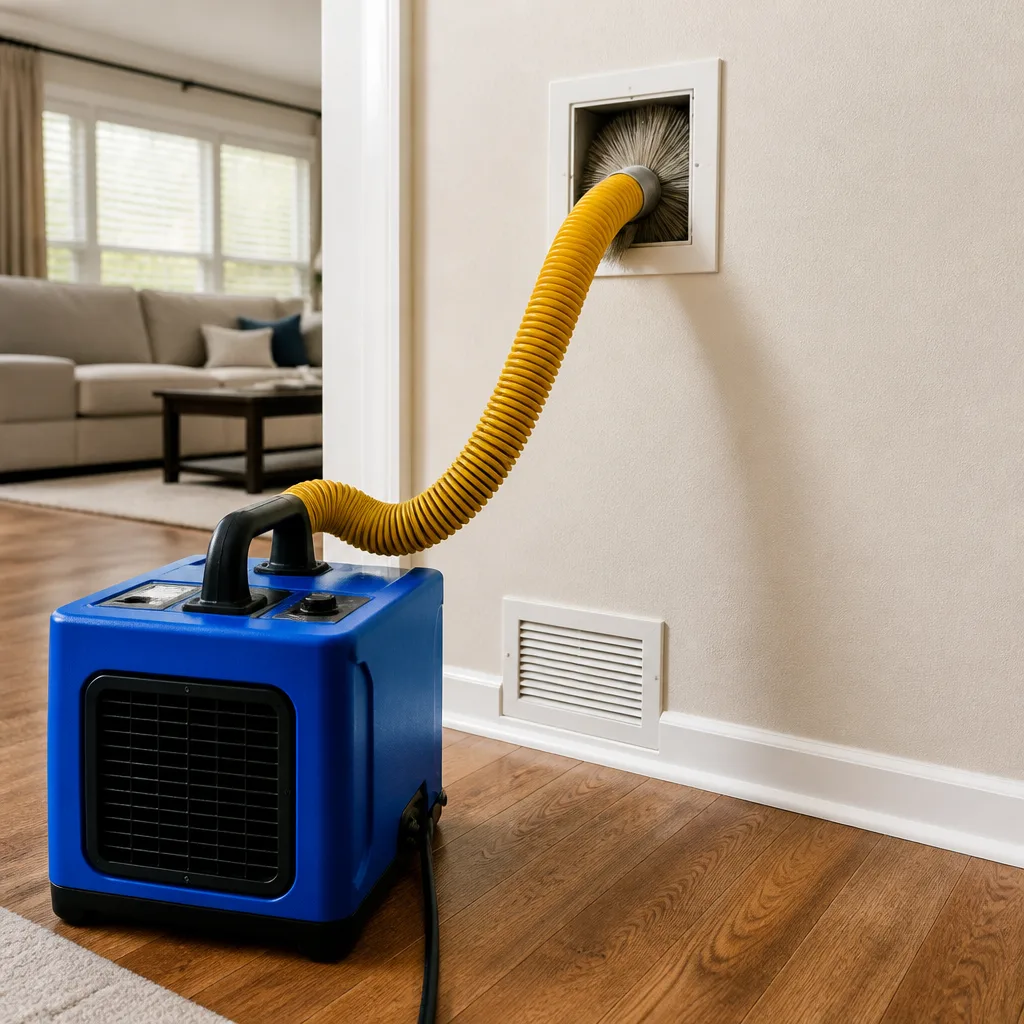 Sanitizing & deodorizing
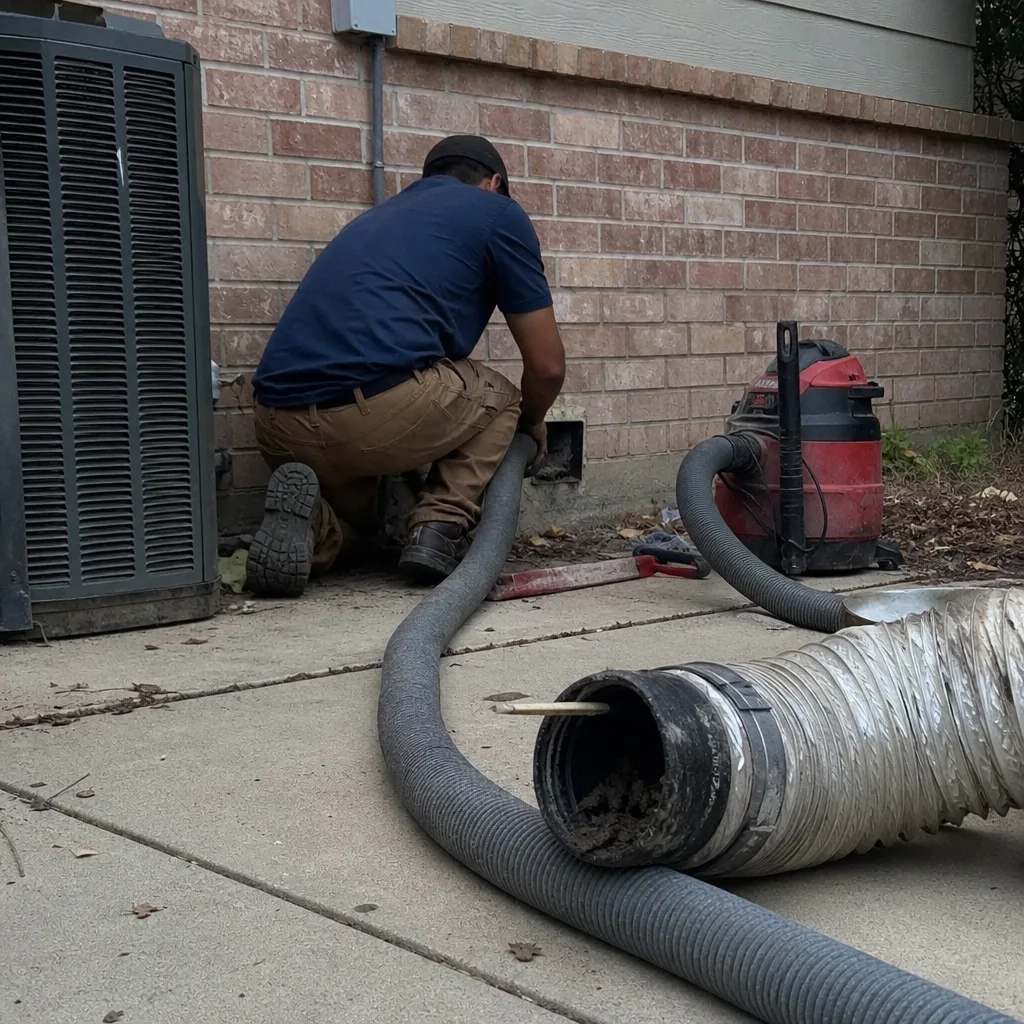
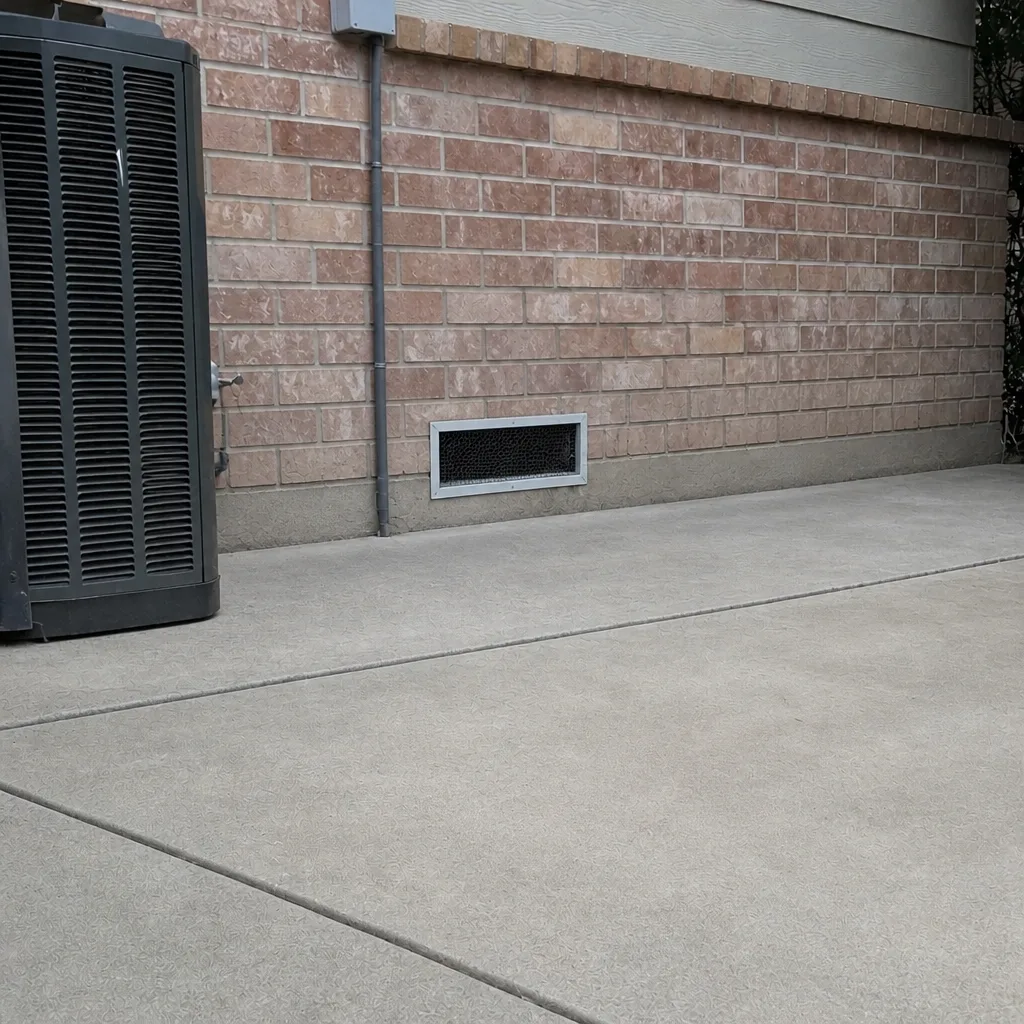
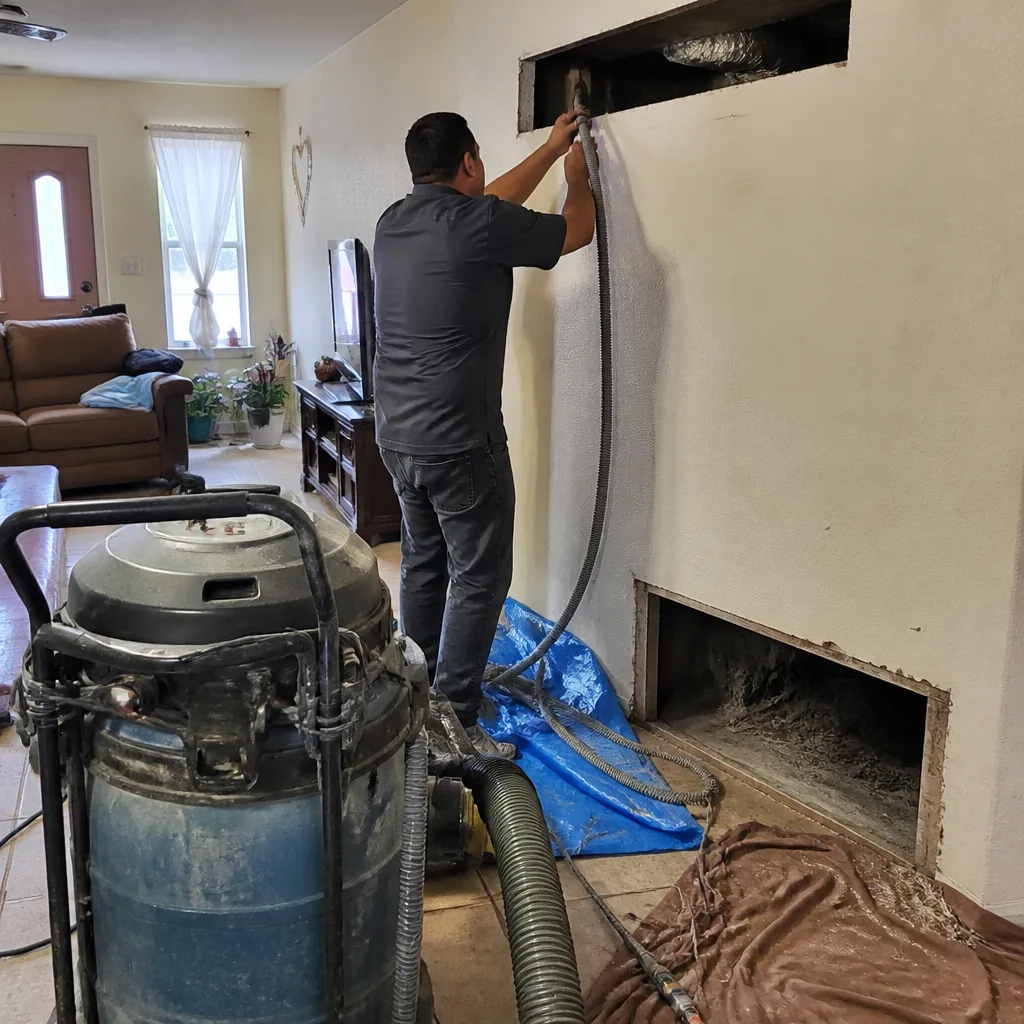
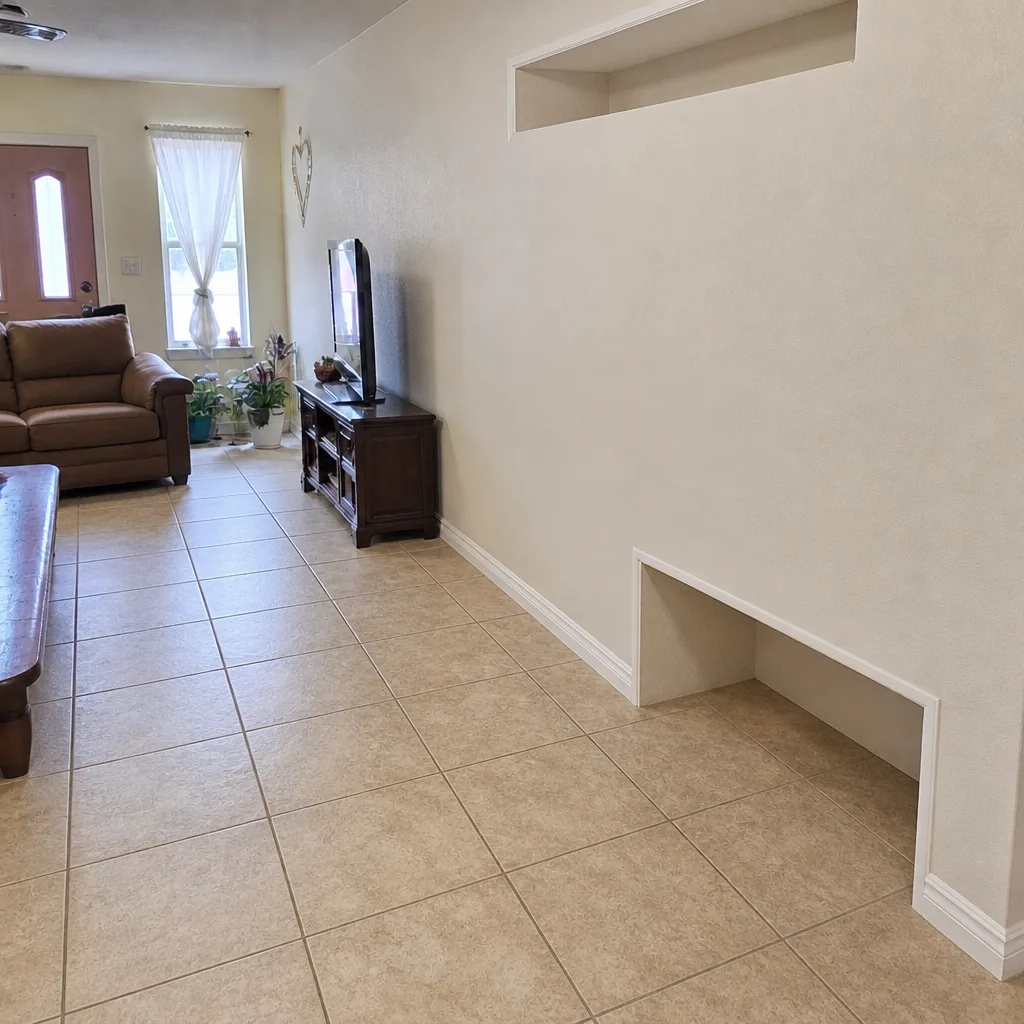
Whole-system duct and dryer vent check with before-and-after photos - you see exactly what came out of your vents
That "$99 whole-house special" is a bait ad - the real number appears once they are in your hallway, or the "clean" is a shop-vac at the register. We photograph the inside of your ducts before and after instead.
DIY vs Professional Air Duct Cleaning: The Edinburg Homeowner’s Decision Guide
Here’s the part most duct cleaning articles skip: a shop vac and a $40 brush kit will clean the registers you can reach. That’s real work, and it helps. What consumer equipment cannot do is create the negative pressure differential that pulls debris out of main trunk lines, or agitate buildup off the inner lining of flex duct. That’s where most of the contamination in a typical Edinburg home actually lives. This guide explains the technical gap honestly, shows you which jobs are genuinely worth doing yourself, and gives you a framework to decide when the line gets crossed.
Quick Answer
DIY air duct cleaning works for surface-level maintenance: cleaning return grilles, vacuuming accessible registers, and brushing out a short dryer vent run. It is not equivalent to professional cleaning, because consumer vacuums cannot generate the negative pressure or airflow needed to remove settled debris from trunk lines and duct lining. If your system has visible mold, pest activity, post-renovation dust, or flex runs over about 10 feet, DIY becomes a false economy.
Styles & brands we work with
- Whole-home duct cleaning
- Dryer vent cleaning
- Camera inspection
- Sanitizing & deodorizing
Table of Contents
- What Negative Air Pressure Actually Does (And Why a Shop Vac Can’t)
- The DIY Tasks That Are Genuinely Worth Doing
- Where DIY Ends and Professional Equipment Begins
- The Risk Profile of Aggressive DIY Attempts
- A Decision Framework: System Age, Contamination Type, and Access
- What Edinburg’s Climate and Housing Stock Mean for Duct Contamination
- What Professional-Grade Equipment Looks Like on the Job
- DIY vs Professional: Side-by-Side Comparison
What Negative Air Pressure Actually Does (And Why a Shop Vac Can’t)
Air duct cleaning is fundamentally about source removal. You’re not freshening the air passing through a duct; you’re physically removing the accumulated debris that has settled along the bottom and walls of the ductwork. That debris is held in place by adhesion, static, and the constant airflow of a running HVAC system. To get it out, you have to overcome those forces and capture what you dislodge before it goes anywhere else.
Professional systems like the Rotobrush rotary brush and Nikro HEPA-rated vacuum units do this in two coordinated steps. The rotary brush agitates debris off the duct wall, including the corrugated inner lining of flex duct where buildup locks into the ridges. Simultaneously, the vacuum creates a negative pressure environment in the duct system, so the dislodged material is pulled toward the collection point rather than pushed into the room or into the air handler.
A consumer shop vac operates at a fraction of that airflow. It creates localized suction, which is fine for a register face or a return grille, but it cannot depressurize a main trunk line. What’s more, the typical shop vac exhausts fine particulate back into the room. You end up moving dust from the duct to the air you’re breathing. That’s not source removal; that’s a change of address.
This distinction matters especially in Edinburg, where homes run their air handlers a substantial portion of the year and the system’s static pressure and airflow are already the primary factors in how dust distributes through the home. If you’re going to intervene, do it with equipment designed for the pressure differentials involved.
The DIY Tasks That Are Genuinely Worth Doing
We’re not going to tell you to skip everything. Several maintenance tasks are well within reach of a homeowner with basic tools, and doing them regularly extends the life of your system and keeps contamination down between professional cleanings. If you want a starting point for genuine air duct cleaning maintenance at home, these are the four worth your Saturday morning.
- Return grille cleaning. Remove the grille with a screwdriver and wash it in the sink or with a hose. Vacuum the frame and the immediate duct surface behind it. This is the highest-impact, lowest-risk DIY task you can do.
- Register vacuuming. With the system off, use a shop vac with a brush attachment on each floor register and return opening. You’re removing surface dust and debris before it becomes part of the airstream.
- Filter housing inspection. Pull the filter and look inside the housing with a flashlight. Check for debris buildup on the sides, gaps around the filter frame, and evidence of pest activity. Replace the filter on schedule and note if the housing is dirtier than the filter alone should allow.
- Dryer vent maintenance. Disconnect the dryer duct at the back of the appliance and pull lint out with a brush kit. This is one of the highest-value DIY tasks in any home, and it’s also one of the most frequently skipped. If you want a deeper clean of the full vent run, that’s dryer vent cleaning territory, and we’ll get to that below.
What ties these together: each one is a surface-level task with a clear stopping point. You’re not trying to reach into a trunk line or a 15-foot flex run. You’re reducing the material that gets pulled into the system in the first place, and catching problems early, before they become a professional job.
Where DIY Ends and Professional Equipment Begins
There are specific conditions under which DIY is not just less effective but genuinely counterproductive. Knowing these four conditions is the whole decision framework.
- Flex duct runs longer than about 10 feet. Flex duct has a corrugated inner liner that captures debris in every ridge. A brush kit can’t reach the full length of a typical flex run, and shop vac suction drops off sharply with distance. The buildup stays put. Professional rotary brushes with a flexible shaft reach the full run, and the vacuum behind them captures what comes off.
- Signs of mold or pest activity. Visible dark staining inside a register, a musty smell when the system runs, rodent droppings, or insect casings are all beyond the DIY line. These require source removal with containment to avoid cross-contamination, and often repair of damaged duct sections afterward.
- Post-renovation debris. Drywall dust, sawdust, and construction debris settle deep in trunk lines and can coat the air handler coil. A shop vac can’t lift this effectively, and it can pull it into your living space instead of containing it.
- Systems with confirmed contamination rather than maintenance needs. If a previous owner never cleaned, or if the system has run for many years without service, the accumulated load exceeds what any consumer vacuum can remove safely.
The professional threshold isn’t arbitrary. It’s set by the physics of airflow and static pressure, and by the capture requirements of source removal. When a professional system like the Rotobrush is attached to an Abatement Technologies containment setup, the debris that comes off the duct wall goes into a sealed collection path, not into your hall closet. That’s the difference that determines whether the job actually got done.
The Risk Profile of Aggressive DIY Attempts
The most common DIY failure isn’t dangerous in the acute sense; it’s a disruption of the system’s airflow balance. Here’s what goes wrong.
Aggressive brushing with a consumer tool can dislodge debris from the duct wall without capturing it. That debris then travels. It can end up at the air handler coil, where it coats the fins and reduces heat transfer; it can end up in a supply register where it gets pushed into a room; or it can lodge in a flex duct joint and create a partial blockage that degrades airflow to one part of the home.
A second failure mode involves using a shop vac’s exhaust as an accidental blower. If the exhaust port is positioned near an open register, you’re pushing air and fine dust into the ductwork instead of pulling it out. In a home that’s already dusty, this can make the problem measurably worse in the days following the attempt.
There’s also the physical risk of forcing a brush or vacuum head into ductwork that isn’t rated for it. Flex duct can tear at the liner if the tool catches a ridge, and a torn liner is far worse than the dust it was carrying. Repairing that lining is a professional job, and it’s often not covered by the kind of light-duty equipment a homeowner is using. If your ducts are worth cleaning, they’re worth not breaking in the process.
None of this is meant to frighten you away from the DIY tasks listed above. Grille cleaning and filter inspection carry essentially zero risk. The risk kicks in when you use a tool outside its design parameter: when you take a shop vac into a trunk line or run a consumer brush into a flex duct.
A Decision Framework: System Age, Contamination Type, and Access
We’ve seen enough Edinburg homes to know that the answer isn’t the same for every one. This three-part framework is how we’d walk a neighbor through the question.
Factor 1: System Age
If the ductwork has never been cleaned and the home is more than a decade old, the accumulated debris load is almost certainly beyond DIY scope. If the ducts were cleaned within the past five years and you’ve kept up with filters and grilles, you may be in maintenance territory where DIY works fine.
Factor 2: Contamination Type
Ordinary household dust is DIY-adjacent. Mold staining, pest evidence, construction debris, or a persistent musty smell are not. There’s no DIY product that removes mold from duct lining or eliminates a rodent-attractant residue, and there’s no consumer tool that captures the material those situations produce.
Factor 3: Homeowner Access
Can you reach the full length of every flex run? Can you access the trunk line? In most homes, the answer is no, and that’s not a failure of effort. It’s a geometry problem. The rotobrush and vacuum need to reach the whole system, not the part you can see from a ladder.
If all three factors land in the “manageable” column, DIY is reasonable. If any one of them tips toward “contaminated,” “inaccessible,” or “aging,” professional cleaning is the answer, and it’s usually the cheaper answer once you account for the tools you’d have to buy and the risks you’d take on. Our technicians have up to 10 years of experience with these exact scenarios, and we’re happy to walk through yours on the phone.
What Edinburg’s Climate and Housing Stock Mean for Duct Contamination
An air conditioning system in a hot, humid climate runs longer and moves more air per year than one in a milder part of the country. That means more dust pulled through the return, more condensation on cold surfaces, and more opportunity for buildup. The air handler in a typical Edinburg home runs substantially more hours per year than a system in a climate with a short cooling season, and that cumulative runtime accelerates debris deposition in the trunk lines and on the coil.
The other local factor is housing stock. Many Edinburg homes are single-story slabs with flex duct routed through the attic, a configuration that puts the ductwork in a hot, unconditioned space. Attic temperatures and pressure differences can encourage hot air infiltration and dust movement through joints that aren’t well sealed. When duct runs aren’t well sealed, the system pulls air from the attic rather than from the conditioned space, and that air carries insulation particles, dust, and fiberglass fragments that build up in the duct wall.
This is one more reason why a shop vac falls short. In a home where the ducts have been pulling attic air through imperfect joints for years, the contamination is embedded in the flex lining, not just sitting on the surface. Rotation and agitation are required to dislodge it. A vacuum alone will not do it.
If you’re in a newer Edinburg home where the ducts are clean and well sealed, DIY maintenance is a genuinely good answer. If you’re in an older home with original flex duct and a system that hasn’t been serviced, it’s not. Every Edinburg homeowner should be able to get a straight answer to that question, and our free estimates exist exactly for that.
What Professional-Grade Equipment Looks Like on the Job
When we show up, the equipment in the truck is what separates the job from a DIY attempt. Here’s the actual equipment list and what each item does, so you can compare it against any quotes you’re getting from other providers.
- Rotobrush. A dedicated rotary brush system engineered for residential and commercial duct cleaning. It agitates debris off duct walls and pulls it toward the collection point with a coordinated vacuum. This is the workhorse of a real duct cleaning job.
- Nikro HEPA-rated vacuum equipment. HEPA-rated filtration captures fine particulate instead of recirculating it back into the room. This is the difference between source removal and a change of dust location.
- Abatement Technologies containment and air purification. When the job produces dust, containment matters. Abatement Technologies equipment keeps the work zone contained and purifies the air during the job, reducing cross-contamination risk inside the home.
- Honeywell and Aprilaire components. These are common in homes with air-quality systems beyond just the ductwork, and familiarity with them lets us work with your existing setup rather than treating the ducts in isolation.
What a specialist brings beyond equipment is scope. We do duct and vent systems and nothing else, which means the job is structured around doing it thoroughly rather than fitting it in around a general handyman’s other tasks. That focus is also why we offer duct cleaning in Edinburg as a specialist service rather than an add-on, and why we’ll tell you plainly when DIY is the right call for your home.
DIY vs Professional: Side-by-Side Comparison
Here’s the comparison at a glance. If you’re looking for the short version, this is it.
- Surface cleaning of registers and grilles. DIY: Yes, effective. Professional: Thorough but overkill for this task alone.
- Filter replacement and housing inspection. DIY: Yes, recommended. Professional: Not needed.
- Short dryer vent brushing (under about 10 feet). DIY: Yes, effective. Longer runs: professional dryer vent cleaning required.
- Trunk line debris removal. DIY: No, insufficient suction. Professional: Yes, with rotary brush and HEPA vacuum.
- Flex duct cleaning over 10 feet. DIY: No, insufficient reach. Professional: Yes.
- Mold staining or musty smell. DIY: No, not safely. Professional: Yes, with containment.
- Pest activity or droppings. DIY: No, contamination risk. Professional: Yes, with containment and possibly repair.
- Post-renovation drywall dust. DIY: No, wrong equipment. Professional: Yes.
- Damaged or disconnected duct sections. DIY: No. Professional: Yes, via dedicated duct repair service.
- Confirmed heavy contamination. DIY: No. Professional: Yes, full system cleaning.
Common Mistakes to Avoid
- Using a shop vac as a duct cleaning machine. Shop vacs exhaust fine particulate back into the room. You end up moving dust into the living space instead of capturing it. If you’re serious about cleaning the ducts, use HEPA-rated equipment or call a professional.
- Brushing flex duct without vacuum capture. Agitation without simultaneous vacuum is a one-way trip to a dirtier air handler. Rotobrush systems are designed to pair the two for this reason.
- Skipping the return side. Many homeowners clean the supply registers and never touch the return grille or the return trunk. The return side carries the debris load; ignoring it leaves the biggest source in place.
- Forgetting the dryer vent entirely. Lint buildup in the dryer vent is a recognized fire hazard. If your vent run is long or routed through a wall cavity, DIY brushing often misses the turn where lint accumulates most.
- Treating a musty smell as a filter problem. A persistent musty smell when the system runs is a sign of moisture and biological growth inside the ductwork, not a filter issue. Replacing filters won’t fix it. This is professional territory.
- Cleaning ducts after renovation without sealing the return first. Renovation dust is fine and abundant. If the return is open during the work, the entire system pulls it in. Cover returns before the saw goes in, and skip the DIY cleaning after the fact.
- Ignoring attic duct sealing in an older Edinburg home. If the attic ducts are unsealed and pulling hot attic air, cleaning won’t fix the ongoing contamination. Sealing the runs is the necessary first step, and that’s a professional call.
See the difference
 Before
 After
 Before
 After
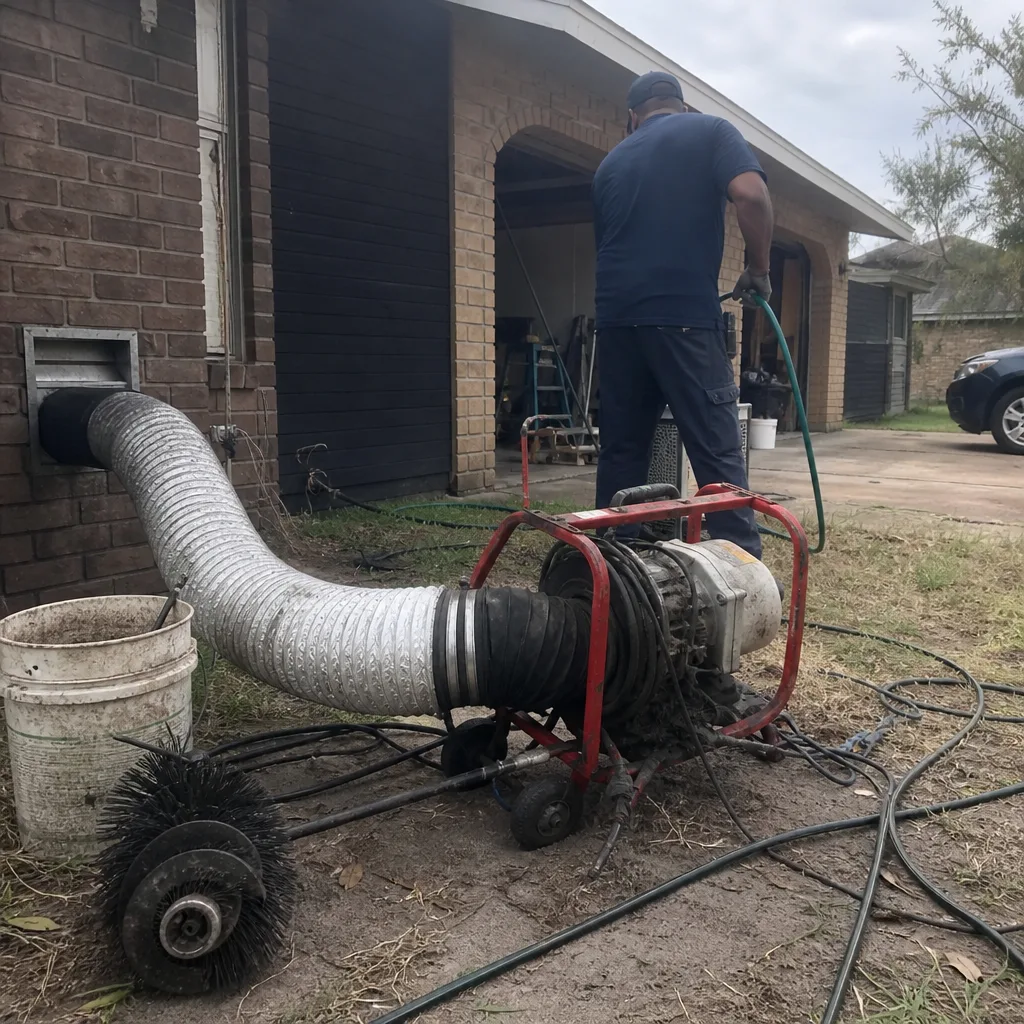 Before
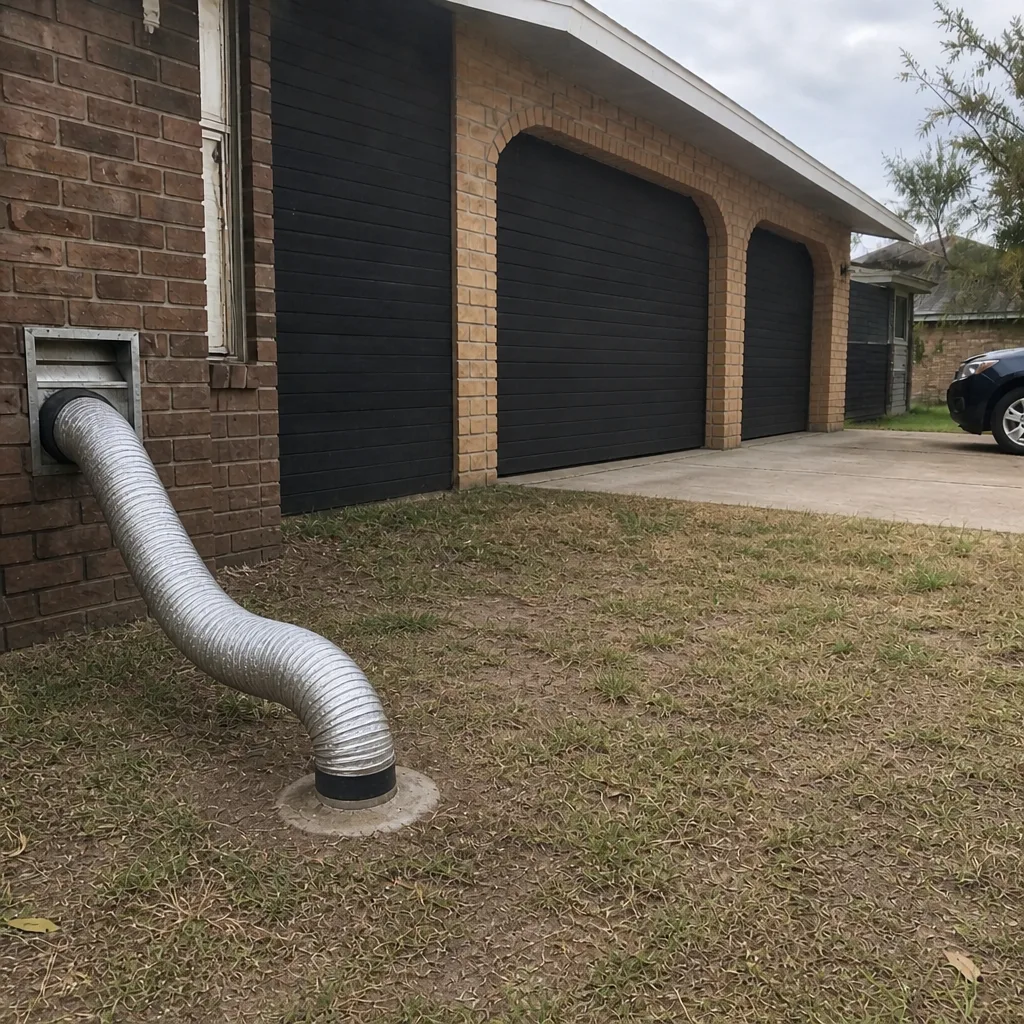 After
When to Call a Professional
Call a professional when the conditions above point to professional scope: flex duct runs longer than about 10 feet, signs of mold or pest activity, visible post-renovation debris, or a system with no cleaning history. Also call when the dryer vent is long, routed through wall cavities, or hasn’t been serviced. The risk of lint accumulation in a concealed run is a genuine safety concern, and it’s not something to handle with a kit from the hardware store.
Duct Cleaning Edinburg offers free estimates in Edinburg. Call (877) 566-6144. We answer 24/7. Fast dispatch from 7am to 7pm, Sunday through Friday. If you’re not sure whether your situation is DIY or professional, describe what you’re seeing. We’ll tell you honestly. We’d rather give you a straight answer than sell you a cleaning you don’t need.
Frequently Asked Questions
No, not for the full system. You can clean registers, grilles, and filter housings, and you should. But the trunk lines and flex duct interior require the negative pressure and rotary agitation of professional equipment. A shop vac cannot create the pressure differential needed to pull debris out of those areas.
There’s no one number, but the general guidance is every three to five years for a typical home with regular maintenance, and sooner for homes with allergies, pets, recent renovation, or a system that’s never been cleaned. In Edinburg’s climate, where the air handler runs most of the year, the accumulation cycle is faster than in milder areas. Call (877) 566-6144 for an honest assessment of your specific situation.
Not for the full system. A shop vac’s exhaust recirculates fine particulate into the room, and its suction is too weak to reach the trunk line. It also risks catching or tearing flex duct lining. Surface vacuuming at registers is fine; anything beyond that isn’t.
DIY brushing removes lint from the accessible portion of a short, straight vent run. That’s a real benefit and worth doing. But longer runs, ones routed through wall cavities, or those with multiple elbow turns accumulate lint in places a brush kit can’t reach. Professional equipment reaches the full run and verifies airflow after cleaning, which is the point.
Some quotes are based on light equipment, or on a single pass with a vacuum and no agitation of the duct walls. Real cleaning uses rotary brush systems, HEPA-rated collection, and containment. If you’re comparing quotes, ask specifically what equipment is being used. The answer tells you whether the job will actually accomplish source removal or just touch the surface.
Ask for before-and-after photos of your own ducts. A professional should be able to open a register or access hole and show you what it looked like before and what it looks like after. Rotobrush and Nikro systems usually produce evidence that’s easy to document. If a provider can’t or won’t provide that, it’s a reason to keep looking.
The Bottom Line
DIY air duct cleaning has a real and useful role in home maintenance: registers, grilles, filter housings, and short dryer vent runs. But it is not equivalent to professional cleaning, and the difference is not effort or equipment quality, it’s the physics of airflow and pressure. Source removal from trunk lines and flex duct requires the negative pressure and rotary agitation that purpose-built systems provide, and doing it wrong can push debris into the air handler. For Edinburg homeowners, the decision comes down to three factors: system age, the type of contamination present, and whether you can physically access the full system. When any one of those tips toward professional scope, DIY becomes a false economy, and we’ll tell you so honestly rather than sell you maintenance you don’t need.
Written by the team at Duct Cleaning Edinburg.